
Original briefings. Zero spin.
Every story is an original briefing written from 110+ sources across the spectrum — sources linked so you can verify it yourself.
 health
Notable (6/10)
Event date: September 3, 2026
health
Notable (6/10)
Event date: September 3, 2026
New Analysis Finds 1 in 15 Healthy Adults Now Has an Unruptured Brain Aneurysm, Up From 1 in 34 Two Decades Ago
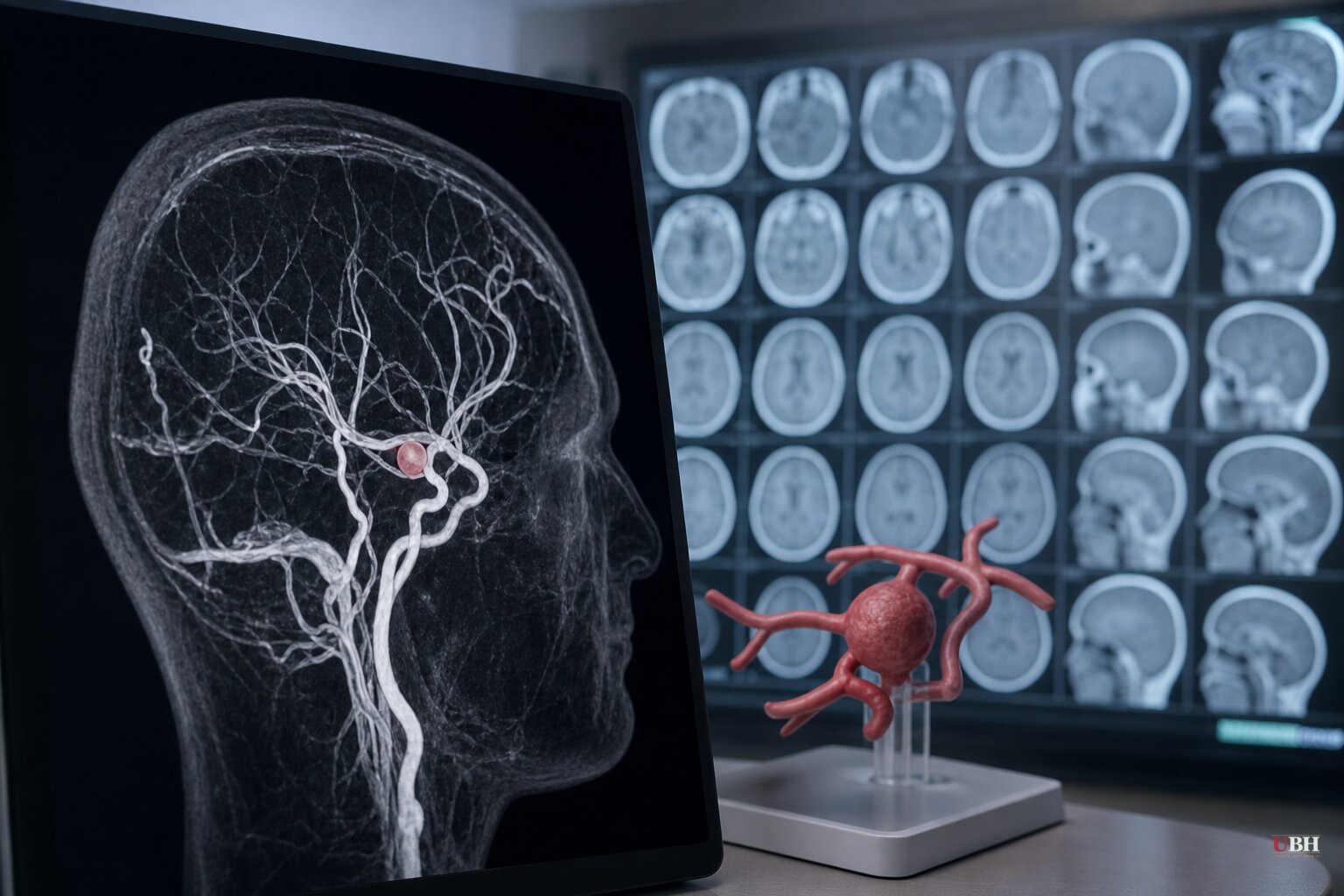
A brain aneurysm can sit quietly in your skull for decades and never cause a problem. Or it can rupture on a Monday morning dog walk and nearly kill you in minutes. Both things are now more common than doctors previously assumed, according to a new systematic review and meta-analysis published in Lancet Neurology.
Dr. Nima Etminan of the University of Heidelberg in Mannheim, Germany, and his co-authors pooled studies of healthy people who underwent MR or CT angiography and found the prevalence of unruptured intracranial aneurysms rose from 2.9% to 6.6% over two decades. After adjusting for age and sex, the prevalence ratio for 2016-2022 versus 2002-2015 was 1.8, with a 95% confidence interval of 1.1 to 2.8. In plain terms: roughly 1 in 15 healthy adults now carries one of these bulges in a brain blood vessel, up from about 1 in 34.
Why the Numbers Jumped
Etminan's team credits some of the rise to an aging population and sharper imaging technology, which catches aneurysms that older scans simply missed. But they were blunt that this doesn't explain the whole trend, writing that the increase "is only in part explained by aging of the population and improvements in vascular imaging, which suggests that other, as yet unknown (e.g., environmental), risk factors play a role as well."
The researchers don't fully know why this is happening. A real gap in the data, it deserves more study rather than speculation.
What the study does nail down is who's at elevated risk. Aneurysms were more common in women, older adults, smokers, and people with high blood pressure. People with connective-tissue disorders, a family history of aneurysmal subarachnoid hemorrhage, or autosomal dominant polycystic kidney disease also showed higher rates.
The Good News Buried in the Data
The overall rate of aneurysmal subarachnoid hemorrhage, the actual rupture event that kills or disables people, has fallen 40% over the past three decades. Etminan and colleagues tie that decline directly to falling smoking rates and better blood pressure control. More people have an aneurysm sitting in their brain right now than in 2002, but fewer of those aneurysms are bursting. That's a public health win driven by personal behavior change, not a new drug or government mandate.
Should Everyone Get Screened? Doctors Say No
An incidental aneurysm diagnosis isn't automatically a call for surgery. In an editorial accompanying the study, Dr. Shuo Wang of Capital Medical University in Beijing and co-authors warned that "prophylactic surgical or endovascular intervention can involve procedural risks, and surgical complications cause net clinical harm for lesions with low risk of rupture."
Cutting into someone's brain, or threading a coil through their blood vessels, to fix a problem that might never have caused harm carries its own danger. Wang's team argued the smarter path is targeted screening of high-risk groups: family history, polycystic kidney disease, connective-tissue disorders, rather than scanning the general public just because AI-assisted imaging is getting better at spotting these things. Wang and colleagues predicted that as high-resolution imaging and AI screening expand, doctors will find even more of these incidental aneurysms, making the targeting question more urgent, not less.
What a Rupture Actually Looks Like
The stakes of getting this wrong were on display for Kari Rixstine, a 55-year-old from Bloomington, Illinois. She was walking her dogs when a shooting pain hit her right temple so hard she thought she'd been shot. She lost vision in one eye almost immediately, then developed severe neck pain and vomiting.
At the hospital, her symptoms were initially chalked up to a migraine, according to OSF HealthCare. Her husband pushed back, telling doctors both her mother and an aunt had died from ruptured brain aneurysms. A CT scan confirmed bleeding, and surgeons placed an external ventricular drain before treating the aneurysm with endovascular coiling. She spent two weeks in intensive care.
Dr. Thomas Russell, a neuroendovascular surgeon at OSF HealthCare, said the overlap between rupture symptoms and ordinary migraines is exactly why family history matters. He also flagged a subtler warning sign: a droopy eyelid or a dilated pupil can mean an unruptured aneurysm is pressing on a cranial nerve before it ever bursts. And he shut down a common myth directly, telling OSF that stress and heavy lifting don't cause aneurysms, though if you already have one, he didn't rule out that straining could play a role in rupture.
Dr. Vipul Gupta of Sir H.N. Reliance Foundation Hospital in Mumbai told the Times of India that women's elevated risk may tie to falling estrogen after menopause, since estrogen helps maintain blood vessel function, but he was careful to note the evidence linking individual estrogen levels to bleeding risk remains mixed. Gupta also pointed to research suggesting smoking's effect on aneurysm formation may hit women harder than men, another reason the habit is worth quitting regardless of which study you believe first.
None of the three reports resolve what's driving the underlying rise in aneurysm prevalence beyond aging and imaging. That question is now sitting with Etminan's team and whoever picks up the research next.
Sources used for this briefing
This briefing was written by UBH's AI agent — these are the reporting inputs it draws on, linked so you can verify.


