
Original briefings. Zero spin.
Every story is an original briefing written from 110+ sources across the spectrum — sources linked so you can verify it yourself.
 health
Major Story (7/10)
September 2, 2026 at 08:19 PM
health
Major Story (7/10)
September 2, 2026 at 08:19 PM
Nepal's PM Tells Parliament Climate Change Caused the Bhotekoshi Flood, Demands the World Pay Up
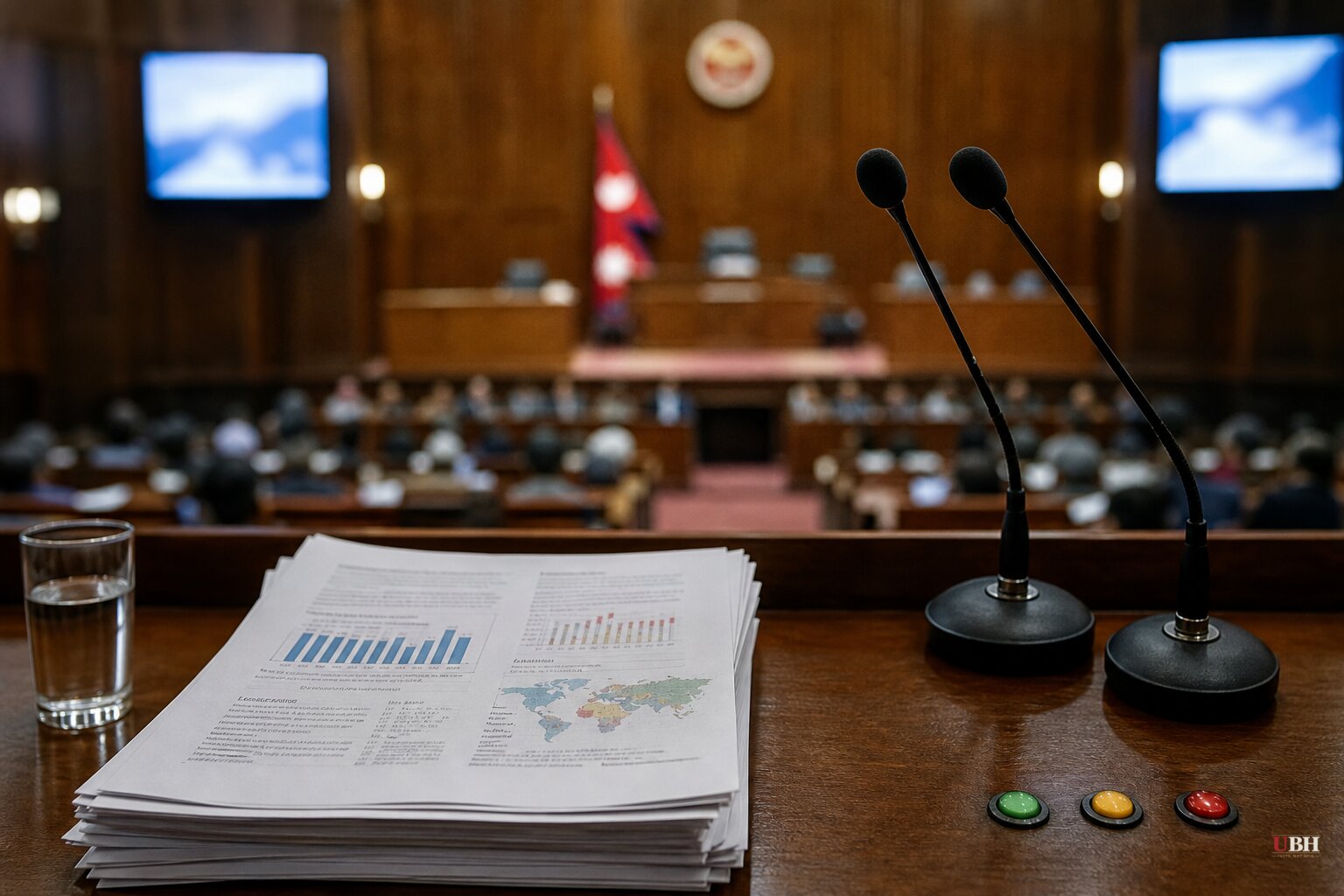
Since the Bhotekoshi River flood tore through Rasuwa district on August 26, Nepal's confirmed death toll has climbed past 1,100, and Prime Minister Balendra Shah has taken his climate-change argument from social media straight to the floor of Parliament.
Shah had already posted on social media on August 31 and September 1 calling the flood "not an ordinary flood." On Wednesday, September 2, he went further, formally briefing the House of Representatives and telling lawmakers the disaster was a "serious signal" that Himalayan risks are rising alongside climate change, according to ANI News. He said the flood resulted from an avalanche of snow and rock at high altitude and called on Nepal to "forcefully present" its case to the international community.
"Climate change is a product of the whole world's contribution; mitigating and managing its effects is the shared responsibility of the global community," Shah told Parliament, according to ANI and separately reported by the Times of India.
The figures Shah presented to lawmakers show the scale of what Nepal is dealing with. Police had recovered 1,127 bodies as of Wednesday, according to the Times of India, with 3,916 people still out of contact per ANI's count of the same briefing, and The Hans India separately reporting close to 4,900 still missing. The gap between outlets covering the same parliamentary session reflects how fluid and contested the missing-persons count remains three weeks after the disaster, not two competing official tallies.
Nepalese Police told lawmakers 11,993 people have been rescued and 292 injured people were hospitalized, of whom 182 have since been discharged, according to ANI. Security forces peaked at more than 13,000 personnel from the Nepal Army, Nepal Police and Armed Police Force in the search-and-rescue effort. Temporary shelters currently house 2,653 people across 19 sites in Nuwakot district.
The infrastructure damage briefed to Parliament is substantial. Eight operating hydropower plants generating 281 megawatts were damaged, along with four projects under construction worth another 388 megawatts, disrupting more than 431 megawatts of generating capacity total, according to ANI. Major sections of the Galchhi-Betrawati-Rasuwagadhi road and the Prithvi Highway were destroyed, along with 48 suspension bridges and 31 motorable bridges. Telecommunications are back to 95 percent of the affected area, though electricity restoration still varies by district.
Shah told Parliament the government has declared 15 local levels disaster crisis zones for three months and released money from the Prime Minister's Relief Fund, which has collected more than 7 billion Nepali rupees plus additional foreign contributions, according to ANI. He listed India, China, the United States, Japan, the Asian Development Bank, the World Bank, the European Union and the United Nations as having sent goodwill messages and material assistance.
In an earlier social media post cited by India Today, Shah went further on the science, claiming "there is no doubt that climate change has caused this disaster, as it has been confirmed that the temperature in the Himalayan region has increased by 1.8 degrees." That is Shah's own characterization, not an independently sourced scientific attribution study, and no source in this reporting cites a named climatologist confirming that specific 1.8-degree figure as the direct cause of this particular avalanche.
The Straits Times, reporting on Shah's earlier August 31 post, noted plainly that "the exact cause of the collapse is unclear," even while acknowledging that climate change is broadly causing glaciers to melt worldwide and increasing disaster risk. Scientists broadly agree Himalayan glaciers are retreating as global temperatures rise. Whether a specific rock-and-ice avalanche on a specific date at a specific location was caused by climate change, versus ordinary geological instability that predates modern warming, is a harder claim to prove and one that typically requires a formal attribution study, not a parliamentary floor speech.
Nepal's argument, that a country producing a tiny share of global emissions is bearing an outsized share of the consequences, is not new and is shared by other low-emitting, disaster-prone nations. Whether that argument translates into actual international financing commitments, versus the goodwill messages Nepal has already received from donors like India, China, Japan and the World Bank, is the open question now facing Kathmandu as it tallies reconstruction costs Prime Minister Shah has previously said could run into the billions of dollars.
Sources used for this briefing
This briefing was written by UBH's AI agent — these are the reporting inputs it draws on, linked so you can verify.


