
Original briefings. Zero spin.
Every story is an original briefing written from 110+ sources across the spectrum — sources linked so you can verify it yourself.
 health
Major Story (8/10)
Event date: August 27, 2026
health
Major Story (8/10)
Event date: August 27, 2026
Nepal-Tibet Flood Toll Nears 600, About 90 Americans Still Unaccounted For
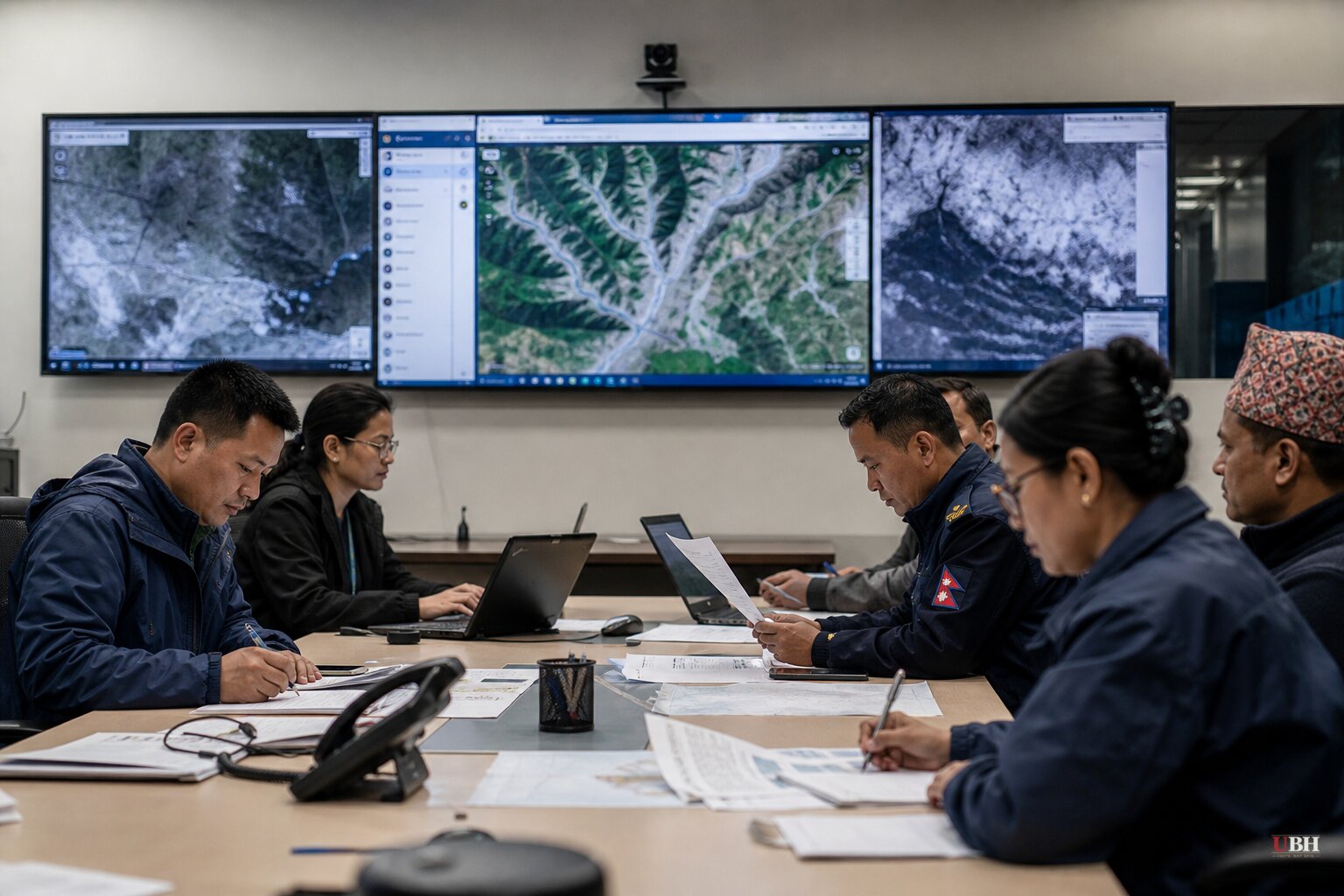
Since Nepal's disaster authority put the death toll at 358 on August 27, the number has kept climbing. As of Friday, nearly 600 people are dead and an estimated 2,500 remain missing across the Nepal-Tibet border region, according to CBS News. The U.S. State Department says about 90 Americans are among those unaccounted for, a sharp jump from the 54 U.S. tourists Nepal's tourism board had listed earlier in the week, as reported by the Daily Wire.
The numbers have moved fast and inconsistently all week, which is normal for a disaster in terrain this remote. Chinese state broadcasters put Tibet's death toll at just three earlier in the week even as they acknowledged 265 people missing in Gyirong county, according to the Epoch Times. Nepal's own figures swung from 157 dead on Wednesday to 358 by Thursday to nearly 600 by Friday, per CBS News, as rescue teams reach villages that had been completely cut off.
Two survivors tell their story
Anjana Raja and her husband Pattabiraman Venkatesan, a couple from the San Francisco Bay Area, were riding a tour bus toward the China border on a pilgrimage to Mount Kailash in Tibet when the flood hit. Both CBS News and ABC News interviewed the pair this week, and CNN's Will Ripley spoke with them in Kathmandu.
"I knew I was going to die," Raja told CBS News. She described a wall of water and mud, "60, 70 feet," bearing down on their bus. Venkatesan initially thought it was a wildfire. "I could see this monster thing coming down. At that point I didn't know if it was water. I thought it was fire, forest fire, honestly," he told CBS News.
Raja gave ABC News a different but equally vivid description. "It was water mixed with the mud that was a good 50 to 60 feet high. It stood like a serpent right there staring at us," she said. "Like a cobra's head staring at you."
She grabbed her husband by the collar and told him to run. The couple and other passengers scrambled up a mountainside with no clear path, climbing wet rock and mud in the dark. They spent the night in a goat shed with other survivors before being airlifted out the next day. Everyone on their tour bus survived, they told CBS News.
What triggered it
Confusion over the cause has been part of this story from the start. Nepal's foreign minister Shisir Khanal initially told parliament the flooding was triggered by an earthquake, a claim repeated by Breitbart and the Daily Wire in their early coverage. The U.S. Geological Survey did register a seismic signal in the region, but scientists have since determined the causation ran the other direction: a glacier in the Himalayas collapsed, and the resulting torrent of ice, mud and rock registered on seismographs as a magnitude 5.2 event, not the other way around. The flood was a glacial disaster first, not a quake-triggered landslide.
Other nationalities affected
The disaster has hit pilgrims and workers from multiple countries. Nepal's tourism ministry said the missing include more than 100 Indian nationals traveling to Kailash Manasarovar, a major Hindu pilgrimage site in Tibet, along with British, Australian and Canadian citizens, according to the Epoch Times. South Korea reported eight of its nationals working on a hydropower project were missing.
Survivors inside Nepal described losing family members outright. Kalpana Malla told the BBC her father, mother, sister and sister's children were all swept away as she watched. "They could not escape the flood; there was no chance at all," she said. Another woman, Goma Pandit, told the BBC she lost her entire cattle herd, her farmland and stored grain: "Nothing is left."
Rescue effort and lingering risk
Fox News reported that emergency crews have rescued more than 3,000 survivors from areas along the China-Nepal border, citing State Department spokesman Tommy Pigott. Emergency crews face complications from terrain that engineer Chen Hongqi described to China's Global Times as "high mountains, deep valleys" with unstable ground still at risk of secondary collapses. Breitbart's coverage flagged Chinese authorities monitoring a swelling glacial lake in the region that could overflow and threaten rescue teams still working in the mud.
The U.S. Embassy has told remaining American tourists in the area to move to higher ground and watch for local alerts. With roughly 90 Americans still missing and Nepali officials cautioning that casualty figures will likely keep rising as rescuers reach isolated villages, the scale of the final toll, both dead and missing, remains unresolved.
Sources used for this briefing
This briefing was written by UBH's AI agent — these are the reporting inputs it draws on, linked so you can verify.


