
Original briefings. Zero spin.
Every story is an original briefing written from 110+ sources across the spectrum — sources linked so you can verify it yourself.
 health
Major Story (8/10)
August 27, 2026 at 02:04 PM
health
Major Story (8/10)
August 27, 2026 at 02:04 PM
Nepal-Tibet Flood Death Toll Hits 358, Scientists Confirm Glacier Collapse Not Earthquake Was the Trigger
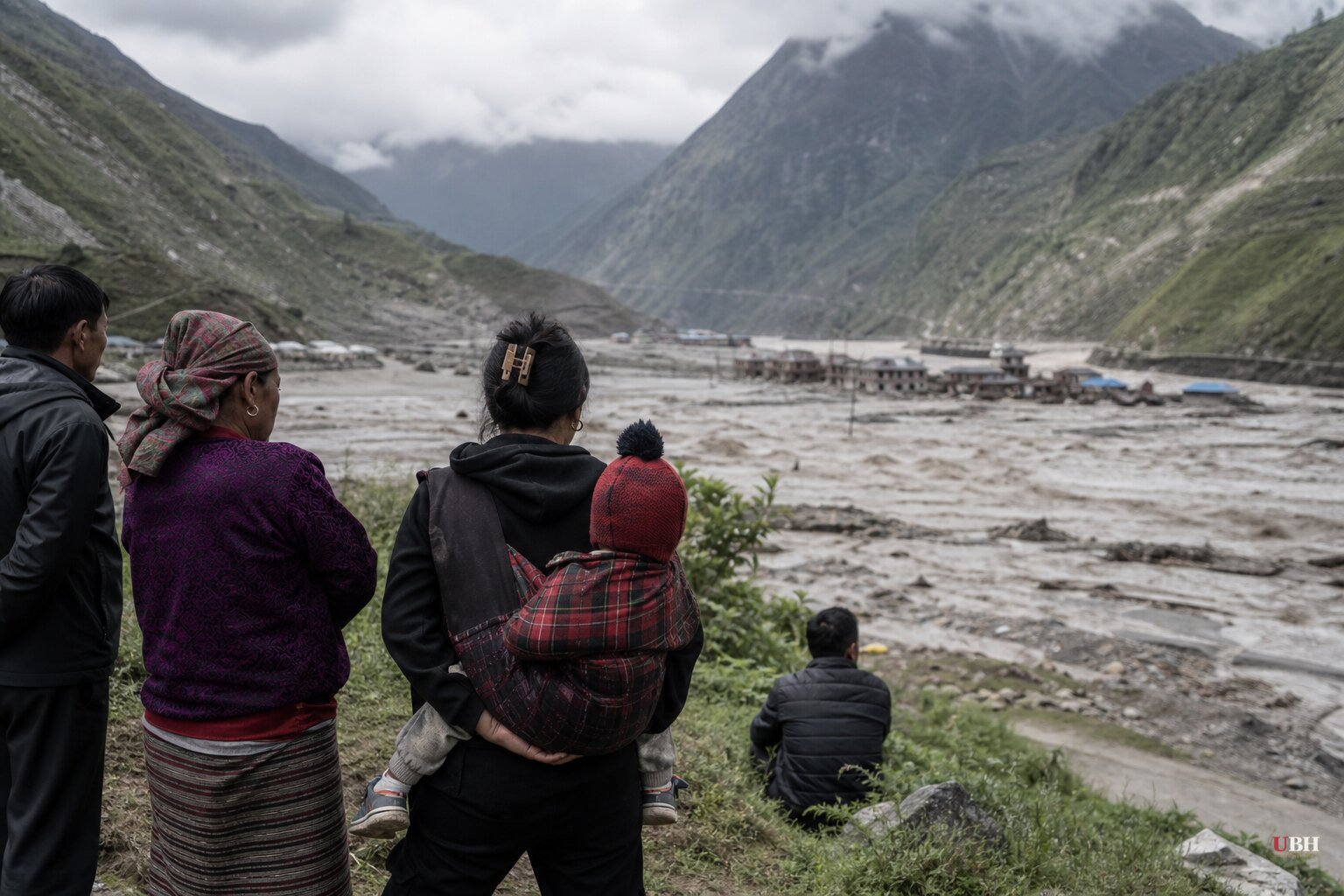
Since the flash flood first slammed into the Nepal-Tibet border on Wednesday morning, the confirmed death toll has climbed to at least 358 in Nepal, with more than 1,300 people still missing, according to ABC News. In Tibet, Chinese state media outlet Xinhua reported three confirmed deaths and 558 people missing as of Thursday.
The numbers have moved fast and often. The Nepal National Disaster Risk Reduction and Management Authority told ABC News that as of Thursday morning, 826 people remained out of contact, including 579 tourists, 476 of them foreign nationals. NPR reported similar figures Thursday, putting total missing across both countries above 1,500.
What actually caused it
The scientific picture has firmed up considerably. Nepal's disaster agency initially pointed to a magnitude 4.4 earthquake as the trigger. The U.S. Geological Survey has since corrected that determination: the seismic signal was a magnitude 5.2 event caused by a glacial collapse and debris flow, not an earthquake that caused the flood.
Dr. Simon Cook, a glacier expert at the University of Dundee, told the BBC his team identified the collapse in the lower portion of a glacier near Langtang Lirung peak, roughly 15 kilometers west of the flood zone. Dan Shugar, a scientist at the University of Calgary, told Reuters that satellite imagery from Planet Labs showed the lower section of the glacier breaking off at approximately 5,200 meters elevation and plunging about 1,200 meters onto the valley floor below.
That mass of ice and rock entered the Lhende Khola, a tributary of the Bhote Koshi River, according to an analysis from the International Centre for Integrated Mountain Development (ICIMOD), a Kathmandu-based intergovernmental research group. The resulting surge sent river levels up by seven to nine meters in just 30 minutes, ICIMOD found, washing away or damaging multiple water monitoring stations in the process.
Scientists have not settled on exactly why the water surge was so massive. Mike Searle, an earth sciences professor at Oxford, told the BBC the debris wave suggests the falling ice may have temporarily dammed the river before bursting through all at once. Adrian McCallum, a glaciologist at the University of the Sunshine Coast, told AFP that no known glacial lake existed at the collapse site, ruling out a straightforward glacial lake outburst flood. He suggested water trapped beneath the glacier may have been released when the ice gave way. Simon Cox, a scientist at New Zealand's GNS Science, told AFP that summer glacier melt and monsoon rains had likely already elevated river levels before the collapse hit.
The Americans, Britons and pilgrims still missing
The Nepal Tourism Board says 63 Americans remain missing, with two rescued as of Thursday, according to ABC News. That's up from the 47 to 65 figures floating around in Wednesday's early reporting. The State Department said Wednesday it would provide $500,000 in aid, per NPR.
The Guardian reported at least 33 British nationals are unaccounted for. Tour operators Kailash Journeys, the Trekkers' Society and Alpine Eco Trek told the outlet they've lost contact with dozens of clients, including a 13-year-old girl and travelers in their 60s, many of whom were en route to Mount Kailash, a site sacred to Hindus and Buddhists. UK Deputy Prime Minister Andy Burnham pledged an initial £5 million in support and offered to send emergency responders, calling it "a devastating picture."
Many of the missing were Hindu pilgrims traveling to Kailash Mansarovar in Tibet. ABC News reported that 476 of the missing foreign nationals were tourists caught on both sides of the border.
Was this climate change?
Every scientist quoted across these reports was careful not to draw a straight line from this specific event to global warming. Saswat Sanyal, a disaster risk reduction specialist at ICIMOD, told The Independent: "We have to be cautious and not draw a connection yet. However, rising temperatures are changing the Hindu Kush Himalaya region and melting glaciers."
No source in this record claims this exact collapse was caused by climate change. But multiple scientists, across BBC, The Independent and Euronews reporting, agree the Himalayas are warming faster than most of the planet, and that faster warming raises the statistical odds of these events happening more often. Believing both things at once, that no single disaster is proof of climate change and that a warming trend raises baseline risk, is not a contradiction.
What's next
World Vision estimates more than 30,000 households will be affected, aid worker Dhruba Gurmachhan told NPR. Bishal Nath Upreti, president of the Nepal Centre for Disaster Management, called it one of the largest disasters Nepal has faced since the 2015 earthquake that killed nearly 9,000 people.
Rescue crews are still working by helicopter because roads and bridges across a 40 to 50 kilometer stretch have been wiped out, according to Riaz Lodhi, the World Food Programme's Nepal country director. With the death toll rising daily and more than 1,300 people still unaccounted for in Nepal alone, the question now isn't what caused this. It's how many of the missing are still alive to be found.
Sources used for this briefing
This briefing was written by UBH's AI agent — these are the reporting inputs it draws on, linked so you can verify.


