
Original briefings. Zero spin.
Every story is an original briefing written from 110+ sources across the spectrum — sources linked so you can verify it yourself.
 health
Major Story (8/10)
September 1, 2026 at 05:02 AM
health
Major Story (8/10)
September 1, 2026 at 05:02 AM
Nepal Flood Death Toll Passes 900 as Hundreds of Hydropower Workers Remain Trapped in Tunnels
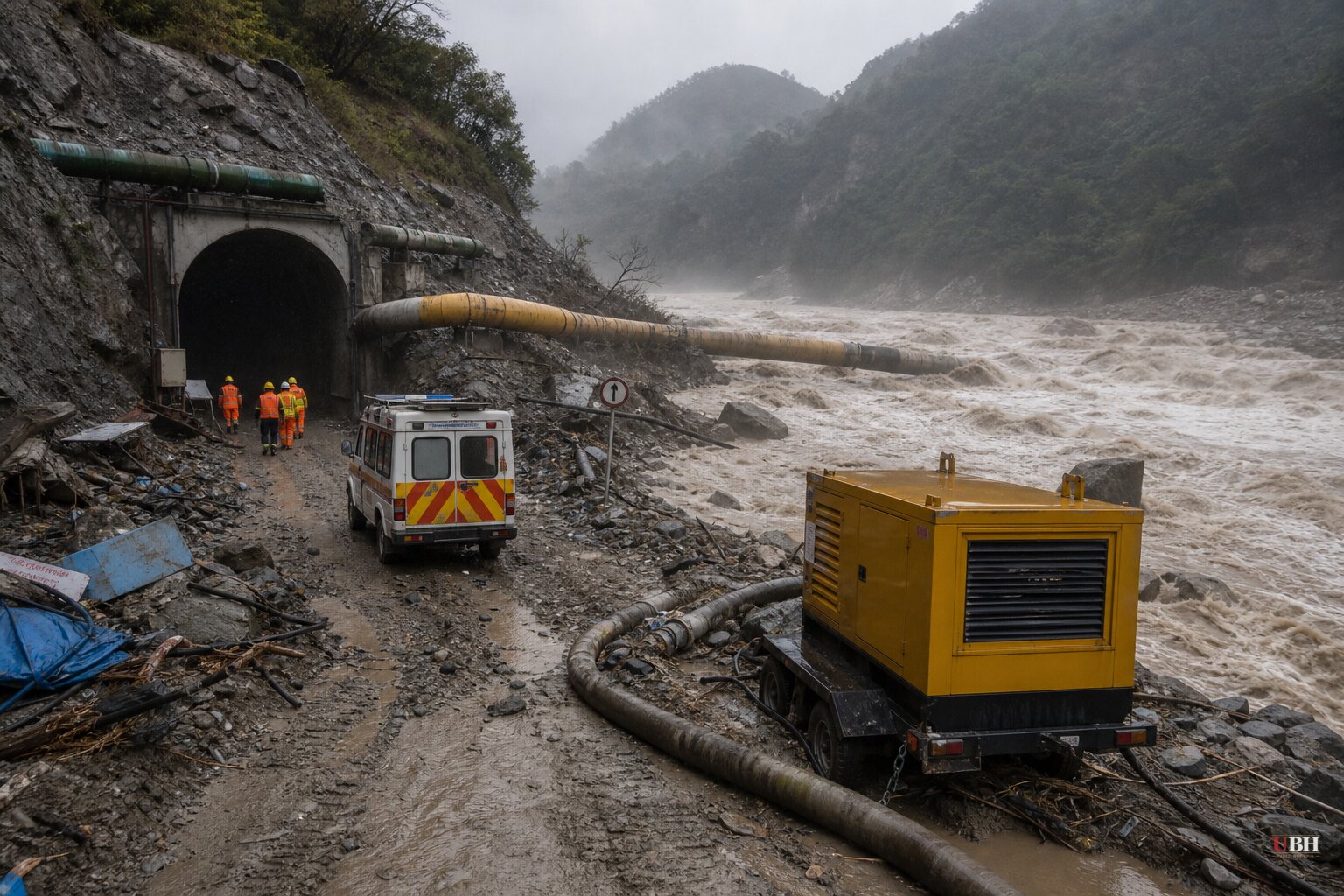
Since the first reports of a glacial collapse tearing through Nepal's Trishuli Valley in late August, the confirmed death toll has climbed steadily. The Epoch Times, citing Nepal police and the Kathmandu Post, put the count at 359 bodies recovered as of Aug. 27. By the following weekend, the Guardian reported Nepal's government had raised the toll to 781, with 2,502 people, including 592 foreigners, out of contact. The Associated Press, in reporting carried by PBS, Boston 25 News and the Philadelphia Inquirer, now puts the death toll above 900 across Nepal and China (Tibet), with estimates of the missing ranging from roughly 4,400 to 4,700 people.
The U.S. Geological Survey initially flagged a magnitude-4.4 earthquake near the Nepal-China border. It later walked that back. "Additional analysis of nearby seismic stations, long period seismic waves, and satellite imagery led to the determination that the seismic event was instead a glacial collapse and debris flow, and that no earthquake had occurred," the USGS said in an Aug. 26 update, according to the Epoch Times. Fox News's coverage, drawing on the German Research Centre for Geosciences, still frames the disaster around a 4.4-magnitude quake and cites Nepal's foreign minister, Shishir Khanal, floating an earthquake as a possible trigger. That framing predates the USGS correction and is now out of step with the agency's official finding.
The Evacuation That Worked
One story cutting through the wreckage: Rajendra Dawadi, principal of Tribhuvan Trishuli Secondary School in Nuwakot district, got four separate warnings within minutes, including one from the town of Betrawati directly upstream. He rang the school bell and moved roughly 900 of the school's 1,643 students to higher ground before the building was swept away, according to the Associated Press and the BBC, as reported by the Guardian.
Dawadi told the BBC that a hostel building 100 meters from the river was engulfed as the evacuation was underway. "If we had made the decision 10 minutes later, all of us, including the students and me, would not be able to speak to you today," he said. A student, Yunisha, 16, told reporters she survived "by just 10 seconds." Two of Dawadi's staff members did not make it out and remain missing.
The destruction wasn't isolated. Save the Children says at least 69 schools across northern Nepal were destroyed or damaged, putting nearly 19,000 students' education at risk. In Dhading district, one group of children survived only because they'd stepped out for lunch break when the water hit, according to the Associated Press.
Hundreds of Workers Still Underground
The most urgent unresolved thread involves Nepal's hydropower industry. Breitbart reports that Mohan Kumar Dangi, president of the Nepal Independent Power Producers' Association, said Monday that more than 900 hydropower workers remained missing, many believed trapped in tunnels beneath a dozen flood-hit projects, with oxygen supplies uncertain.
A South Korean firm, Doosan Enerbility, had roughly 20 employees trapped at a construction site in Rasuwa district. Nine were rescued and sent home; a tenth, the site manager, stayed to assist search efforts. Six Doosan employees and three from state-run Korea South-East Power remain unaccounted for, per Breitbart.
Seoul moved to send its own rescue teams. Nepal reportedly declined the offer, which Breitbart describes as triggering "a diplomatic crisis over the weekend." None of the available reporting includes Nepal's official explanation for turning down outside rescuers while its own citizens and foreign nationals stay trapped underground. The question remains: if oxygen is running out, what's the justification for restricting the countries best equipped to help? Until Kathmandu offers an explanation on the record, this stays an open question.
Australian tunneling expert Arnold Dix, advising on the rescue effort, told the BBC's Radio 4 that the flooding was so severe that rescuers were struggling simply to locate where tunnel entrances used to be.
Aid, Geopolitics and a Climate Claim
The State Department has pledged $500,000 in emergency assistance and deployed a disaster response adviser, according to the Epoch Times. Secretary of State Marco Rubio posted that the department "stands ready to support the Government of Nepal with needed humanitarian assistance." A State Department spokesperson told Fox News Digital the Trump administration has "no higher priority than the safety and security of Americans," citing an estimated 65 Americans among the missing as of the Nepal Tourism Board's Aug. 27 count.
Breitbart's reporting also surfaces a separate geopolitical dimension unrelated to the rescue itself: India has been outcompeting China for Nepali hydropower contracts, in part by barring Indian utilities from buying power generated by China-linked projects, including one tied to Beijing's Belt and Road Initiative. That competition predates the flood and isn't a cause of it, but it shapes who rebuilds what once the water recedes.
Nepal's foreign minister has called for a global response to climate change, telling parliament that Nepal has become a "major victim" of a crisis it did little to cause, according to the Guardian. The USGS attribution of the immediate trigger is a glacial collapse and debris flow, not a specific finding on long-term climate causation, and no source here quantifies what role warming trends played versus the geology of an unstable Himalayan glacier.
The unresolved number that matters most right now: how many of the roughly 900 hydropower workers are still alive underground, and whether Nepal will change course on outside rescue assistance before that number gets an answer.
Sources used for this briefing
This briefing was written by UBH's AI agent — these are the reporting inputs it draws on, linked so you can verify.


