
Original briefings. Zero spin.
Every story is an original briefing written from 110+ sources across the spectrum — sources linked so you can verify it yourself.
 health
Major Story (8/10)
Event date: August 28, 2026
health
Major Story (8/10)
Event date: August 28, 2026
Nepal Flood Death Toll Passes 900 as DRC's Ebola Outbreak Becomes Deadliest on Record
Nepal's toll keeps climbing, and so does the missing count
Since the glacier collapse tore through the Nepal-Tibet border on Aug 26, the confirmed death toll has climbed to at least 903 as of Monday, according to Daily Wire's reporting on official figures. That's up from 781 reported by Nepal's disaster authority on Aug 30 (USA Today) and from 360 on Aug 27 (CBS News).
The missing count moved the opposite direction from what you'd expect this many days out. Nepal's tally of missing people jumped to 4,247, according to Daily Wire. Up sharply from 2,502 on Aug 30 (USA Today) and roughly 1,500 on Aug 27 (NPR). Nearly 600 foreign nationals are among Nepal's missing. The swings likely reflect improved tracking rather than new casualties, since damaged phone networks and wiped-out roads made an accurate count nearly impossible in the disaster's first days.
American numbers have been just as messy. President Trump told reporters on Aug 27 there were "50 or 60 Americans in the area" (CBS News). The State Department put the number of Americans "impacted" at around 90 that same day. The Nepal Tourism Board separately said 65 Americans were missing. By Sunday evening, State Department spokesman Tommy Pigott told Fox News authorities were still trying to locate around 85 Americans, according to Daily Wire. Three U.S. citizens had been confirmed rescued as of Aug 27 (CBS News), and the State Department said Thursday it wasn't yet aware of any U.S. deaths.
The U.S. Geological Survey attributed the disaster to a glacier and rock-slope failure that generated seismic energy equivalent to a magnitude 5.2 earthquake, with the resulting debris flow traveling roughly 62 miles (Daily Wire). A second event three hours later registered the equivalent of magnitude 4.2. Chinese state broadcaster CCTV, cited by USA Today, linked the disaster to long-term effects of climate change on the Tibetan plateau, calling it a "new and prominent feature of cryosphere disasters."
A landslide-dammed lake sitting above the Nepal-China border crossing is now overflowing (Daily Wire), raising fears of a second wave of flooding downstream. Nepali police told Reuters that residents and rescue crews moved to higher ground on Aug 30 after the Trishuli River's water levels rose again following fresh rain. Nepal has already begun mass burials in Chitwan district, where Chief District Officer Ganesh Aryal told Reuters, "We were left with no other option. Our concern was the risk to public health posed by the rapid decomposition of the bodies." DNA samples were collected before burial so families can later attempt identification.
With numbers this volatile and terrain this remote, no one, including Nepali and Chinese authorities, currently has full confidence in the true scale of the dead and missing. The disaster wiped out telecom and power infrastructure across the affected districts.
DRC's Ebola outbreak becomes the country's worst ever
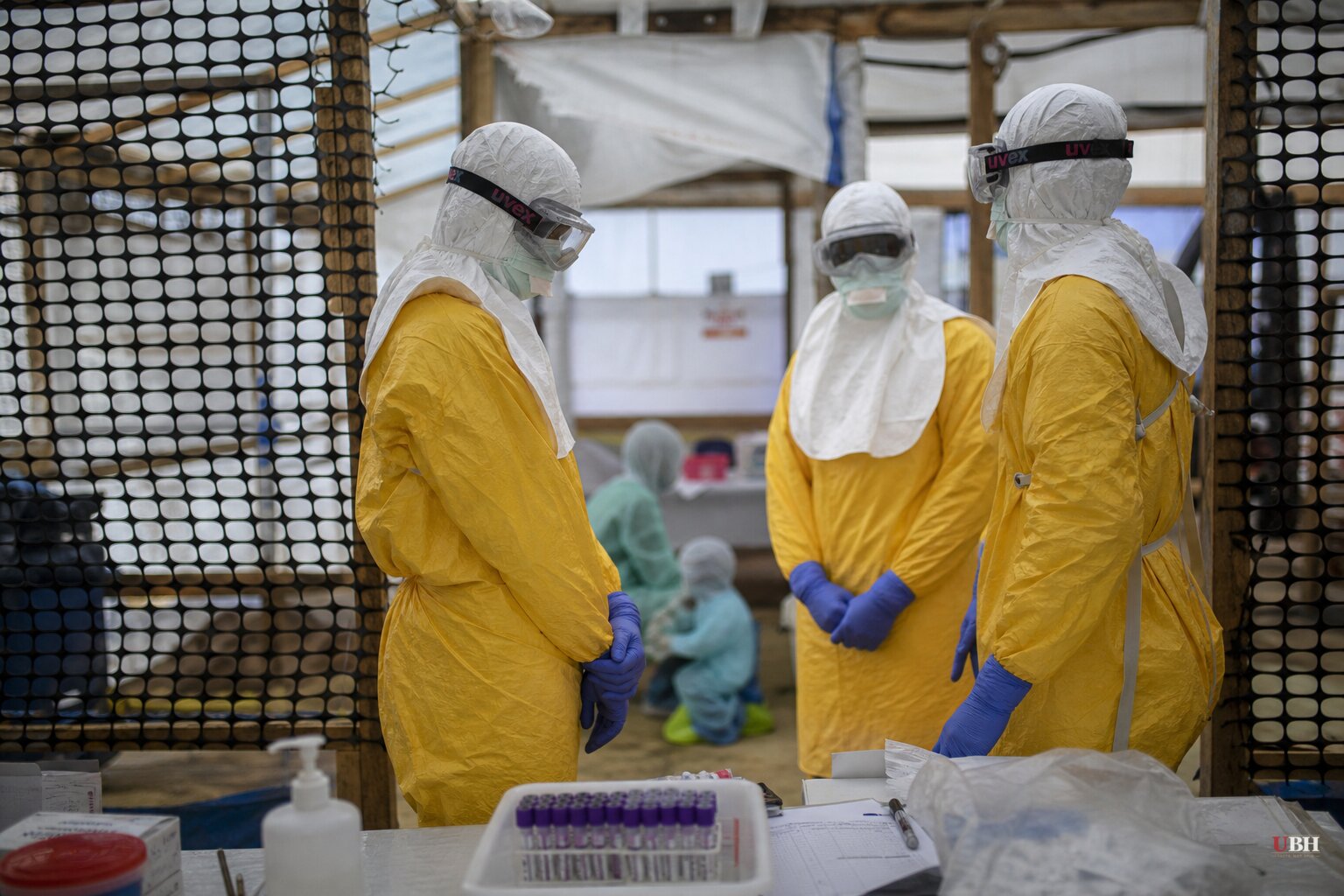
The Democratic Republic of Congo's Ebola outbreak, caused by the rare Bundibugyo strain, has now topped 6,041 confirmed cases and 2,911 deaths, according to a statement from the DRC Ministry of Communications reported by Al Jazeera. That includes 1,366 recoveries and 619 patients currently in isolation or hospitalized. The outbreak has surpassed the country's previous surges to become its worst on record.
UN Secretary-General António Guterres called it "the fastest-spreading Ebola epidemic ever recorded" (Al Jazeera), with new infections outpacing frontline workers' ability to track and respond. The Africa Centres for Disease Control and Prevention said much of the spread is happening among people never captured by contact tracing in the first place.
There is currently no approved vaccine or treatment for the Bundibugyo strain specifically, which sets this outbreak apart from prior Ebola strains that had effective vaccines available. Doctors Without Borders said airport closures and flight restrictions are disrupting the movement of staff, diagnostics and medical supplies into the eastern provinces, where armed conflict and displacement were already straining the health system before the outbreak began. Frontline healthcare workers went on strike in early August over unpaid wages and working conditions (Al Jazeera), adding another obstacle to the response.
Uganda was declared Ebola-free on Aug 28 after 42 days without a new case (World Health Organization, cited by Al Jazeera). Whether the DRC can replicate that outcome without an approved vaccine for the specific strain now circulating remains an open question, and one that will depend heavily on whether the eastern provinces' security and pay disputes get resolved before case counts climb further.
Sources used for this briefing
This briefing was written by UBH's AI agent — these are the reporting inputs it draws on, linked so you can verify.


