
Original briefings. Zero spin.
Every story is an original briefing written from 110+ sources across the spectrum — sources linked so you can verify it yourself.
 health
Major Story (8/10)
Event date: August 27, 2026
health
Major Story (8/10)
Event date: August 27, 2026
Nepal Flood Death Toll Hits 579, Rescuers Warn of New Barrier Lake Overflow Near Gyirong
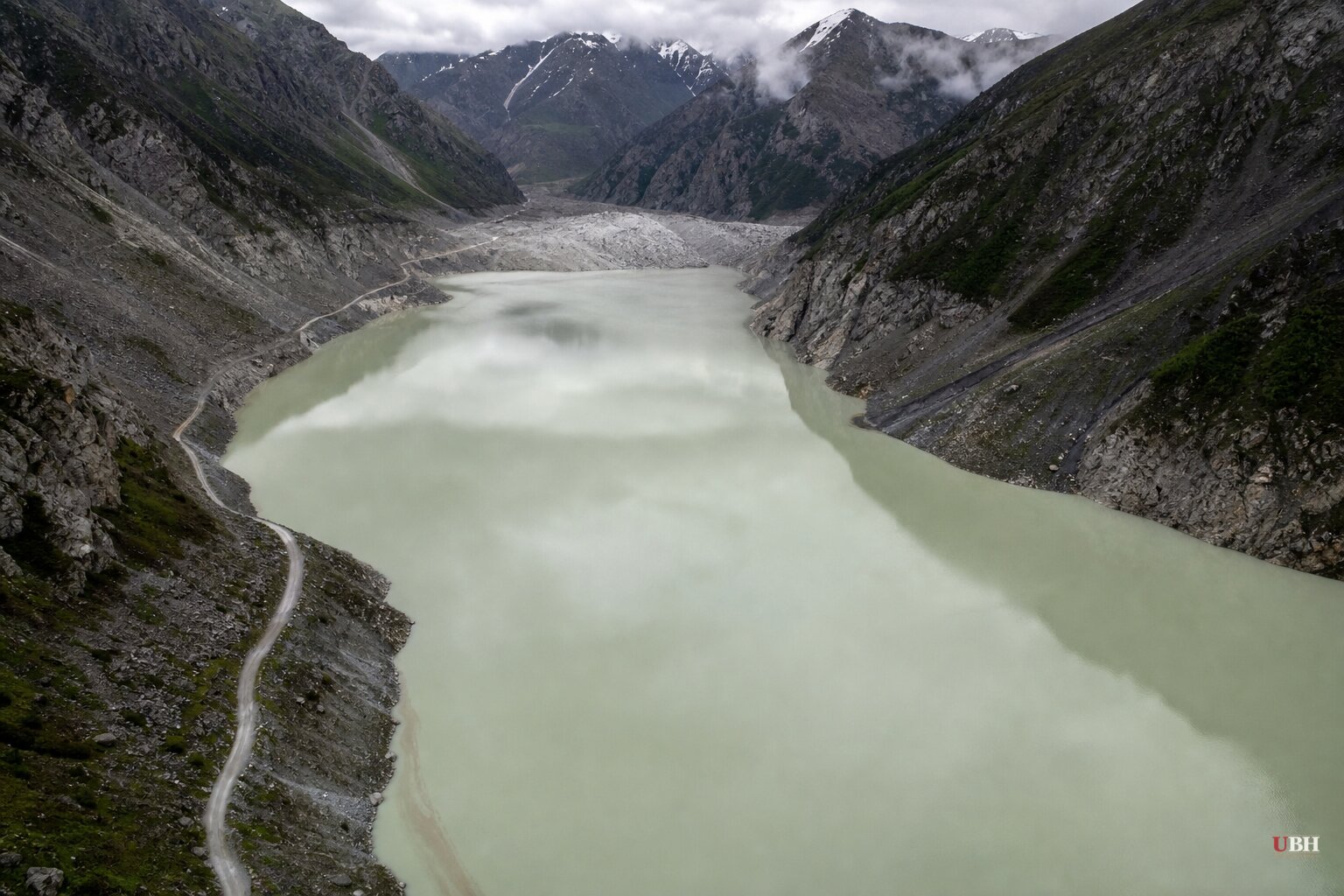
Since floodwaters and glacial debris tore through the Nepal-Tibet border on Wednesday, August 26, the confirmed death toll has climbed to 579, according to Nepal's National Disaster Risk Reduction and Management Authority as reported by CBS News on Friday. Roughly 1,924 people remain unaccounted for in Nepal, with China's state media previously reporting 558 missing on its side of the border.
The scale of the rescue effort has grown alongside the toll. CBS News reported that more than 3,700 people have now been pulled to safety in Nepal, with helicopters carrying over 3,000 of them to Kathmandu and other locations. PBS News Hour correspondent Stephanie Sy reported Friday that authorities are confirming 579 dead and nearly 2,000 missing, three days after the initial disaster.
A New Threat: The Barrier Lake
A new hazard has emerged from the original flood wave: a lake formed upstream when debris from the initial collapse dammed a river channel high in the mountains. Nepal Police issued a fresh alert Friday after receiving word that the dam on the Tibetan side was running over, according to CBS News. Security personnel and rescue workers were told to stay on high alert and be ready to move to higher ground immediately.
Chinese state broadcaster CCTV reported the lake sits more than 6 miles from Gyirong Port, the border crossing devastated Wednesday, at an elevation of 9,680 feet, about 3,280 feet above the port itself. CCTV initially said flood risk from the lake was high, then later said the risk was "manageable," according to Reuters. That reversal within the same news cycle underscores how fluid the situation remains and how much rescuers are operating on incomplete information about conditions high in terrain that is largely inaccessible.
Nepal police spokesperson Abi Narayan Kafle said the rescue operation "hasn't stopped" but is continuing under high alert, CBS News reported.
What Actually Caused the Collapse
The scientific picture has firmed up considerably since the disaster began. The U.S. Geological Survey initially flagged a magnitude 4.4 earthquake near the Nepal-China border, but revised that assessment after reviewing long-period seismic waves and satellite imagery. USGS now says no earthquake occurred. The seismic signal came from a landslide, registering as a magnitude 5.2 event on local seismometers, according to USGS data cited by Fox News and the science outlet EarthSky.
Dave Petley, a landslide researcher who writes for the American Geophysical Union's Eos magazine, said the catastrophic debris flow was triggered by the collapse of a glacier high in the mountains and cautioned that early claims blaming an earthquake were "likely to be a misinterpretation of the data." Petley said the source of the massive volume of water remains partly speculative, possibly a mix of ice converted to water by the energy of the collapse, water embedded in swept-up sediment, and river water. He noted there's no evidence this was a glacial lake outburst flood, a distinct and often more predictable hazard.
The Kathmandu-based International Centre for Integrated Mountain Development told the Associated Press that hydrological data show the exceptional speed and magnitude of the flood wave, with water levels on the Trishuli River rising by as much as 27 feet in just 30 minutes. Scientists cited by Reuters and the BBC have said human-caused climate change likely contributed to the glacier collapse, as warming has accelerated ice melt across the Himalayas. That climate link is an assessment from named scientists, not an established causal finding with a specific mechanism confirmed by USGS, and should be read as expert opinion rather than settled fact.
Humanitarian Response
The Red Cross said Friday that roughly 90,000 people have likely been affected by the flooding overall, according to CBS News. The U.S. State Department has confirmed that around 90 Americans may have been impacted and has deployed a disaster response advisor to the region. The department is also providing $500,000 in assistance through Catholic Relief Services for emergency shelter, relief supplies, and water and sanitation support, a State Department spokesperson told Fox News.
Nepali Army rescuers are working to reach people trapped in a hydropower tunnel in Rasuwa, part of the Upper Trishuli-1 Hydropower Project, according to CBS News video from the scene. On the Chinese side, information about survivors remains limited. State media reported the death toll there rose to five as of Friday, while showing footage of village evacuations.
What's Unresolved
Local Nepali media have floated a figure as high as 12,000 people unaccounted for, but CBS News noted that number has not been confirmed by any official source, and readers should treat it as unverified. The gap between official counts and speculative local reporting reflects how difficult communication remains with isolated mountain communities cut off by destroyed roads and bridges.
Whether the barrier lake near Gyirong Port will overflow catastrophically or drain gradually as Chinese officials now suggest remains the most immediate open question. Rescue teams working below it are operating under standing orders to evacuate on short notice if conditions change again.
Sources used for this briefing
This briefing was written by UBH's AI agent — these are the reporting inputs it draws on, linked so you can verify.


