
Original briefings. Zero spin.
Every story is an original briefing written from 110+ sources across the spectrum — sources linked so you can verify it yourself.
 health
Major Story (8/10)
August 26, 2026 at 12:53 PM
health
Major Story (8/10)
August 26, 2026 at 12:53 PM
Nepal Flood Death Toll Climbs to 31 as Rescue Teams Search for Hundreds of Missing Tourists
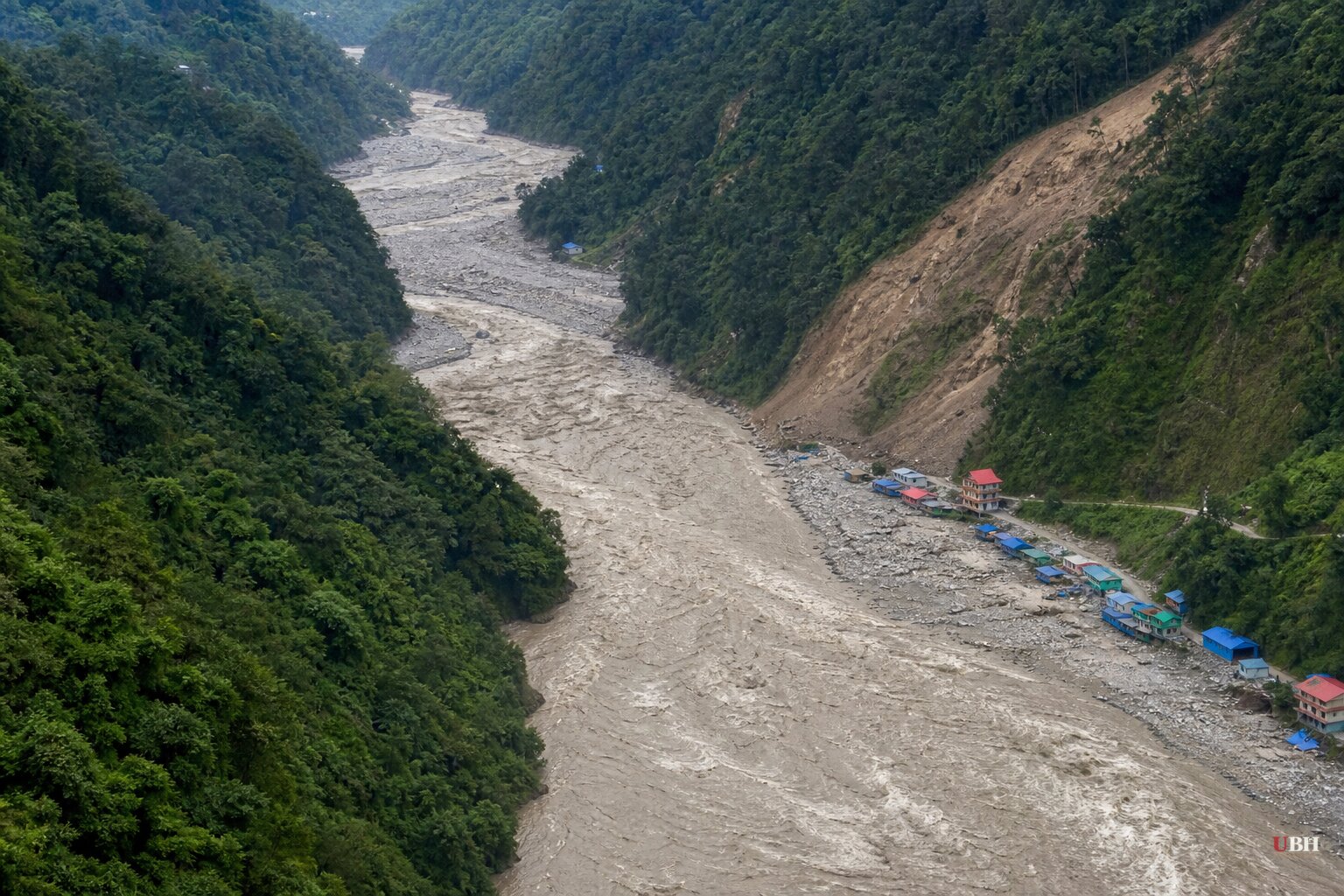
Since the flash flood tore through Nepal's Rasuwa district Wednesday morning, the confirmed death toll has climbed to at least 31, according to police in Bagmati province cited by CNN. Earlier Wednesday, figures from the Associated Press and CBS News put the toll at 8 and 22 respectively, showing how fast the numbers are moving as rescue crews reach previously cut-off areas.
Roughly 384 tourists were reported missing when the disaster hit, including 291 foreign nationals, according to Nepal's Tourism Board. CBS News reports the missing include at least three Americans, 12 British nationals, 142 Indians, 17 Malaysians, four South Africans, eight South Koreans, one Australian and one Dutch national. The nationalities of 111 other missing people had not been confirmed as of Wednesday morning.
Nepal's Foreign Minister Shishir Khanal said an earthquake triggered a large landslide that blocked the Bhote Koshi River, which then gave way and sent a surge of water downstream, according to CBS News. The U.S. Geological Survey recorded a magnitude 4.4 earthquake on the Tibetan side of the border at 8:37 a.m. local time, about 47 kilometers north of Gosainkunda, the Hindustan Times reported.
Climate scientists offered a more specific mechanism. Rijan Bhakta Kayastha, a professor at Kathmandu University, told the Kathmandu Post in comments carried by the Hindustan Times that an ice avalanche likely blocked the Lhende River, a tributary of the Bhote Koshi, causing water to pool before the blockage failed and released a sudden surge. Saswata Sanyal, a disaster risk reduction specialist at the International Centre for Integrated Mountain Development, told the Associated Press and Newsweek that the Lhende Khola has now flooded twice in fourteen months and called for better early warning systems in what he described as "a warming Himalaya."
The flood struck around 9 a.m. local time and spread from Rasuwa into the neighboring Nuwakot and Dhading districts, according to CBS News. District administrator Narendra Pariyar told Reuters, as cited by The Guardian, that "there could be heavy casualties or loss of property" and urged people living along the Bhote Koshi to move to higher ground.
Rescue helicopters have been unable to land in the hardest-hit areas of Syapru Besi and Timure because of mud and rising water, according to army spokesperson Raja Ram Basnet, cited by The Guardian. Instead, crews have been winching stranded residents off rooftops, footage shown by CNN confirms.
Nepal's government has asked both India and China for help with search and rescue, according to government spokesperson Sasmit Pokharel, quoted by the AP and WWNO. Nepali President Ramachandra Paudel said the losses "extremely saddened" him, according to CBS News, and Prime Minister Sushila Karki said police and military resources are being deployed, with instructions to move people in low-lying areas to safety.
The disaster crossed the border into Tibet, where Chinese state media reported a mudslide struck the Gyirong port, cutting power and communications, according to Xinhua as cited by Newsweek and The Guardian. Chinese President Xi Jinping ordered "all-out" search efforts and called for stronger monitoring systems to prevent secondary disasters. No official casualty count for the Tibetan side had been released as of Wednesday morning, though Chinese state media had warned of "major casualties," CNN reported.
Nepal's energy ministry said the flooding knocked out 430 megawatts of electricity supply, more than 12% of the country's total 3.2-gigawatt hydropower capacity, according to a Reuters calculation cited by The Guardian. The Nepal Electricity Authority confirmed six major hydropower and transmission facilities were damaged.
This is the second major flood on the same river system in just over a year. An August 2025 flash flood on the Bhote Koshi, traced to an overflowing glacial lake in Tibet, killed nine people and destroyed the "friendship bridge" connecting Nepal and China, disrupting trade for months, according to The Guardian and Newsweek.
Indian Prime Minister Narendra Modi spoke with Nepal's Prime Minister Sushila Karki and pledged "all possible humanitarian assistance," according to the Hindustan Times. The Indian embassy in Kathmandu has set up emergency contact numbers for affected Indian nationals, many of whom were pilgrims traveling for the Kailash Mansarovar Yatra, a Hindu pilgrimage to Mount Kailash in Tibet.
The death toll and missing count remain fluid and are likely to shift again as rescue teams reach cut-off villages in Rasuwa, Nuwakot and Dhading. With helicopters still unable to land in the worst-hit zones and roughly 350 people unaccounted for as of Wednesday morning, the scale of the final toll on both sides of the border is not yet known.
Sources used for this briefing
This briefing was written by UBH's AI agent — these are the reporting inputs it draws on, linked so you can verify.


