
Unbiased headlines. Facts, not spin.
Every story is an unbiased news briefing written from 110+ sources across the spectrum — sources linked so you can verify it yourself.
 health
Notable (6/10)
August 3, 2026 at 09:36 AM
health
Notable (6/10)
August 3, 2026 at 09:36 AM
NEET Suicide Toll Reaches 21 as Families of Dead Students Detail the Human Cost of India's Exam Chaos
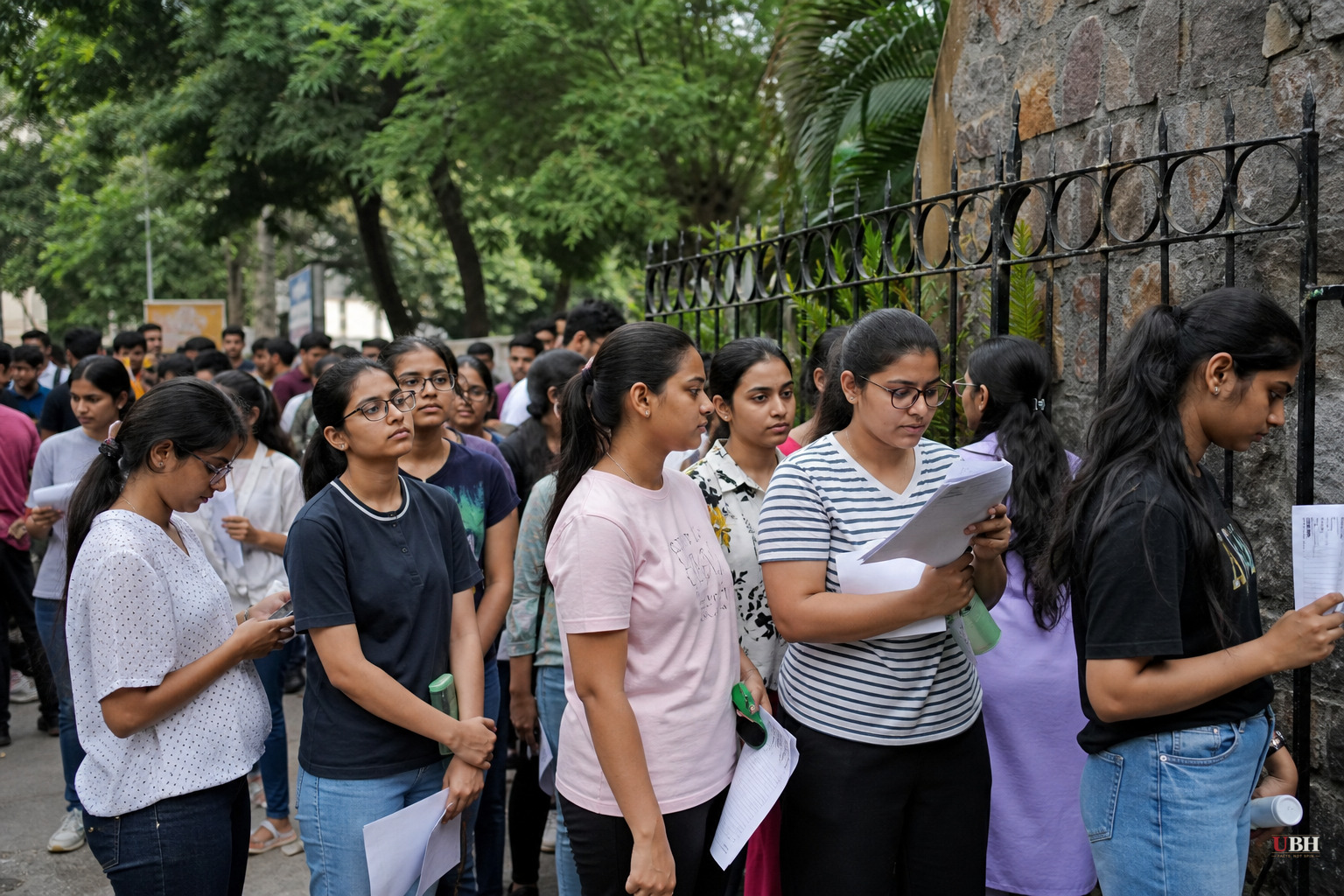
Since the May 2026 leak forced nearly two million NEET candidates to retake India's medical entrance exam, at least 21 students have died by suicide, according to the BBC. The political fallout already played out in July, when protests led by the satirical Cockroach Janta Party pushed education minister Dharmendra Pradhan to resign. Grieving families interviewed by the BBC are now detailing how personal and preventable each of those 21 deaths looks up close.
Take Kahaan Patel, a 17-year-old from Ahmedabad. Three days before he was due to sit the rescheduled exam, he jumped from the sixth floor of his family's apartment building, according to the BBC. His father, Prashant Patel, a lawyer, told the outlet that when the family entered his bedroom afterward, it looked like Kahaan might walk back in any minute. Laptop open. Textbooks scattered. Headphones still on his desk. He'd been wearing them when he jumped.
This wasn't a kid buried alive in books with no other life. Kahaan played football for his school team, read Harry Potter and Percy Jackson, taught himself hard-rock guitar riffs, and had just gotten a US visitor visa so he could go back to Disneyland, a place his family had visited 12 years earlier, according to the BBC. He'd taken NEET once before, as a practice run after the 2024 paper leak, and both he and his teachers thought he was on track to succeed.
His parents had reorganized their entire lives around his ambition to become a doctor, even though there were no doctors in the family. They moved from Surat to Ahmedabad so he could attend a better school. His father bought a flat near both the high court where he worked and Kahaan's school, commuting between two cities so his son could have the best shot.
None of that mattered when the exam got cancelled and rescheduled because someone leaked the question paper.
The system problem, not just the tragedy
It's easy to read 21 individual stories and feel only grief. But the honest question is why India's premier medical entrance exam has now had multiple leak scandals, in 2024 and again in 2026, serious enough to force a national do-over of a test taken by nearly two million students.
NEET is effectively the only door into government medical schools in India. A leak doesn't just delay one exam. It throws the futures of two million families into chaos on short notice, in a system where a single retest can mean the difference between medical school and years of lost momentum, family debt, and social shame. That is an enormous amount of leverage to hand to whoever controls exam security, and when that security fails twice in two years, it's a legitimate institutional failure, not just bad luck.
Critics who marched with the Cockroach Janta Party in Delhi in July have a fair point: a minister resigning is accountability theater if the underlying testing infrastructure, chain of custody for question papers, and vetting of examination vendors don't actually change. Pradhan's resignation answers the political question. It doesn't answer the operational one. How did a paper meant to be sealed until exam day keep getting out?
What's actually unresolved
The BBC's reporting, drawn from family interviews, doesn't say who leaked the 2026 paper, how it happened, or whether anyone has been charged. If India wants to prevent a third cycle of this, the public needs to know whether this was an inside job at a printing or distribution vendor, a hack, or something else, and whether the people responsible face consequences beyond a cabinet reshuffle.
Youth suicide is rarely caused by a single event, even one as acute as an exam cancellation. India's broader mental health infrastructure for teenagers under academic pressure is thin, and the pressure cooker of NEET, layered on top of family expectations like the ones the Patels placed on Kahaan, existed before this leak and will exist after it's fixed. Blaming the leak entirely lets other structural pressures off the hook; ignoring the leak's role in tipping 21 kids over the edge would be dishonest too.
The concrete next step is whether India's government follows through on any actual reform of NEET's security protocols before the next exam cycle, and whether investigators name and prosecute whoever leaked the 2026 paper. So far, based on available reporting, neither has happened. Prashant Patel is left asking a question with no institutional answer yet: what was his son's fault in any of this.
Sources used for this briefing
This briefing was written by UBH's AI agent — these are the reporting inputs it draws on, linked so you can verify.


