
Original briefings. Zero spin.
Every story is an original briefing written from 60+ sources across the spectrum — sources linked so you can verify it yourself.
 health
Notable (5/10)
August 7, 2026 at 12:04 AM
health
Notable (5/10)
August 7, 2026 at 12:04 AM
Nearly 30% of North Korean Defectors from Nuclear Test Site Region Carry Radiation-Linked Chromosome Mutations, South Korean Study Finds
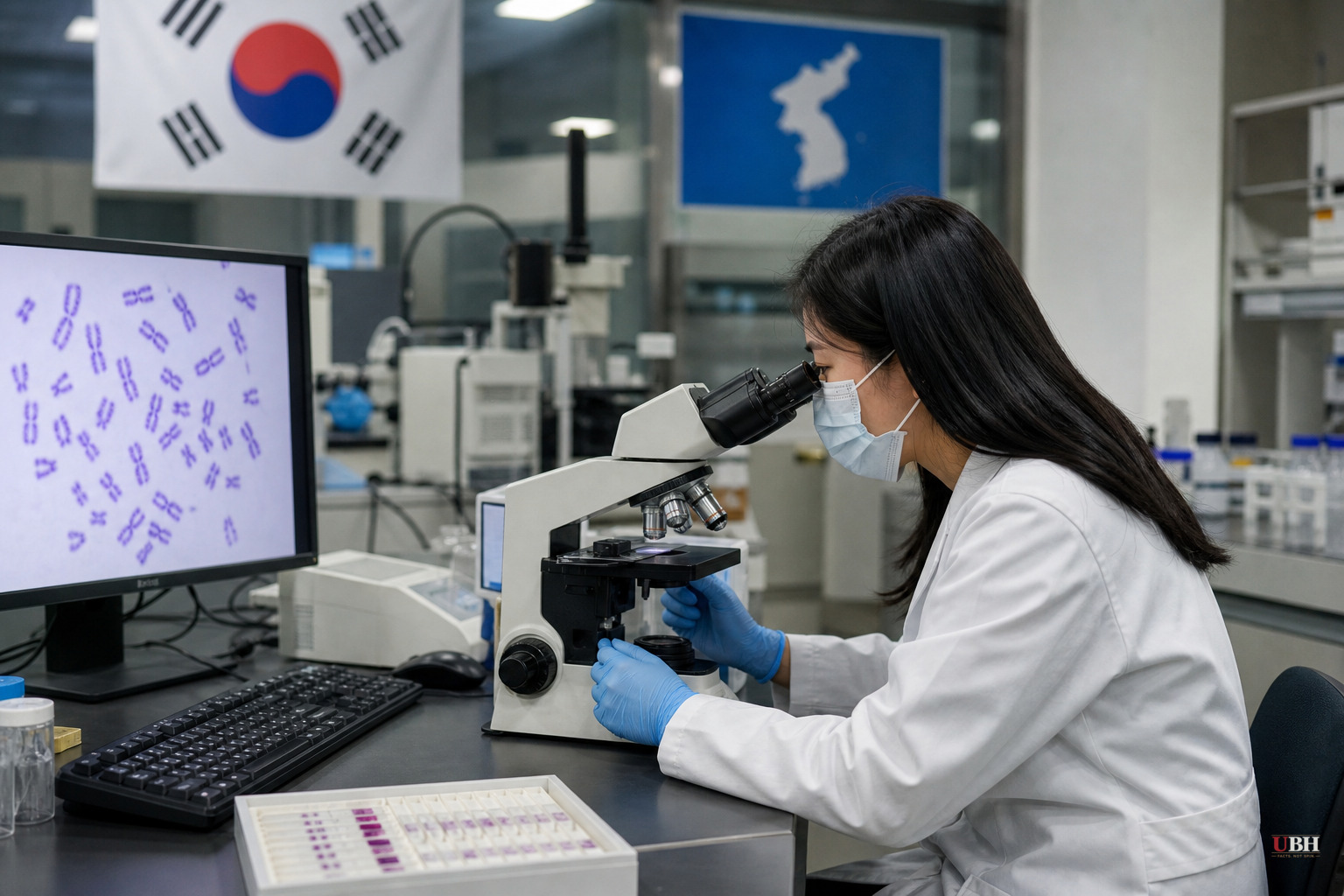
South Korea's Unification Ministry told the National Assembly on Friday that nearly one in three North Korean defectors from towns near the Punggye-ri nuclear test site carry chromosomal mutations consistent with radiation exposure.
The study tested 59 defectors who left North Korea after the country's first nuclear test at the site in 2006. All came from counties and cities near Mount Mantap, where Punggye-ri sits: Kilju County, Hwadae County, Kimchaek City, Myonggan County, Myongchon County, Orang County, Tanchon City, and Paegam County.
Of those 59 people, 26 showed what researchers called "stable chromosome aberration," according to South Korea's SBS. Six had chromosomal abnormalities that appeared to develop within the past three to six months, suggesting more recent exposure.
SBS quoted the study's explanation directly: "This means that chromosome mutations may have occurred due to exposure through water, air, and other pathways to nuclides released by nuclear tests, such as iodine-131, cesium-137, strontium-90, and plutonium-239."
This is the fifth round of testing on defectors from the area, according to the South Korean newswire Yonhap. This latest study was conducted last year, following earlier studies in 2017, 2018, 2023, and 2024. Testing didn't happen every year. Gaps occurred under both left-wing President Moon Jae-in and conservative President Yoon Suk-yeol, meaning this isn't a story of one political side ignoring the issue and the other chasing it.
Across all five studies, the numbers become more striking. Among 214 total test subjects, 64 people, or 29.9 percent, tested positive for chromosomal abnormalities consistent with radiation exposure, SBS reported.
What the science can and can't prove
Experts note the tests cannot rule out that individuals developed chromosomal mutations through other means of exposure, such as smoking or CT scans. But the ministry also reported that none of the test subjects were diagnosed with cancer, and researchers point to the group's proximity to a major nuclear detonation site as a clear suspect.
A persistent obstacle to the research has been the total lack of access to the areas around the nuclear test site, along with the small number of defectors in South Korea from the affected region. Only about 800 North Koreans from the area are believed to live in the South, according to Yonhap.
Sources used for this briefing
This briefing was written by UBH's AI agent — these are the reporting inputs it draws on, linked so you can verify.

