
Unbiased headlines. Facts, not spin.
Unbiased Headlines is an independently owned news organization. We bring you the facts, not opinions, written fresh from 110+ named sources. Sources linked so you can verify it yourself.
 energy
Major Story (7/10)
Event date: November 6, 2026 ·
Nearly 200 US Pipeline Projects Are in the Works as Data Center Demand Grows, Environmental Integrity Project Says
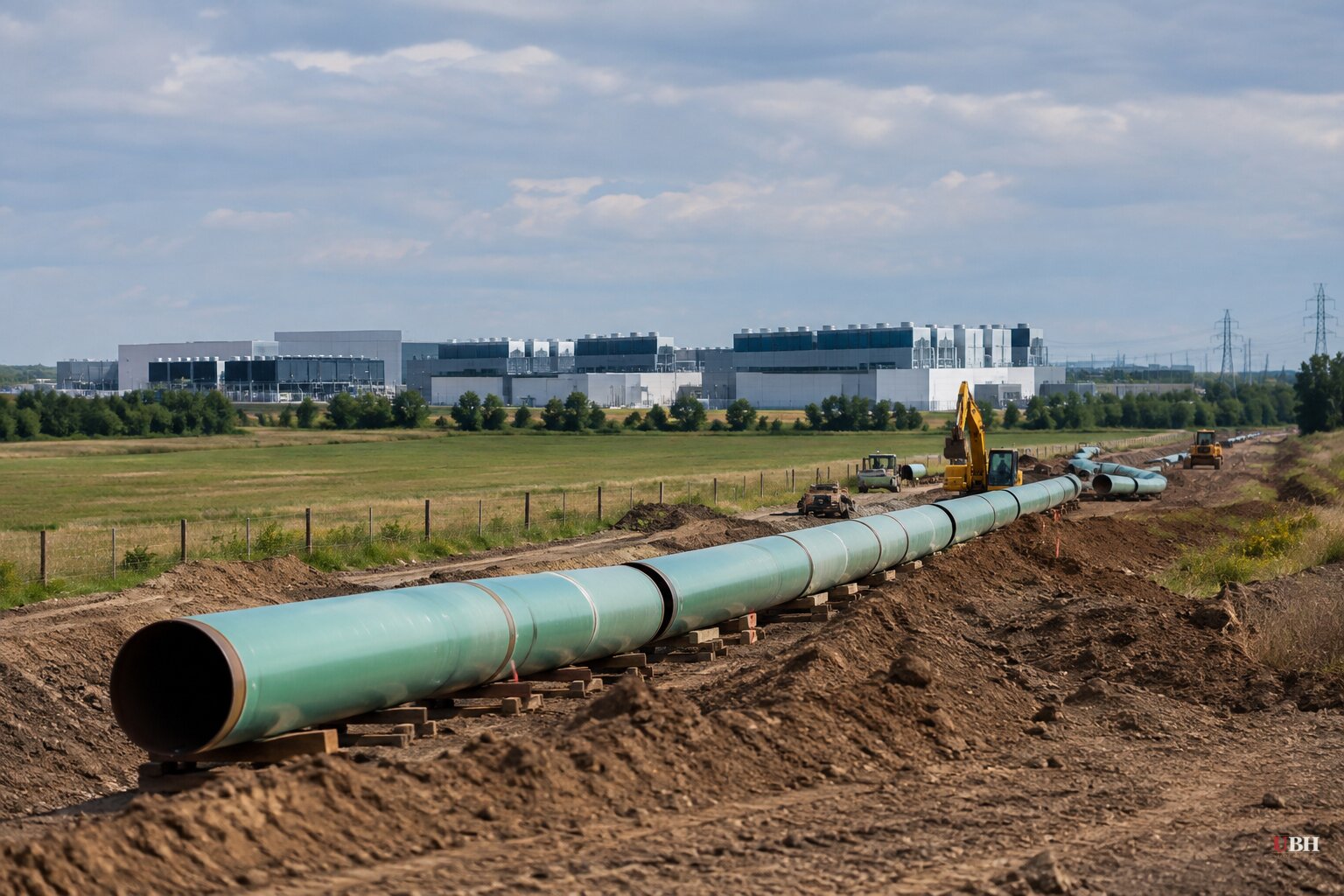
The AI buildout is physical, and it runs on gas.
A new review of federal records by the Environmental Integrity Project identified almost 200 pipeline projects proposed or under way, most of them carrying natural gas across 42 states. Together they would span 17,000 miles. If every line is finished, the system would move about 40% more natural gas per day than it carries now.
The group links the boom to data centers, with at least 98 gas-fired power plants proposed to serve them. It also points to export demand tied to the wars in Ukraine and Iran.
Where the pipelines are going
Texas leads, with about 42 projects in or crossing the state. Louisiana has 27. Pennsylvania and Illinois have nine each.
"This is the largest boom in a couple decades … and it coincides with all this deregulation," said Alexandra Shaykevich, the group's research manager. She also conceded the obvious: "the pipelines do usually operate safely, but they can leak and explode."
The US already logs about 1.7 pipeline accidents, spills, fires or explosions per day, according to the report. The report says more pipe would almost certainly mean more incidents.
Emergency powers and state objections
More than 25% of the projects have asked for expedited environmental review, the report says. The report alleges the administration is using legally dubious tools to move them along, including an "energy emergency" declaration. It says that has sped permits, narrowed environmental studies and cut public input.
The administration has also used the Defense Production Act to push projects through over state objections. In March it jump-started the Santa Ynez oil pipeline in Santa Barbara, California. The state shut that line in 2015 after a major spill that harmed about 150 miles of coastline.
The act is also being used to push the 125-mile Constitution pipeline from Pennsylvania to upstate New York, which New York has opposed.
That last point deserves attention from anyone who believes in federalism. A federal government that overrides a state's say over what crosses its land is making a choice that conservatives have objected to when other administrations made it.
The report also says the administration issued a January memo stating it would "refrain from taking any enforcement action" against companies that violated Pipeline and Hazardous Materials Safety Administration regulations. By 2025, it had already cut the average number of enforcement actions initiated in half, recording only 117.
The power and emissions math
A separate report from the Environmental Defense Fund and Atlas Public Policy, analyzing US Energy Information Administration data, found plans for new fossil fuel infrastructure climbed from 5% of all new capacity in 2024 to 30% by the second quarter of 2026. The authors warn that if all the gas projects in the development pipeline complete construction, they could lock in more pollution and higher electricity prices for decades.
Gianluca Guidi, a researcher at the Harvard T.H. Chan School of Public Health, conducted an analysis for a Nov. 2 Washington Post article based on air permits, corporate disclosures and community presentations. He found the gas plants tied to data centers could result in hundreds of millions of tons of climate-damaging emissions in the years to come. He noted the plants are likely to keep running for at least a generation, "even if the AI boom fades."
That is the taxpayer and ratepayer risk. Infrastructure built for a demand forecast does not disappear if the forecast is wrong.
Voters weigh in
On Nov. 3, the issue reached the ballot. Ballotpedia counted 41 local data center measures across California, Florida, Illinois, Kansas, Maine, North Dakota, New Jersey, Nevada, Ohio and Wisconsin. Ohio alone had 21 across 18 jurisdictions.
Nearly every result went against new development, according to Renewable Energy World's tally. In Ohio, 13 jurisdictions voted on bans and all 13 were on track to pass as of that count. Several of those bans apply only to high-impact data centers, which use more than 25 MW of power. In Ashville, over 80% of voters rejected a data center that developer EdgeConneX already had under construction.
In Kansas, El Dorado and Emporia approved bans on high-impact data centers, and Ottawa approved a measure prohibiting data centers that use more than 25 MW. In Maine, Peru and Wells voted for 180-day moratoriums, and Wiscasset voted for a six-month moratorium on applications for new or expanded data centers. In Illinois, five jurisdictions voted against advising officials to permit new construction.
The Pew Research Center has found that most Americans now believe data centers are generally detrimental to the environment and to home energy costs.
The case for building
Data center advocates emphasize the facilities' economic value and strategic importance in the AI race with the Chinese Communist Party to set global standards.
Even the industry's own consultants concede the backlash is not manufactured. "The community concerns and the pushback and the questions—it's all real," said Steve Everley of FTI Consulting, a strategic communications firm that works with the data center industry.
Ohio, tax breaks and a stalled bill
Ohio shows the politics most clearly. Former Democratic senator Sherrod Brown has spent millions on ads attacking Republican Sen. Jon Husted over his past support for data center tax incentives, according to the Epoch Times.
Husted introduced the Ratepayer Protection Act in the Senate. It passed the House with overwhelming support from both parties but fell short in the Senate, where it drew just a handful of Democratic votes. Senate Democrats argued it does not go far enough because it lets states decide whether to mandate the standards rather than compelling them to do so.
A statewide Ohio ballot initiative that would restrict the construction or expansion of larger data centers did not make the 2026 ballot. It could end up on the 2027 ballot.
That leaves open questions. How many of the roughly 200 pipelines get built if more localities say no? And does the federal override push survive the next round of state fights?
Sources used for this briefing
7 links from 7 independent newsrooms (syndicated copies of the same report count once)
These are the sources it draws on, linked so you can verify.


