
Unbiased headlines. Facts, not spin.
Unbiased Headlines is an independently owned news organization. We bring you the facts, not opinions, written fresh from 110+ named sources. Sources linked so you can verify it yourself.
 energy
Notable (5/10)
Event date: November 7, 2026 ·
Egypt Announces Mediterranean Gas Discovery Estimated at 200 Billion Cubic Feet
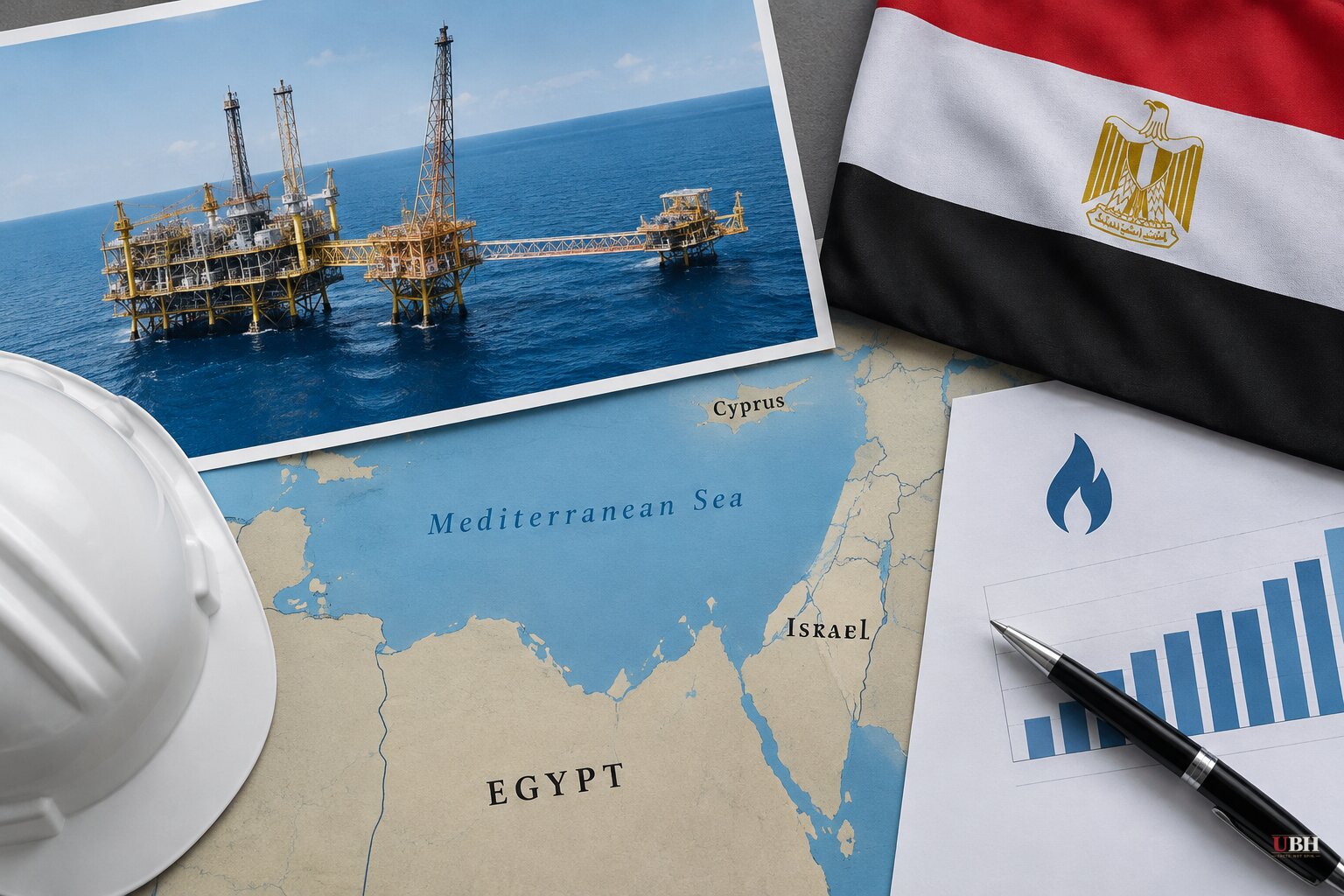
Egypt's Ministry of Petroleum and Mineral Resources announced Friday, Nov. 6, a natural gas discovery in the Mediterranean Sea. Preliminary estimates put the reservoir at about 200 billion cubic feet.
That is also the initial figure, and it is the amount of gas in the reservoir, not the amount that can be produced.
What the well found
The ministry said drilling and evaluation of the Nasseem-1X exploratory well (also transliterated Nessim-1X) hit a gas-bearing layer with a net thickness of about 15 meters (49 feet) in true vertical depth. It described the formation as having favorable petrophysical properties. English-language renderings of the concession name vary between Temsah and Tiba.
Italian energy company Eni operates the concession with Australia's Woodside as partner. Petrobel carried out the drilling for the partners. Xinhua describes Petrobel as the joint venture between Eni and the Egyptian General Petroleum Corporation.
The ministry said technical and reservoir studies are continuing. They are meant to establish recoverable reserves, possible daily production rates and commercial viability. A development and production plan has not yet been finalized.
Pipeline plan
The ministry said it plans to tie the well into existing production facilities through a pipeline of about 22 kilometers (13.7 miles). The line would connect to the Abu Madi-El Gamil pipeline.
Speed is the main advantage. Using infrastructure already in place should cut the time between discovery and first gas. The ministry has not given a date for the start of production.
Why Cairo wants it
Egypt has been trying to lift domestic gas output after a decline in recent years left it more dependent on imports to meet demand from the power and industrial sectors. A find that can be plugged into existing facilities is the kind of discovery that could help that effort.
A 15-meter pay zone and a 200 bcf in-place estimate are promising for an exploration well. They do not settle the question of how much will be sold. The ministry has said further assessments will determine recoverable reserves and the well's expected production capacity before a development and production plan is finalized.
The ministry's explanation
The ministry credited the result to increased exploration activity and an improved investment climate. It specifically pointed to progress in settling overdue payments owed to foreign energy companies.
That is the ministry's own account, and it has an interest in making it. Still, the payment point is concrete. The ministry said clearing outstanding payments is strengthening international companies' confidence and encouraging further investment in exploration for new oil and gas resources.
What comes next
The open number is recoverable reserves. Until the ministry and the Eni-Woodside partnership publish that figure and a development plan, 200 billion cubic feet describes what is in the reservoir, not what Egypt will be able to produce.
Sources used for this briefing
7 links from 7 independent newsrooms (syndicated copies of the same report count once)
These are the sources it draws on, linked so you can verify.


