
Original briefings. Zero spin.
Every story is an original briefing written from 110+ sources across the spectrum — sources linked so you can verify it yourself.
 politics
Notable (6/10)
August 29, 2026 at 11:25 AM
politics
Notable (6/10)
August 29, 2026 at 11:25 AM
National Park Service Report Backs Trump's 250-Foot Arch, Admits It Will Disrupt DC Sightlines
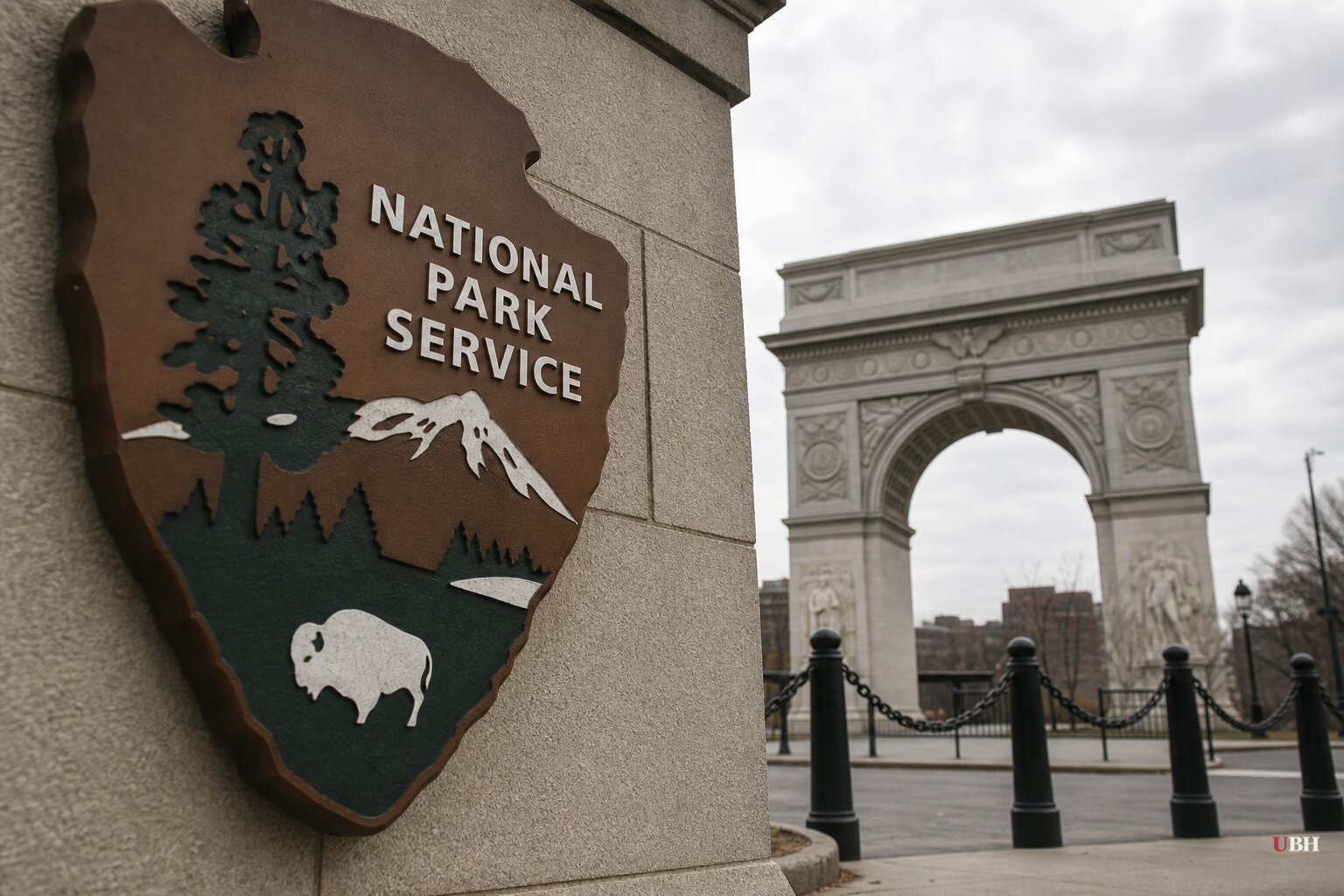
The National Park Service has weighed in on Donald Trump's planned 250-foot triumphal arch, and the agency's own report admits the project will damage the historic character of some of Washington's most sacred ground. It's backing the arch anyway.
Released Friday, the 133-page report was required under the National Historic Preservation Act, which forces federal agencies to study how new construction affects nearby historic sites. The Park Service's answer here is blunt: six of 31 National Historic Landmarks in the surrounding 3.5-mile radius, including the U.S. Capitol and the Pentagon, will suffer "adverse effects," according to Notus. The damage isn't physical. It's visual, spatial, and about nighttime lighting, per the report's own language cited by multiple outlets including The Guardian and the Associated Press.
The single most cited example: the arch would break the sightline connecting the Lincoln Memorial, Memorial Bridge, and Arlington House, the former home of Confederate Gen. Robert E. Lee. That alignment was built to "physically and symbolically unite North and South through a coordinated monumental composition extending across the Potomac River," the report says, as reported by ABC News, PBS, and the AP.
The Agency's Own Logic
The Park Service doesn't dispute the damage. It argues the damage is the price of building anything at all on that spot.
"The same characteristics that make Memorial Circle sensitive from a preservation perspective are also the characteristics that make it the historically appropriate location for the undertaking," the report states, according to the Associated Press coverage carried by PBS, ABC News, and 2news.com.
The agency goes further, ruling out alternative locations entirely. Moving the arch elsewhere or shrinking the "principal commemorative feature" would "fail to meet the undertaking's purpose and need," the report says. Translation: if you want a 250-foot arch commemorating America's 250th birthday, Memorial Circle is where it goes, adverse effects included.
The Guardian's coverage adds a detail the wire-service pickups leave thinner: during design review, the administration considered shorter versions of the arch and rejected them. Smaller heights would have fully blocked the view between the Lincoln Memorial and Arlington National Cemetery instead of framing it, the report argues, and wouldn't have matched the symbolic weight of the 250th anniversary. So a taller arch, in the Park Service's own reasoning, is actually less obstructive than a shorter one.
The Legal Record
The arch would harm historic sightlines and the Park Service is backing it regardless. These facts aren't new; the Fine Arts Commission gave preliminary design approval back in May, and an earlier Park Service report already flagged concerns about "character-defining visual and spatial relationships." What Friday's report adds is the formal, legally required adverse-effects finding under the National Historic Preservation Act, plus a name-by-name list of which landmarks take the hit, and a mitigation framework the agency will lean on to defend the project in court.
Court litigation is the key next stage. Three veterans and an architectural historian sued in February, arguing the arch would obstruct the sightline toward Arlington National Cemetery. The Park Service report, by acknowledging the harm and then justifying it as unavoidable, could work either way in that litigation, depending on whether a judge finds the agency's minimization argument legally sufficient or sees it as an admission dressed up as a defense.
The Park Service also says it collected more than 100,000 public comments during June and July, many raising concerns about sightline obstruction, cost, the rushed timeline, and environmental impact, according to Notus. Those comments are part of the record but don't appear to have changed the agency's conclusion.
The Height Question
The Epoch Times, reporting before Friday's release, focused on a different fight: whether the arch's height violates the Height of Buildings Act of 1910, a century-old law capping building heights in the capital. A source close to the administration told the outlet the Fine Arts Commission's chairman doesn't believe that law applies to the arch, and the White House has no plans to shrink the design despite an earlier commission suggestion to cap the mezzanine at 130 feet. That statutory question is separate from the historic-preservation finding released Friday, and it remains unresolved. The commission is expected to make a final design decision at its September meeting, according to the Epoch Times.
The design itself: modeled on Paris's Arc de Triomphe but 100 feet taller, with "One Nation Under God" and "Liberty and Justice for All" lettered in gold on opposing faces, three interior levels including ticketing, program space, and a 360-degree observation deck at the top.
Whether the report's mitigation-and-minimize framing survives a federal judge is the open question. The veterans' lawsuit is still pending, and Friday's document is now part of the record either side can point to.
Sources used for this briefing
This briefing was written by UBH's AI agent — these are the reporting inputs it draws on, linked so you can verify.


