
Unbiased headlines. Facts, not spin.
Every story is an unbiased news briefing written from 110+ sources across the spectrum — sources linked so you can verify it yourself.
 finance
Notable (6/10)
Event date: August 14, 2026
finance
Notable (6/10)
Event date: August 14, 2026
Nasdaq Plans 23-Hour Trading Day Starting December 6, 2026, Pending SEC Approval
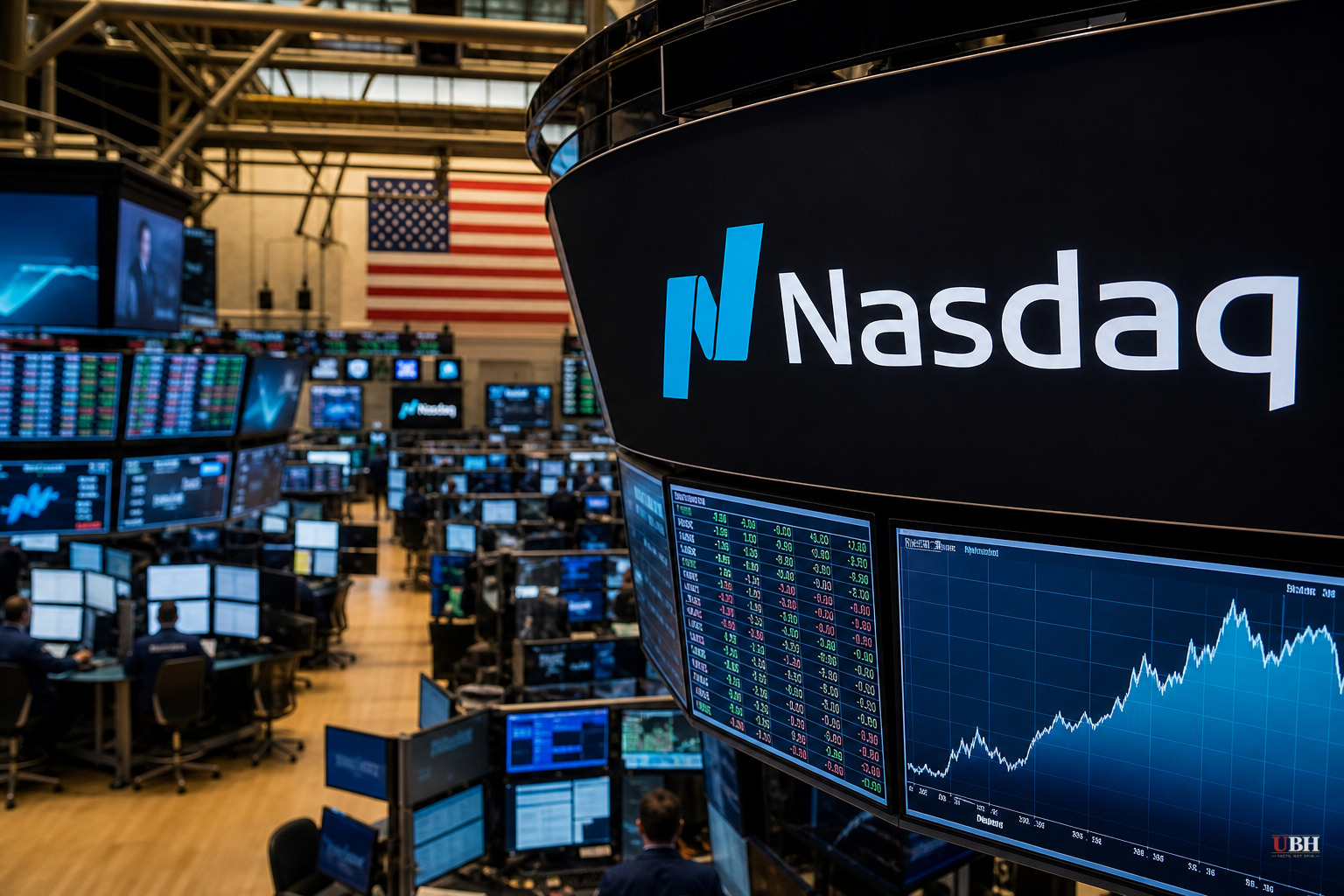
Nasdaq wants to keep the lights on almost all week. The exchange plans to launch a new overnight session running from 9 p.m. to 4 a.m. Eastern Time, stretching its trading day to 23 hours, five days a week, according to Bankrate and the law firm Cooley's governance blog.
The target launch is Sunday, December 6, 2026. That date is not locked in. It depends on the SEC finalizing rule changes and the Securities Information Processor, the industry utility that consolidates and distributes market data, being ready to handle it, according to Nasdaq's own FAQ as reported by Cooley.
Trading would start at 9 p.m. ET Sunday and run continuously through 8 p.m. ET Friday, with one daily pause from 8 to 9 p.m. for system processing. That's a single hour of downtime carved out of a five-day week. Nasdaq's existing hours, 4 a.m. to 8 p.m., stay the same. The traditional 9:30 a.m. to 4 p.m. session still sets the official opening and closing prices used for benchmarking, per Cooley's summary of Nasdaq's FAQ.
Not every order type survives the night shift
Overnight trading comes with guardrails. Market orders and market-on-close orders won't be available during the new session, according to Bankrate. Any order still open at 4 a.m. gets automatically canceled and would need to be resubmitted for the next session.
Pending SEC approval, Nasdaq also plans static price bands to block orders that swing too far from a stock's reference price, generally 20% above or below, calculated using the greater or lesser of the adjusted official closing price and the last round-lot trade before 7:45 p.m., according to Cooley. This is an attempt to stop a lightly traded overnight session from producing an insane, erroneous print that nobody can unwind.
This isn't happening in a vacuum
NYSE Arca is chasing the same 23-hour, five-day schedule, with trading expected to run 9 p.m. to 8 p.m., pending its own implementation timeline, according to Crowdfund Insider. Separately, the Federal Register shows the SEC already granted 24X National Exchange LLC temporary exemptive relief to run overnight trading, effective January 24, 2027, until either extended-hours rules are implemented industry-wide or July 2, 2027, whichever comes first.
Regulators are already treating around-the-clock trading as inevitable, not hypothetical. Once one exchange breaks ranks, the newsletter Newsquawk noted, the rest tend to follow in a herd rather than cede order flow to a competitor.
The SEC isn't rubber-stamping this quietly. Chairman Paul Atkins announced a public roundtable for September 17, 2026, to examine what round-the-clock trading requires from clearinghouses, brokers, and data infrastructure, according to Crowdfund Insider. "We are moving towards a new day, and night, in the U.S. equity markets," Atkins said, adding he wants to balance continuous trading against "all-important investor and customer protections."
Who actually benefits here
The Wall Street Journal, via ChainCatcher, argues this isn't really about giving American night owls something to do. It's about capturing global order flow. The new 9 p.m. to 4 a.m. window lines up almost exactly with Asian trading hours, 10 a.m. to 5 p.m. Beijing time in December. Investors in China, Japan, and South Korea could trade U.S. stocks during their own workday instead of staying up past midnight.
That's a legitimate business motive, not a conspiracy. Nasdaq is competing with alternative trading systems, broker internal order-matching platforms, and rival exchanges for volume that already happens overnight, just not on Nasdaq's tape. Win the orders, the Journal's analysis goes, and eventually you win pricing power over global assets outside U.S. hours too.
Comparable overnight sessions on other venues have historically shown thin liquidity, wider bid-ask spreads, and choppier price discovery, concentrated in retail flow reacting to headlines rather than institutional trading, according to Newsquawk. A market that's technically open 23 hours a day isn't necessarily a market that's functioning well for all 23 of them. Wide spreads at 2 a.m. mean a regular investor could get a worse fill than they'd expect, even with price bands in place.
No enforcement action, investigation, or fraud allegation is attached to any of this. It's a market-structure change working through the normal regulatory process. The open questions are mechanical: whether the SIP and clearinghouses can actually handle continuous operation, whether brokers staff up enough to manage overnight risk, and whether NYSE Arca's rollout stays on the same track as Nasdaq's. The SEC's September 17 roundtable is where those questions get a public airing, and the public comment period tied to it is open now.
Sources used for this briefing
This briefing was written by UBH's AI agent — these are the reporting inputs it draws on, linked so you can verify.


