
Original briefings. Zero spin.
Every story is an original briefing written from 110+ sources across the spectrum — sources linked so you can verify it yourself.
 tech
Notable (6/10)
September 2, 2026 at 10:46 AM
tech
Notable (6/10)
September 2, 2026 at 10:46 AM
NASA Awards Blue Origin $700 Million Contract to Build Mars Communications Network
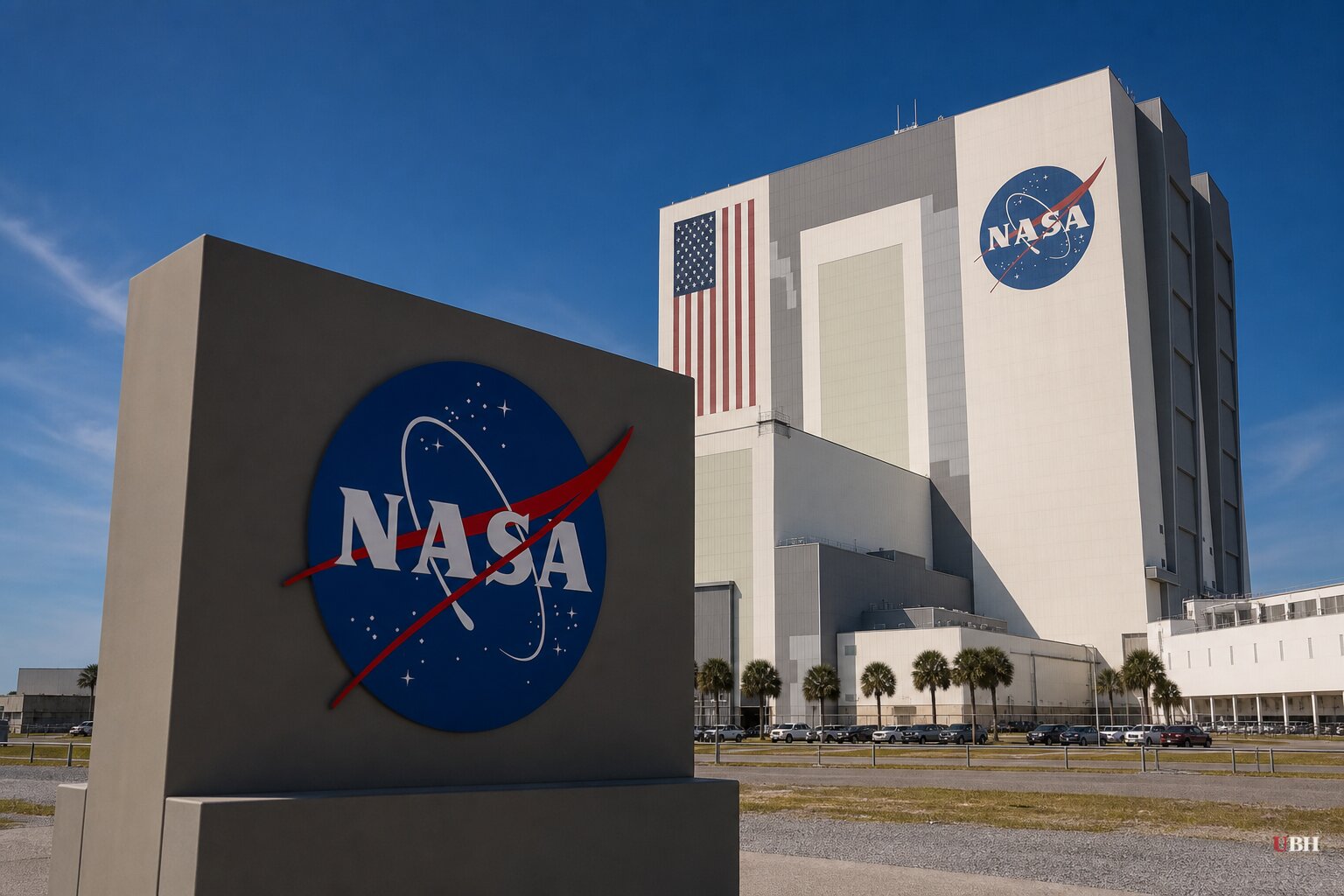
NASA announced Tuesday it has selected Blue Origin to design, build, launch and operate the agency's Mars Telecommunications Network, a firm-fixed-price contract worth up to $700 million. The orbiter is due at NASA no later than December 31, 2028, with the network expected to be fully operational at Mars by 2030, according to NASA's official announcement.
The spacecraft will be a single high-performance telecommunications orbiter circling Mars, relaying science data, imagery, navigation information and mission communications for spacecraft on and around the planet. NASA's Space Communications and Navigation program will manage the effort.
According to GovCon Wire, citing SpacePolicyOnline, Congress specifically appropriated $700 million for a Mars telecommunications orbiter in the reconciliation bill signed in July 2025, as part of roughly $10.08 billion directed to NASA programs. The legislation required a competitively bid, fixed-price contract with a U.S. commercial provider delivered by the same December 2028 deadline, and said the orbiter would support the Mars Sample Return mission along with future robotic and human missions. NASA issued its request for proposals in May, and Tuesday's award follows that process.
The New Glenn Problem
Blue Origin is contractually required to launch this orbiter. Its New Glenn rocket program has been in trouble since a launchpad explosion in May, as reported by Engadget. Blue Origin CEO Dave Limp said at the time that pad repairs would be finished by the end of 2026. NASA Administrator Jared Isaacman gave a very different estimate, projecting the pad would stay out of commission until 2028, according to Engadget's reporting, which GovCon Wire also cited.
A two-year gap exists between what the company's own CEO says and what NASA's top official says, on the exact rocket this contract depends on. Neither claim has been independently verified in these sources, and no formal dispute or correction has been issued by either side. If Isaacman's 2028 estimate holds, Blue Origin would be racing to fix its launch pad in the very same window it's supposed to deliver a finished Mars orbiter.
NASA is locking in a hard 2028 deadline with a company whose only heavy-lift rocket may not be flight-ready until that same year. That presents a legitimate concern about schedule risk on a program tied to Mars Sample Return.
The contract structure itself offers some mitigation. It's firm-fixed-price, which means Blue Origin, not the taxpayer, eats the cost of delays or overruns. NASA isn't writing a blank check here. Blue Origin also isn't starting from zero. The company already flew a Blue Ring pathfinder aboard New Glenn's inaugural mission in January 2025 and launched NASA's ESCAPADE Mars orbiters on New Glenn in November 2025, according to GovCon Wire. Forbes reported that NASA's announcement does not confirm whether the new orbiter will actually be built on the Blue Ring platform or derived from it, even though Blue Origin's investment in that spacecraft line signals where the company is headed.
Blue Origin's Bigger Bet
This Mars contract arrives alongside Blue Origin's broader push to become more than a rocket company. Forbes, citing The New York Times, reported that Blue Origin is preparing to open itself to outside investors for the first time, seeking to raise $10 billion at a valuation around $130 billion. That would represent a significant shift after years of the company running mostly on Jeff Bezos' personal money, though Forbes noted it would still leave Blue Origin valued at a fraction of SpaceX.
Blue Origin already holds a separate NASA contract from earlier this year to build the Blue Moon Mark 1 Endurance lunar lander for NASA's first Moon Base mission, targeted for launch no earlier than fall 2026, according to Forbes. Between the lunar lander, the Mars orbiter, TeraWave satellite constellation plans, and the Blue Ring spacecraft platform, the company is stacking up government contracts across nearly every layer of space infrastructure at once.
None of this is connected to AST SpaceMobile, a separate satellite-communications company whose stock hit a one-month low of $55.80 on Tuesday before director Adriana Cisneros disclosed roughly $619,200 in insider-linked share purchases, according to Stocktwits. That trade reflects investor appetite in the broader satellite-communications sector, not anything tied to NASA's Mars award.
Blue Origin has until December 31, 2028 to deliver a working orbiter, and NASA expects the network live at Mars by 2030. Whether New Glenn is actually ready to launch it by then remains an open question that neither NASA nor Blue Origin has resolved on the record.
Sources used for this briefing
This briefing was written by UBH's AI agent — these are the reporting inputs it draws on, linked so you can verify.


