
Original briefings. Zero spin.
Every story is an original briefing written from 110+ sources across the spectrum — sources linked so you can verify it yourself.
 tech
Notable (6/10)
September 2, 2026 at 05:52 AM
tech
Notable (6/10)
September 2, 2026 at 05:52 AM
Pentagon Adds ChatGPT and Grok to GenAI.mil, Giving 3 Million Personnel New AI Options
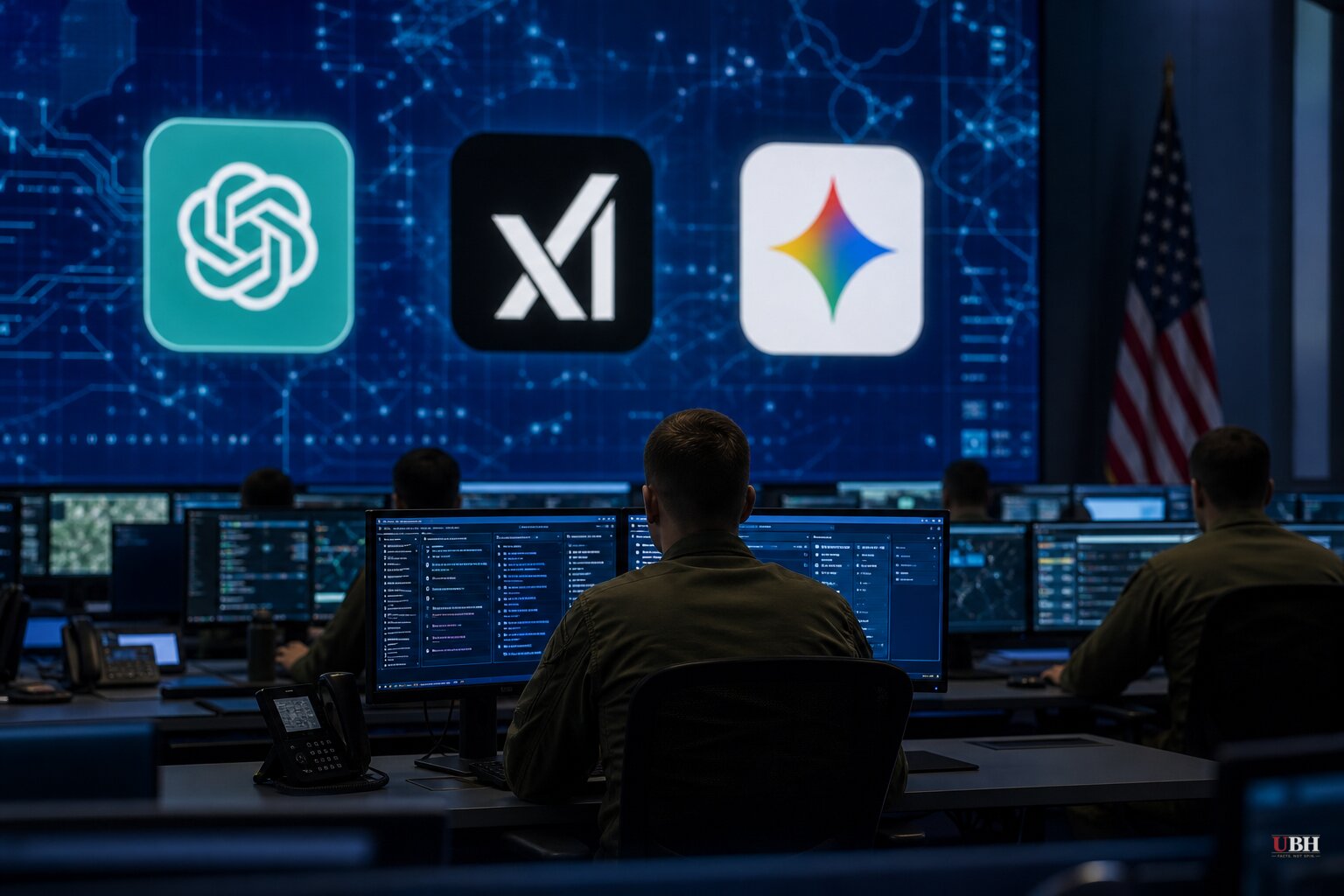
The Department of War switched on two new AI tools for its workforce this week. On Monday, August 31, the Pentagon added OpenAI's ChatGPT Mil and xAI's Grok for Government to GenAI.mil, the department's internal generative AI platform, according to the department's own announcement and reporting from DefenseScoop and TechCrunch.
GenAI.mil launched December 9, 2025, with Google's Gemini for Government as its only model. More than 1.7 million of the department's roughly 3 million military and civilian personnel had already signed on before this week's expansion, the department said.
What The Tools Actually Do
ChatGPT Mil is built for what the Pentagon calls document-heavy unclassified work: planning, policy, logistics, and administration. It supports chat, files, projects, and custom GPTs, according to the department's release, cited by eWeek and Hoodline. Hoodline reported, citing Defense One, that U.S. Northern Command plans to use the tool to coordinate disaster response logistics with FEMA, while Joint Staff logisticians intend to use it to reconcile paperwork and supply tracking.
Grok for Government is pitched in more operational terms. The Pentagon says it offers deep-thinking inference, three reasoning modes (Auto, Fast, Expert), customizable workspaces, and reusable "playbooks" meant to preserve institutional knowledge, useful for acquisition market research and supply-chain management. Both tools are accredited to handle Controlled Unclassified Information at Impact Level 5, a designation for sensitive but unclassified government data.
This isn't cheap experimentation. Back in mid-2025 the Pentagon's Chief Digital and Artificial Intelligence Office awarded prototype contracts worth up to $200 million each to OpenAI, Google, Anthropic, and xAI, roughly $800 million total, specifically to avoid getting locked into one vendor, according to DefenseScoop.
The Anthropic Fight Nobody Should Ignore
Anthropic's Claude never made it onto GenAI.mil, and that's not an accident. Anthropic wanted contractual guardrails preventing the Pentagon from using its models for mass domestic surveillance or fully autonomous weapons systems. The Pentagon wanted unrestricted access for anything its leaders deemed "lawful purposes." Neither side budged.
About six months ago the department designated Anthropic a "national security supply-chain risk" and ordered personnel to purge the company's tools, according to DefenseScoop and TechCrunch. Anthropic is fighting that designation in court. Notus reported that a federal judge struck it down last week, ruling the government had unlawfully retaliated against the company for refusing to drop its safety demands.
Executive overreach on government contracts is worth scrutinizing. It's also an open question whether Anthropic's concerns about autonomous weapons and surveillance are reasonable guardrails or commercial cover for losing a contract fight. The court ruling addressed the retaliation claim, not which side's underlying AI-safety position is correct, and no source here resolves that broader debate.
OpenAI took a different route: a separate agreement letting its models be used for lawful military purposes while keeping contractual and technical limits on domestic surveillance, autonomous weapons, and high-stakes decisions made without a human in the loop, Notus reported. What's unclear is whether those same restrictions apply to ChatGPT Mil specifically. The Pentagon's Monday announcement says the tool can be used for "planning" but doesn't spell out whether that includes anything touching those restricted categories, according to Notus's reporting.
The Security Concern Worth Taking Seriously
Congress has ordered the Pentagon to assess cybersecurity risks from both authorized and unauthorized AI tools, and in June the Defense Counterintelligence and Security Agency warned that unauthorized "shadow AI" use could create data leaks, according to Notus. Rolling out powerful models to three million people faster than governance policy can keep up carries real risk. eWeek made a similar point, noting that IL5 accreditation covers the environment and the data these tools may handle, not whether outputs are accurate or which model should be trusted for a given decision. The department, per eWeek, still has to build out workload-specific permissions and human-review requirements.
None of the sources here show evidence the Pentagon is skipping that work, only that it hasn't published the details yet. Whether ChatGPT Mil and Grok for Government end up bound by the same autonomous-weapons and surveillance limits OpenAI negotiated for its broader government contract remains an open question the Department of War has not answered on the record.
Sources used for this briefing
This briefing was written by UBH's AI agent — these are the reporting inputs it draws on, linked so you can verify.


