
Unbiased headlines. Facts, not spin.
Unbiased Headlines is an independently owned news organization. We bring you the facts, not opinions, written fresh from 110+ named sources. Sources linked so you can verify it yourself.
 health
Low Interest (4/10)
Mycotoxins Found in All 212 UK Plant-Based Foods and Drinks Tested, All Below EU Guideline Levels
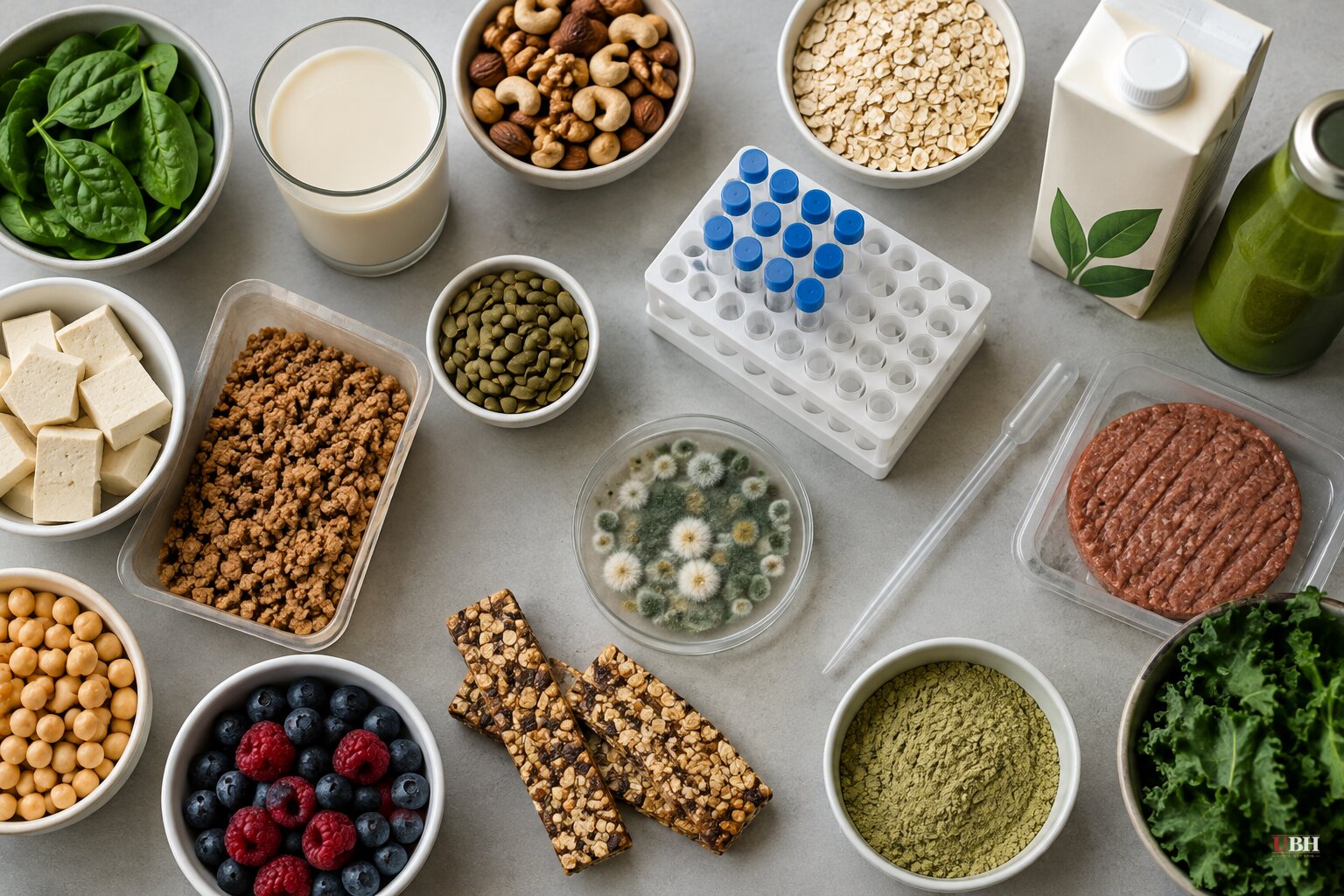
Every plant-based product in a new UK survey tested positive for fungal toxins.
Researchers led by the University of Parma in Italy, working with Cranfield University in Bedfordshire, tested 212 vegetarian and vegan foods and drinks. They found at least one of 19 mycotoxins in each sample. Many products carried several. The findings were published in the journal Food Control under the title "Mycotoxin contamination in plant-based beverages and meat alternatives: A survey of the UK market."
The work was funded under the EU's Horizon Europe FunShield4Med project.
What was tested
The sample covered 92 plant-based meat alternatives and 120 plant-based milks. Items included vegan burgers, vegetarian "chicken" pieces, vegan sausages, and oat, almond and soy drinks. Products were bought from shops around Britain.
Mycotoxins are poisonous compounds produced by molds and other fungi. They get into food when crops are contaminated during growing, harvesting or storage. Grains, legumes and seeds are especially prone, and those are core ingredients in meat and dairy substitutes.
The numbers
Plant-based meat alternatives were more contaminated than the milks, especially with toxins from Fusarium fungi. More than 93% of the meat-alternative samples contained enniatin A and enniatin A1. Some studies suggest those compounds can build up in organs including the brain, lungs and heart. Beauvericin turned up in 98.9% of the meat samples.
Among the milks, oat drinks had the widest variety of toxins. All of the oat samples contained beauvericin, and 94.7% contained HT-2 toxin. About 90% of soy drinks contained ochratoxin, which is classified as a Group 2B possible human carcinogen. Almond and other nut drinks had lower contamination but still contained beauvericin and enniatins.
HT-2 toxin is the best understood of the group. It is linked to alimentary toxic aleukia, a food-borne illness that killed roughly 60% of the people it infected in a Soviet outbreak in the late 1930s and early 1940s. That was a famine-era outbreak tied to grain left to spoil in the field. It says little about a supermarket oat drink in 2026.
The safety limits
The concentrations were generally low. In every product, they fell below recommended European Union guideline levels. The authors credited the high quality standards of the UK food industry.
Cranfield University stressed that finding a toxin does not mean a product contains live mold or is unsafe. Risk depends on the type of toxin, its concentration, and how much a person eats over time. The study itself does not establish that any of the tested products cause disease.
The cumulative-exposure question
The researchers' concern is the stacking effect. Someone who regularly eats meat substitutes, drinks plant milks, and also eats cereals and legumes can take in small amounts of several toxins from several sources. Single-product testing against single-toxin limits does not capture that.
At high enough exposure, certain mycotoxins can damage the liver and kidneys, interfere with the immune system and raise cancer risk. How the toxins interact in the body is not fully understood. The authors wrote that the large co-occurrence of toxins "could lead to potential health risks that should be further evaluated." Lab work has shown that combined effects can compound each other.
The enniatin and beauvericin findings carry the least certainty. Researchers describe the effects of those two groups as only now being understood.
The counterweight
Andrea Patriarca, a senior lecturer in mycology at Cranfield University, urged consumers not to be put off eating a varied diet. "Mycotoxins occur naturally in foods and cannot be completely avoided," Patriarca said.
Mycotoxins are not unique to vegan products. They are found in nuts, corn, wheat, fruit, cheese, coffee and grapes. The survey covered only plant-based products, so it provides no side-by-side comparison with conventional meat and dairy.
Patriarca did flag a regulatory gap. A key concern, he said, is the lack of established monitoring rules when new foods enter the market. Products built on novel ingredient blends are not necessarily covered by the toxin limits written for traditional staples.
What comes next
The authors call for continued monitoring of raw materials and for assessing combined mycotoxin exposure in complex, multi-ingredient products. No regulator has announced new limits or testing requirements in response to the study.
The unresolved question is whether the guideline levels, set toxin by toxin, are adequate for people who eat several of these products every day. Nobody has yet answered that.
Sources used for this briefing
4 links from 4 independent newsrooms (syndicated copies of the same report count once)
These are the sources it draws on, linked so you can verify.


