
Unbiased headlines. Facts, not spin.
Unbiased Headlines is an independently owned news organization. We bring you the facts, not opinions, written fresh from 110+ named sources. Sources linked so you can verify it yourself.
 tech
Major Story (8/10)
Musk Says Tesla and SpaceX Have Formed Special Committees to Weigh a Merger
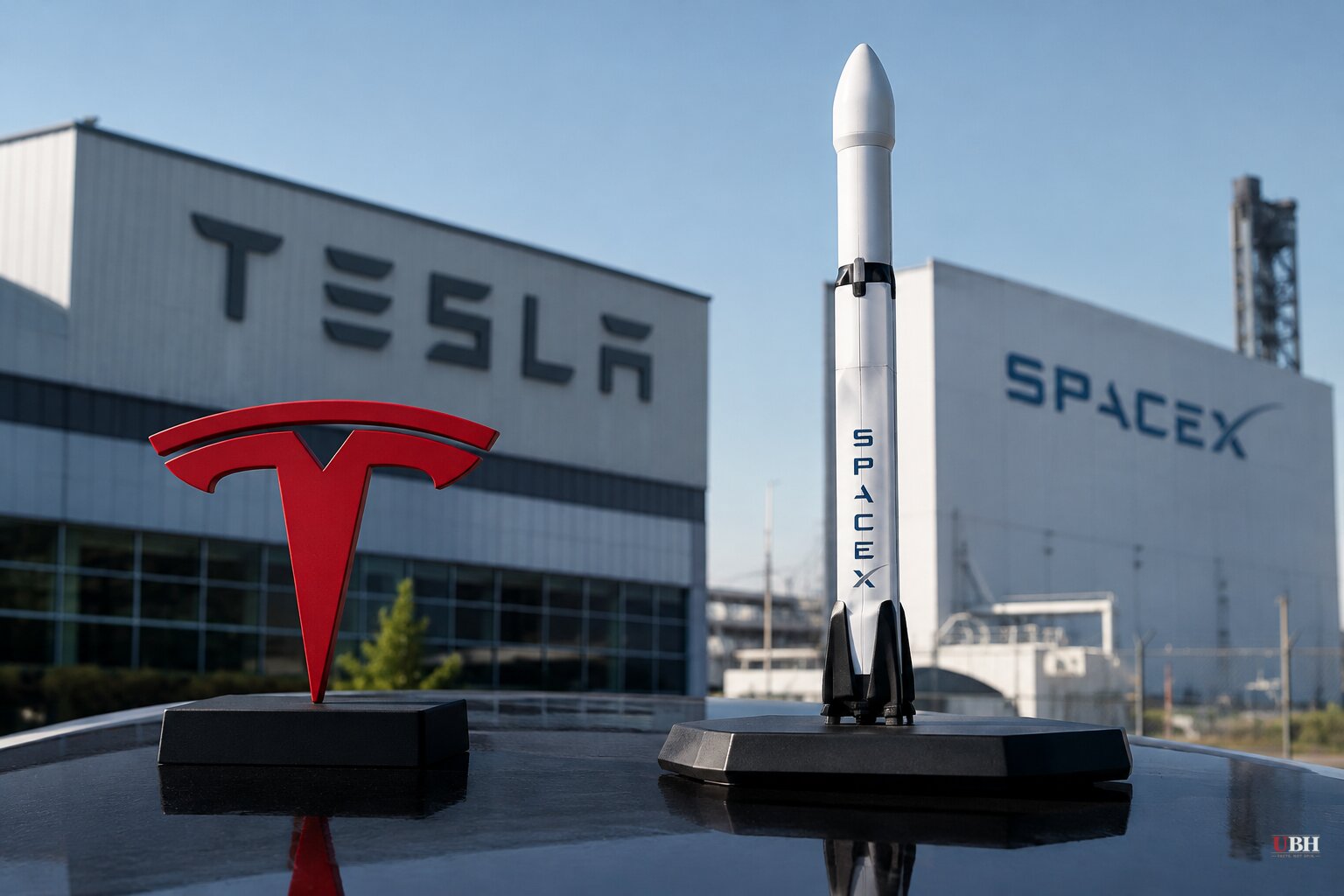
Hours after SpaceX posted its third-quarter numbers, the more consequential news from the Oct. 20 earnings call was not about revenue. Elon Musk told analysts that Tesla and SpaceX have each formed a special committee to consider combining the two companies.
"Do I think it would be a good idea? Yes," Musk said.
He was just as quick to put limits on it. "The special committees have not reached agreement on terms of any transaction and there's no guarantee that they will," Musk said. He added that he sees "a lot of merit to merging and a lot to be gained."
Who is deciding, and who is not
Musk is CEO of both companies. He says that makes him a "conflicted party," so he sits on neither committee and is not part of the talks.
He described the setup as "an odd kabuki dance where two groups of people are talking and I can't be in the conversation." He also said even discussing the idea publicly felt like "tap dancing through a minefield."
Musk said the committees are made up of independent directors and were formed at the request of shareholders. He did not name the members.
The same man controls the agenda, the narrative and the public pitch for both sides. Musk's stated answer is recusal. How much distance that creates when he is also the person promoting the strategic logic on a public call is a question the committees will have to answer in their own process.
The vote problem
The hurdle Musk flagged most directly is on the Tesla side. "We will need a 50 percent vote of all shares, not just those who vote, but of all shareholders," he said, calling that "quite a high hurdle to try to achieve."
That is a higher bar than a majority of votes cast. Every Tesla share that stays home counts, in effect, as a no.
"At the end of the day, the shareholders have to be supportive of this," Musk said. Whatever the committees negotiate has to go to a shareholder vote.
Musk's case for combining
Musk framed the rationale around AI. "I do think there's a lot of merit to combining companies as we are pretty much in the superintelligence singularity," he said.
He listed areas for cooperation: superintelligence software, chip design, the "TeraFab," robotics, mass to orbit with the "Starmind" constellation, and connectivity. He stressed the decision rests with the committees: "They've got to come up with something and then that's going to be put to the shareholders as a vote."
The size of the potential deal is enormous. Tesla is valued at roughly $1.5 trillion and SpaceX at roughly $2 trillion, which would make a combination one of the largest mergers in history.
The tradeoffs for shareholders
The Verge's analysis lays out the friction points. If Tesla were the buyer, it would have to issue millions of new shares, leaving current Tesla owners with a smaller slice of a larger company.
SpaceX's launch ambitions also require tens of billions of dollars a year, spending that The Verge notes could compete with Tesla's plans for new car factories and battery plants. The Verge also reports that most Wall Street analysts and legal experts expect SpaceX to be the acquirer, through a stock swap, rather than Tesla, given SpaceX's higher valuation since its IPO.
Neither company has announced deal terms, an exchange ratio, or a structure. Musk's own comments indicate there is not yet one to announce.
What SpaceX's numbers add
The call came with a strong quarter behind it. SpaceX reported 161% revenue growth for the third quarter, net income of $4.4 billion and operating income of $2.8 billion, and guided first-quarter 2027 revenue to $33 billion to $37 billion against an average analyst estimate of $22.2 billion, according to LSEG data.
SpaceX shares rose about 5% in extended trading on Tuesday after the report.
The breakdown by business is the context for any merger talk. Starlink's connectivity unit generated $5.25 billion in revenue and $2.37 billion in operating income. AI revenue reached $7.56 billion, and the segment swung to a $431 million profit. The launch business brought in $1.77 billion and lost $7 million.
SpaceX closed its $60 billion purchase of AI coding startup Cursor during the quarter, and it bought xAI earlier this year.
SpaceX's profit still comes almost entirely from Starlink. Tesla shareholders weighing a combination would be looking at a company whose growth story is increasingly AI compute capacity rented to outside customers, including Google and Anthropic.
What comes next
Tesla reports its third-quarter results after the close on Wednesday, Oct. 21. Shareholders will get their first chance to hear the Tesla side of the discussion, and to see how Tesla stock responds to the merger comments.
The open questions are concrete. Who sits on each committee, what terms they negotiate, and whether holders of 50% of all Tesla shares will approve anything they bring back.
Sources used for this briefing
5 links from 5 independent newsrooms (syndicated copies of the same report count once)
These are the sources it draws on, linked so you can verify.


