
Unbiased headlines. Facts, not spin.
Unbiased Headlines is an independently owned news organization. We bring you the facts, not opinions, written fresh from 110+ named sources. Sources linked so you can verify it yourself.
 tech
Major Story (7/10)
Musk Says 200+ AI Neoclouds Face 'Guppy-Level Death' as SpaceX Announces $40 Billion GPU Debt Deal
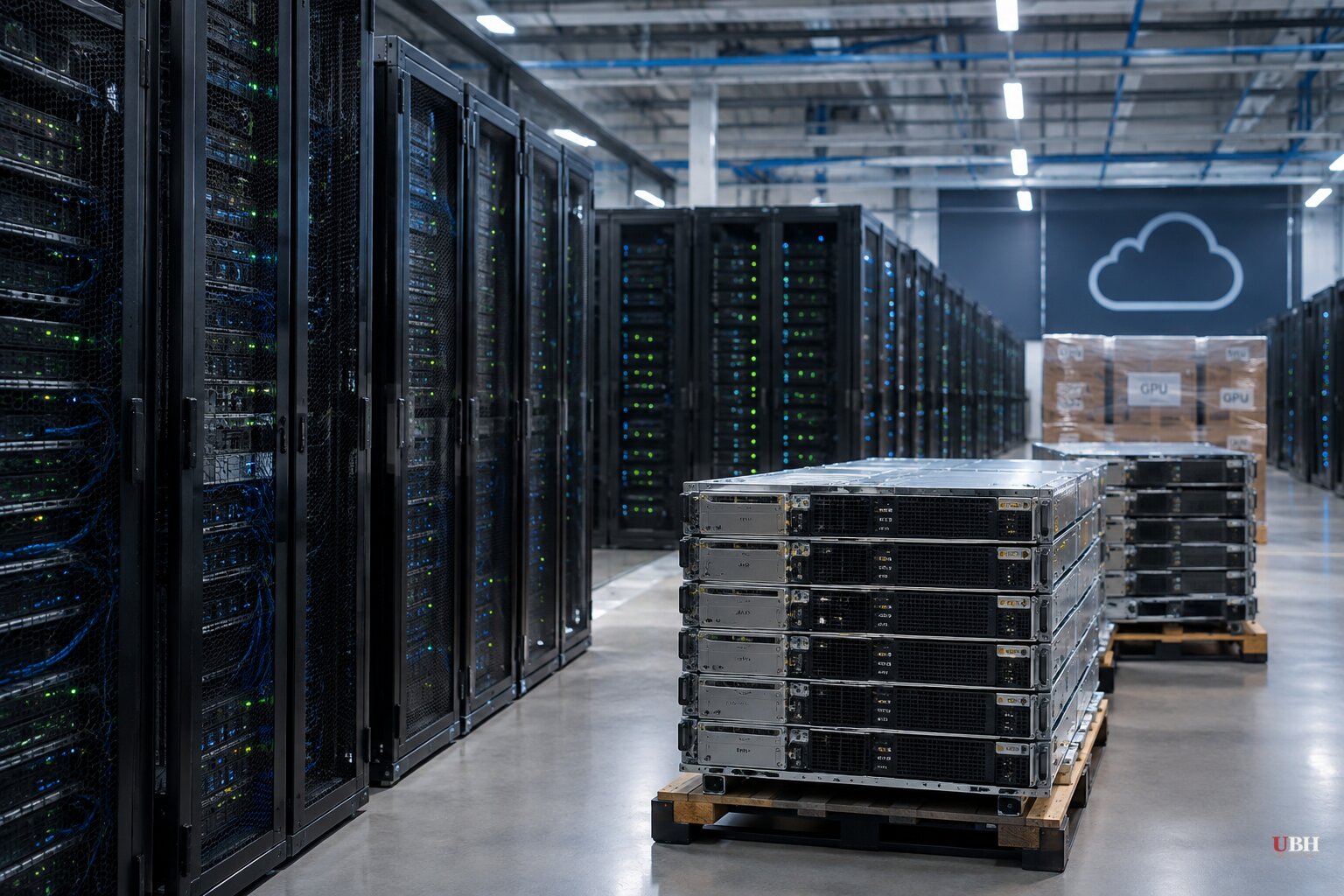
Elon Musk told his X followers on Sunday, Oct. 25, that most of the more than 200 "neocloud" companies renting out AI computing power are headed for failure or a forced sale.
"As of the past few weeks, debt markets have almost entirely shut off access to money for any company that doesn't have substantial revenue independent of AI data centers," Musk wrote. "That means the 200+ neoclouds are going to see guppy-level death and consolidation. Some will make it through, but not many."
In the same post he said SpaceX has closed $40 billion of debt to buy GPUs, adding: "we're investment grade and have Starlink & launch revenue."
The market reaction
Nebius, CoreWeave and Iren each fell more than 4% in premarket trading today, Oct. 26, according to CNBC. Regular trading on the NYSE and Nasdaq has not opened yet, so those are premarket moves, not the session's price action.
The stocks were already in a hole. CoreWeave and Nebius are down more than 30% over the past month and Iren is down about 40%. CoreWeave shares have fallen roughly 60% over the past year.
The skid began earlier this month when the spread on CoreWeave's five-year credit default swaps reached levels generally read as a sign of distress. CoreWeave's bond yields also rose. The company carried $35.6 billion in debt at midyear.
Who is talking
Musk was replying to Chamath Palihapitiya, founder of Social Capital, who wrote that neoclouds are "disorganized and poorly capitalized." Palihapitiya predicted "a lot of partially stranded compute and compute sitting in inventory in 2027 than is currently forecasted," bought and paid for but "effectively underearning (below total cost of capital) or collecting dust."
He called 2027 a year that "will clear out a bunch of wrong/bad bets" and a consolidation year for a few. On Friday, Musk had separately warned of "stranded compute in partially complete data centers." That means chips that are ready to run but cannot be switched on because the facility lacks power or is unfinished.
The messenger has a stake. SpaceX sells computing capacity from its own data centers, which makes it a direct competitor to the neoclouds. Its "Super Intelligence" unit, the former xAI, brought in $7.6 billion in third-quarter revenue, up 830% from a year earlier, out of $14.6 billion in total sales. SpaceX reported a $4.4 billion quarterly profit. The company credits new cloud services agreements, its acquisition of Cursor and wider use of its Grok model.
Some X users speculated that Musk was talking the sector down to buy it cheap. He answered: "SpaceX is not buying any neoclouds. Pointless."
SpaceX's own financing
Musk's "investment grade" pitch is not the whole picture of the $40 billion deal. Bloomberg reported as recently as Friday that the financing had stalled amid turmoil in credit markets. SpaceX has not said how that was resolved beyond Musk's statement that it closed.
There is also precedent for accounting trouble. An earlier xAI financing was structured as a sale-leaseback, but auditors rejected that treatment and SpaceX had to book about $13 billion as debt.
SpaceX went public in June at $135 a share after acquiring xAI in February. It says it plans to invest $35 billion to $40 billion in the fourth quarter alone, and expects computing capacity to rise from 1.7 gigawatts at the end of September to 2.5 to 3 gigawatts by year-end.
The other side of the argument
Not everyone in the industry shares the gloom. Nvidia CEO Jensen Huang has maintained that demand for AI cloud infrastructure is "off the charts." Nvidia is a major backer of CoreWeave, Nebius, Iren, Lambda and others, so it too is an interested party.
The bearish case does not rest on Musk alone. Gartner's chief forecaster, John Lovelock, expects more than 80% of neocloud providers to cease operating independently by 2030. Gartner projects AI providers will spend nearly $1 trillion on infrastructure in 2026 and another $6 trillion between 2027 and 2030, but says there is not enough revenue to make all of it profitable.
Gartner forecasts spending on AI-optimized infrastructure-as-a-service will climb from $66 billion in 2027 to $174 billion in 2030. Even so, it says most providers could struggle to recover their investment before the current generation of AI chips is replaced. Larger cloud companies with diversified revenue can carry AI spending for years, Gartner said.
Power and construction limits
A Bernstein Research report projects that only about 35% of planned U.S. data center capacity will be built. Bernstein expects Amazon, Google, Meta and Microsoft to finish what they planned. It called newcomer pledges "bragawatts," including the 15 gigawatts promised by a company tied to investor Kevin O'Leary, and said those projects are unlikely to be realized.
Amazon Web Services is expected to receive $5 billion worth of Nvidia GB300 racks without enough power in its data centers to run them, and will store the units in warehouses until the facilities are ready, Business Insider reported.
Nscale, the British neocloud, showed how exposed the model is when its major customer, Microsoft, walked away shortly before the company's planned IPO.
What to watch
The test is the credit market. If CoreWeave's default-swap spreads and bond yields keep widening, the financing squeeze Musk describes will be visible in prices, not just in posts. Palihapitiya has pointed to 2027 as the year the stranded-compute problem shows up, and SpaceX's planned $35 billion to $40 billion fourth-quarter spending will show how much of that capacity it intends to build itself.
Sources used for this briefing
7 links from 6 independent newsrooms (syndicated copies of the same report count once)
These are the sources it draws on, linked so you can verify.


