
Unbiased headlines. Facts, not spin.
Unbiased Headlines is an independently owned news organization. We bring you the facts, not opinions, written fresh from 110+ named sources. Sources linked so you can verify it yourself.
 tech
Major Story (7/10)
Event date: October 24, 2026 ·
Chinese Lab Moonshot's Kimi K3.1 Pro Ranks Fourth on Independent AI Index, With Open Weights Due Nov. 4
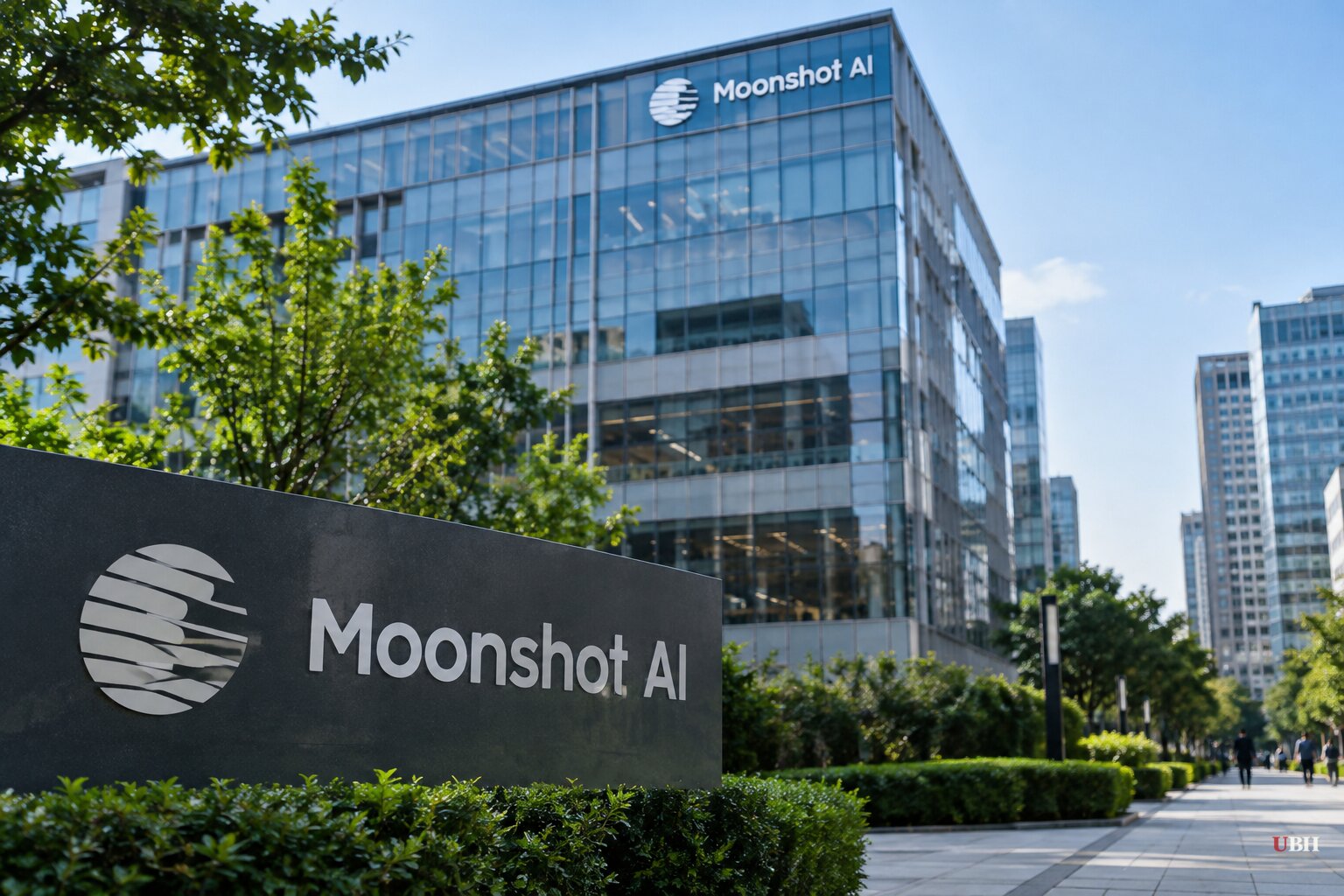
Moonshot AI, the Chinese lab behind the Kimi models, released Kimi K3.1 Pro on Oct. 23, according to Tech Times; other coverage dates the announcement Oct. 24. The company says the full model weights will be published on Nov. 4.
The independent number carries the most weight. Artificial Analysis puts K3.1 Pro at 55 on its Intelligence Index, fourth among 215 models.
Only three models rank higher. Anthropic's Claude Opus 5.5 is among the models ahead of it, and Meta's Muse Wonder Full is another. Moonshot has also reported that it trails Claude Opus 5.5 by 0.7 points on Terminal-Bench 4.0.
What the model does well
Moonshot describes K3.1 Pro as a post-training upgrade over K3, built with substantially larger post-training compute and joint reinforcement learning across hundreds of domains. The underlying architecture is unchanged: a Mixture-of-Experts model with 2.8 trillion total parameters and a one-million-token context window (1,048,576 tokens).
On Terminal-Bench 4.0, a coding-agent test, Moonshot reports 65.7%, versus 66.4% for Claude Opus 5.5. A gap of 0.7 points is thin, and Moonshot's number comes from its own evaluation. It has not been reproduced by an independent harness in the coverage to date.
Other Moonshot-reported figures: SWE Marathon, a sustained multi-hour software engineering evaluation, rose from 42.0 for K3 to 51.7. BrowseComp, an agentic web-research benchmark, rose from 91.2 to 92.1. Kimi Code Bench rose from 55.95% to 61.2%. On Moonshot's internal Kimi Hallu Bench Hard, built to probe error-prone edge cases rather than reflect everyday usage, the score fell from 23.4% on K3 to 8.3%.
The picture is not uniformly strong. Terminal-Bench Science sits at 38.1 for K3.1 Pro, more than 25 points below GPT-6 Astra and Claude Opus 5.5 in that subdomain. On BenchCAD with tools, K3.1 Pro scored 92.7% against 96.2% for Opus 5.5 and 95.9% for GPT-6 Astra. Gaps also persist on HLE-Diamond and ProgramBench, the hardest subsets of the expert-knowledge and programming evaluations.
The cyber trade-off
Moonshot says it removed offensive cyberattack training data from both stages of post-training before preparing the weights for release, and it has documented the effect. The released model scores 81.0% on xdev-bench-hard, Moonshot's in-house cybersecurity evaluation. An ablation checkpoint trained without the redaction scores 90.5%. The 9.5-point gap is the capability Moonshot chose not to release.
Moonshot's stated position is that this keeps K3.1 Pro's offensive cyber capability below frontier proprietary models that have already been publicly available for at least three months, reducing marginal uplift risk for bad actors without materially harming the model's value for legitimate security and coding work.
None of these figures has been independently verified, and no evaluation harness, refusal-rate table or red-team methodology accompanied the claim in the coverage. Treat it as a vendor statement rather than a measured property.
The stakes are tied to how open weights work. Once downloaded, a model cannot be recalled. Standard fine-tuning on a released open-weight checkpoint can in principle partially recover suppressed capabilities. The UK AI Safety Institute and its US counterpart assessed K3's cyber capabilities before its July release and concluded that its safeguards did not prevent offensive operations, only reduced the probability of success.
Washington's accusation
Moonshot also faces an unresolved dispute with the U.S. government. Tech Times reports that Washington has publicly accused the company of covertly stealing capabilities from American AI systems. No source in this story shows a public Moonshot response or any enforcement action.
Separately, on Oct. 23, China's State Council published a directive, Guobanfa [2026] No. 29. It requires AI application projects in regulated market-access sectors, where deployment could cause significant employment disruption, to complete an employment-risk assessment before receiving project approval. It also encourages companies to offer workers an "unemployment buffer period." The directive is unrelated to the Kimi release.
What to watch
The next checkpoint is Nov. 4. Until the weights are public, Moonshot's own figures are the only data available for most of its claims. If Moonshot publishes on schedule, outside researchers will be able to test its benchmark claims and its cyber-capability numbers for themselves.
Sources used for this briefing
7 links from 7 independent newsrooms (syndicated copies of the same report count once)
These are the sources it draws on, linked so you can verify.


