
Original briefings. Zero spin.
Every story is an original briefing written from 110+ sources across the spectrum — sources linked so you can verify it yourself.
 politics
Major Story (7/10)
Event date: August 24, 2026
politics
Major Story (7/10)
Event date: August 24, 2026
Mozambique's ISIS Insurgency Enters Ninth Year: 1.3 Million Displaced, Aid Cuts Deepen the Crisis
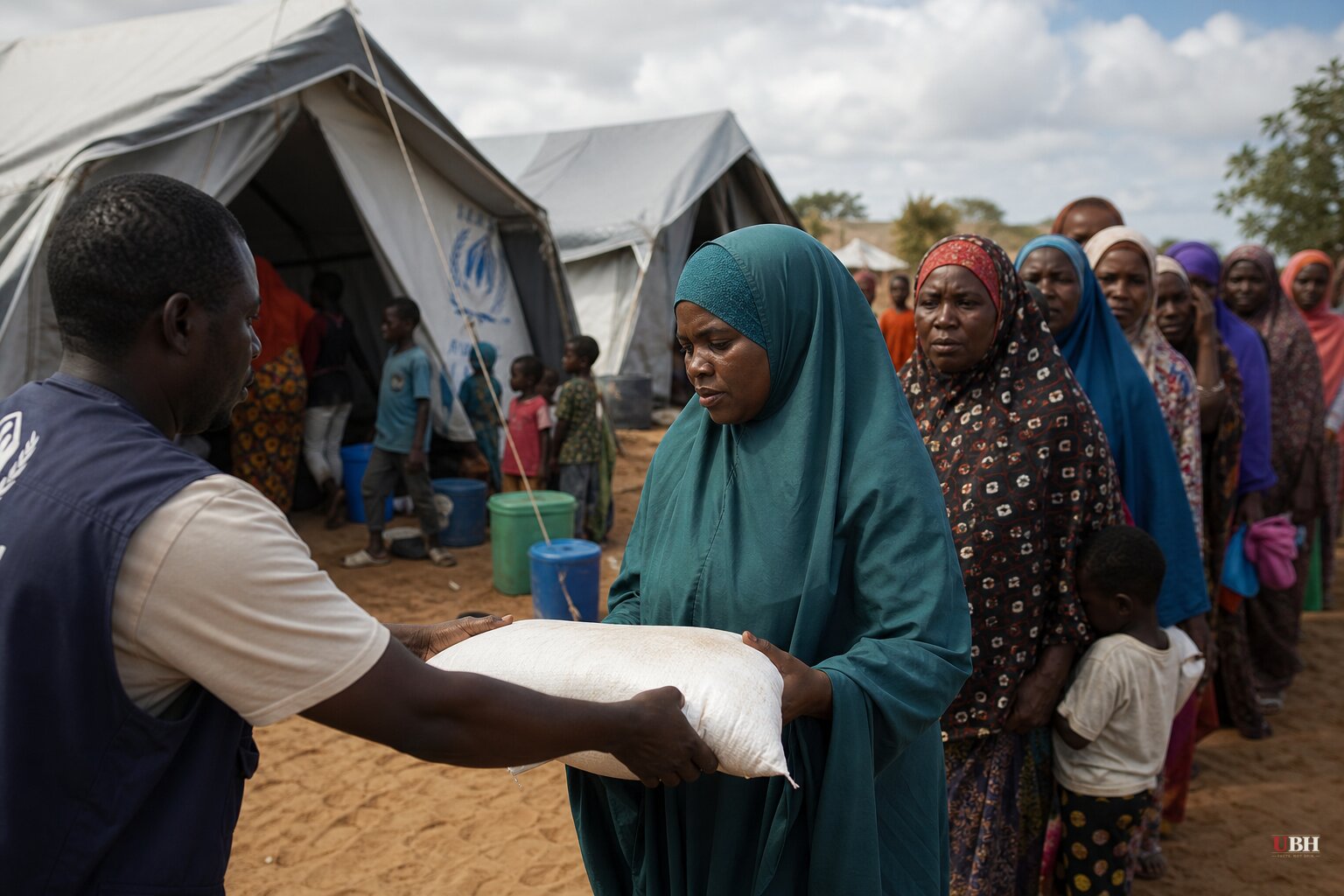
Mozambique's government began a two-day forum on Tuesday, August 25, 2026, to address the fate of over 1.3 million people displaced by an Islamist insurgency now in its ninth year, according to Al Jazeera. Renewed attacks since August 2025 have pushed the crisis in Cabo Delgado province to a new level, with violence reported in all 17 districts of the region for the first time.
The insurgency, waged by a group known locally as al-Shabab but affiliated with the Islamic State and formally called Islamic State Mozambique Province (ISMP), has no connection to Somalia's al-Shabab despite the shared name. It has fought Mozambican government forces and allied troops since 2017 in a resource-rich coastal region that hosts massive natural gas projects, including TotalEnergies' $20 billion LNG development, which restarted this year after a five-year freeze tied to the violence, according to Al Jazeera.
The Numbers Behind the Displacement
Between January and July of this year, at least 28,163 people were newly displaced, with 65 percent of them women and children, Al Jazeera reported. That's on top of roughly 100,000 people displaced in late 2025 alone, according to the United Nations. Fighting has centered on the strategic town of Mocimboa da Praia and spread into previously safe areas like Mueda, which had served as a hub for displaced people and aid groups.
The UN's Office for the Coordination of Humanitarian Affairs paints a grim operational picture. OCHA says the UN and its partners need roughly $348 million to meet urgent humanitarian needs in Mozambique, including $265 million just to reach the 919,000 people facing the most severe conditions. As of the latest funding tracking, only 42 percent of the broader $534.3 million humanitarian appeal for Mozambique is funded, leaving a gap of nearly $310 million.
Compounding the violence: repeated cyclones and El Niño-driven droughts have hammered the same communities, according to OCHA. Airstrip closures, mandatory military escorts, and now visa and work-permit delays imposed by the Mozambican government are choking off aid delivery even further, OCHA reports, warning that "increasing government oversight... risks compromising humanitarian principles."
Aid Cuts Are Making It Worse
Al Jazeera reports that US-led global aid cuts have caused several humanitarian organizations to exit northern Mozambique or scale back operations, right as needs are climbing. The UN says its humanitarian response is currently reaching 619,000 of the 1.1 million people it recently targeted for assistance, a shortfall tied directly to funding gaps.
Reduced US foreign aid spending is having immediate consequences on the ground in Cabo Delgado. There are fewer aid workers and less coverage for a displaced population that's growing, not shrinking.
What Breitbart and Fox News Add to the Picture
Al Jazeera's report focuses heavily on displacement statistics and humanitarian access. It does not detail the nature of the violence itself. Breitbart's coverage fills that gap, citing the Middle East Media Research Institute's (MEMRI) warning of what MEMRI itself calls a "silent genocide," pointing to Islamic State fighters in Mozambique posting videos of church burnings and beheadings of Christians. These are claims made by MEMRI based on jihadist propaganda videos; they have not been independently verified by a court or international body in the sources reviewed here, but MEMRI has a long track record of translating and cataloging extremist groups' own social media output.
Breitbart also links the post-2024-election unrest in Mozambique to the insurgency's staying power, noting that many young voters believed the October 2024 election that kept the ruling Frelimo party's Daniel Chapo in office was rigged. The European Union and African organizations raised concerns about the vote's integrity, according to Breitbart, though Mozambican courts ultimately upheld the result. Breitbart reports that ongoing protests against the outcome and allegations of police brutality in response have created instability that both ISIS-linked fighters and separate ethnic militias have exploited.
Fox News, meanwhile, reports on the practical danger to foreigners. The US State Department updated its travel advisory for Mozambique on August 21, moving to a "Level 2: Exercise Increased Caution" designation nationally while flagging Cabo Delgado specifically as "Level 4: Do Not Travel." Journalist Alex Perry, a former TIME bureau chief and author of a book on the insurgency, told Fox News the ISIS affiliate in Mozambique is small, around 500 fighters, but "spectacularly nasty," known for mass beheadings that have gutted the region's high-end hunting-safari tourism industry.
What's Unresolved
Nine years in, there is no military solution on the horizon. Al Jazeera notes that heavy troop deployments, including forces from Rwanda, have failed to dislodge the insurgents, and some observers are now calling for negotiations instead. Whether the Mozambican government's two-day forum this week will produce any concrete shift in strategy or simply another round of statements is unclear. Whether Western donors, having cut aid funding even as displacement numbers climb, will reverse course before the $310 million funding gap OCHA has flagged becomes a humanitarian catastrophe on top of an already active war also remains undetermined.
Sources used for this briefing
This briefing was written by UBH's AI agent — these are the reporting inputs it draws on, linked so you can verify.


