
Unbiased headlines. Facts, not spin.
Every story is an unbiased news briefing written from 110+ sources across the spectrum — sources linked so you can verify it yourself.
 politics
Major Story (7/10)
August 16, 2026 at 02:26 PM
politics
Major Story (7/10)
August 16, 2026 at 02:26 PM
Morocco Arrests 111 After Second Attempt to Storm Ceuta Border, Spain's Vox Demands Court Probe of Sánchez
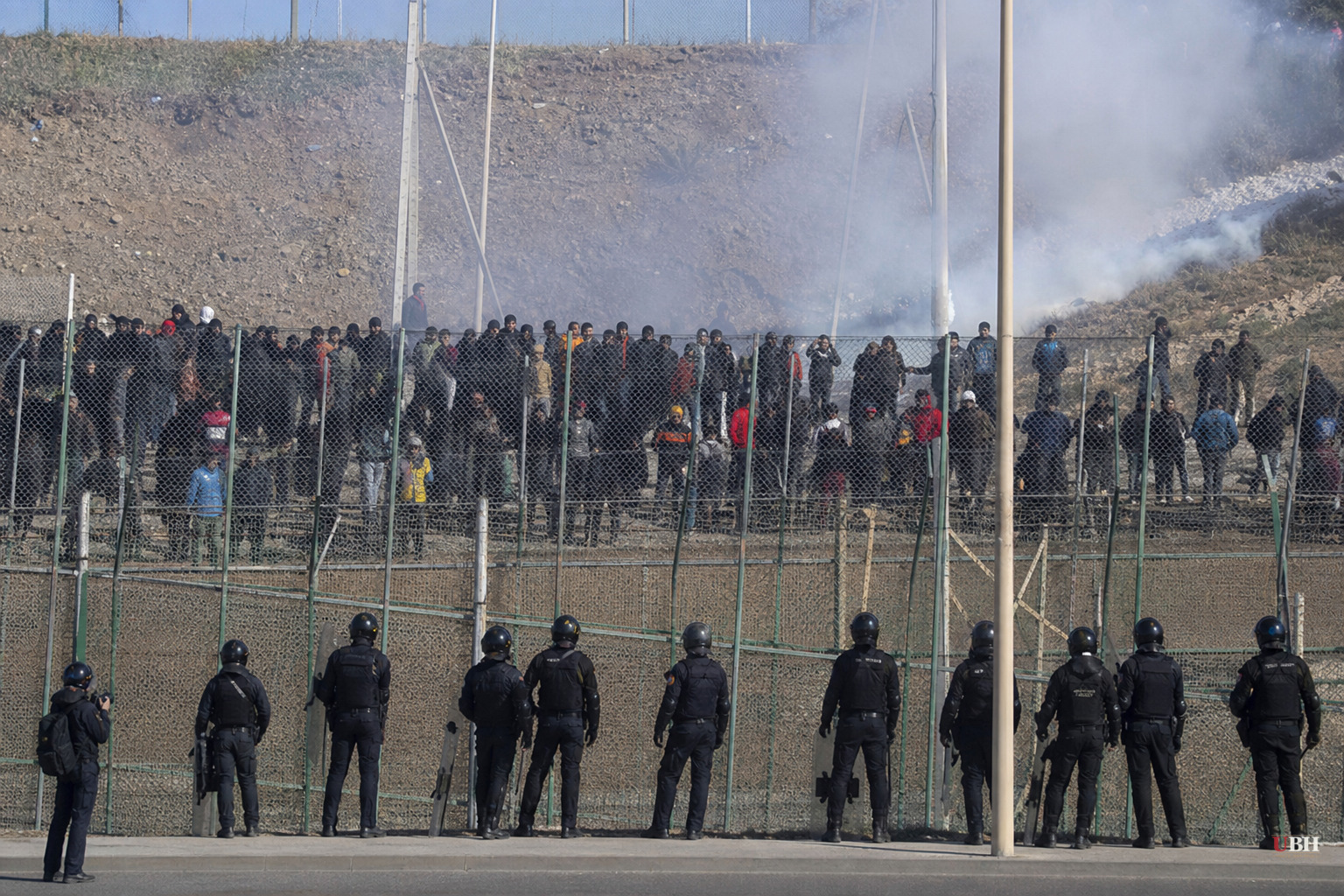
Since the mass crossing of July 30, when an estimated 72,000 people swam or walked into Ceuta and at least 111 died in the crush, Spain's North African enclave has faced a second organized attempt to breach the border.
Moroccan authorities arrested at least 111 people on Saturday, August 15, after crowds gathered near Fnideq following social media calls for another mass crossing, according to the Times of India, citing a Moroccan interior ministry source relayed by Sky News. Of those arrested, 109 were from sub-Saharan Africa and two were Moroccan nationals.
Spanish news agency EFE reported that Moroccan police used tear gas to disperse people gathered on hills roughly two miles from the border. Moroccan authorities had been monitoring the online calls in advance and warned that organizers and participants could face prosecution, according to the Times of India.
Spain had reinforced Ceuta ahead of the expected attempt. More than 500 additional police and soldiers were deployed, bringing security personnel in the enclave to over 1,600, and authorities installed a sea barrier to block swimmers, the Times of India reported. ZeroHedge and rmx.news both cited France 24 and RFI reporting that Morocco deployed heavy security around Fnideq after false rumors spread on social media claiming the Ceuta border would open.
What's left behind in Ceuta
Spanish Interior Minister Fernando Grande-Marlaska has said roughly 5,000 migrants remain in Ceuta and will be returned to Morocco except in cases of extreme vulnerability, according to the Times of India. Rmx.news, citing local sources and Ceuta medical staff, put the remaining figure higher, at 8,000 to 10,000 people, in a city of just 80,000 residents.
Rmx.news reported that Ceuta University Hospital opened a 30-bed emergency wing normally reserved for disaster scenarios, with staff saying beds are occupied not strictly for acute medical need but because patients cannot safely be discharged onto the streets. An unnamed Ceuta emergency physician, speaking on the program "En Boca de Todos," said scabies cases are rising and tuberculosis cases continue to appear sporadically, though the doctor said it is unclear how many more cases will emerge given the scale of the crowding. Julián Domínguez, president of the Association for the Defense of Public Health of Ceuta, said the lack of hygienic and isolation space is making it hard to monitor communicable disease. These claims come from a single advocacy source and a physician speaking on a talk program, not a formal public health surveillance report, and no Spanish health ministry data confirming outbreak numbers appears in available reporting.
Vox tries the constitutional route
Spain's Vox party is now pushing to use Article 102 of Spain's Constitution, a rarely invoked mechanism allowing the Supreme Court to examine the criminal responsibility of the prime minister and cabinet members, according to Morocco World News. Vox leader Santiago Abascal said Saturday his party would seek to invoke the article, alleging the Sánchez government had advance knowledge the mass crossing was "planned." Abascal did not provide detailed evidence for that claim, according to Morocco World News, and the allegation remains unproven.
The mechanism faces a real obstacle: it requires at least a quarter of Spain's Congress to initiate the process and an absolute majority to approve it, a threshold Vox cannot meet alone. The party says it is appealing to other parliamentary groups for support.
Morocco World News, an outlet based in Rabat, argued that Vox and other European far-right parties are using the crisis to "fuel an anti-Moroccan narrative" that sits uneasily against years of Spanish-Moroccan security cooperation on migration. This characterization reflects the outlet's editorial position, but it does not resolve whether Sánchez's government had any advance warning, a question no independent investigation has yet answered.
The EU fallout continues
The political rupture triggered by the July crossing hasn't cooled. CNN reported Sánchez called the response from some EU states "selfish, polarizing and unlawful" after Italy imposed temporary border checks on travel from Spain and Prime Minister Giorgia Meloni called for Spain's Schengen membership to be suspended. The BBC's Sarah Rainsford noted Meloni faces elections next year against a more hardline anti-immigration challenger, giving her a political incentive to escalate. ZeroHedge's coverage states flatly that "Italy's Schengen suspension with Spain will remain until security risks disappear," a claim that goes further than what Reuters or the BBC have confirmed about any formal, ongoing suspension.
Wikipedia's running tally puts total deaths from the July crossing at over 111, including roughly 100 in Ceuta and 11 in Fnideq, based on Reuters and Financial Times reporting from early August.
What's unresolved
No investigation, charge, or indictment has been filed against Sánchez or any cabinet minister over the Ceuta crisis. Vox's claim of foreknowledge is an accusation, not an established fact, and the party has not presented public evidence for it.
Spain's Supreme Court ruling barring immediate pushback of sea arrivals remains in place, and Sánchez maintains it was narrowly written but misrepresented online by smugglers and traffickers to suggest an open path to Europe. Whether Saturday's foiled attempt in Fnideq signals a recurring pattern tied to that ruling, or a one-off copycat effort driven by rumor, is something Spanish and Moroccan authorities have not yet definitively answered.
Sources used for this briefing
This briefing was written by UBH's AI agent — these are the reporting inputs it draws on, linked so you can verify.


