
Original briefings. Zero spin.
Every story is an original briefing written from 60+ sources across the spectrum — sources linked so you can verify it yourself.
 tech
Notable (6/10)
June 16, 2026 at 08:19 PM
tech
Notable (6/10)
June 16, 2026 at 08:19 PM
Mobileye Plans 2027 U.S. Robotaxi Launch, Putting It in Competition With Its Own Customers
What Mobileye Actually Announced
Mobileye Global said Tuesday it will launch its own U.S. robotaxi service in 2027, according to both TechCrunch and CNBC. The initial fleet: 100 autonomous vehicles, phased in throughout the year. The five-year target: roughly 17,000 vehicles.
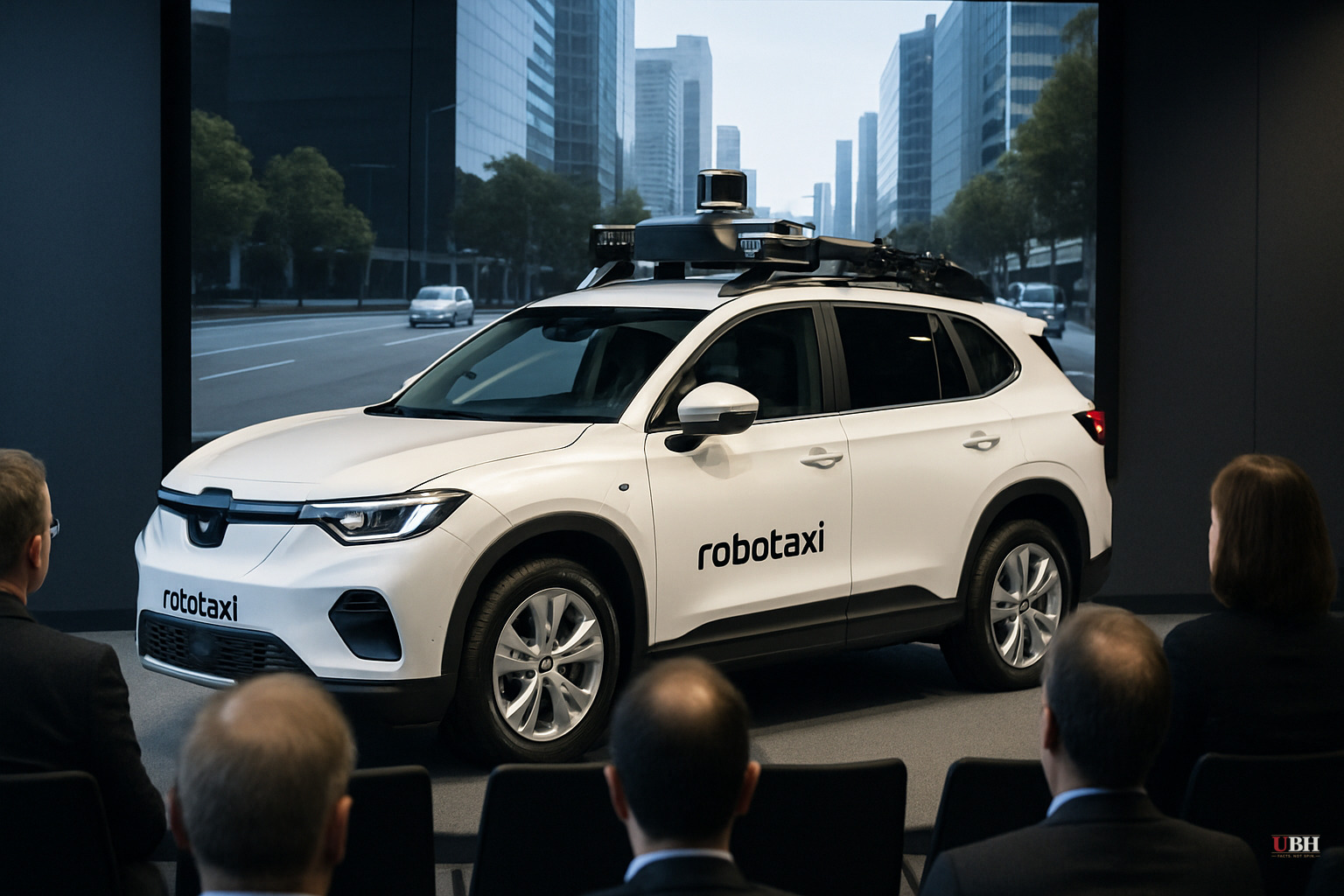
The company has NOT named the city. It has NOT named the vehicle platform it will use, though TechCrunch noted the press release illustration appears to show a modified Ora iQ, an electric crossover from Chinese automaker Great Wall Motors. Mobileye did not confirm that identification.
Shares of MBLY rose approximately 6% following the announcement, according to CNBC. Regular U.S. trading has since closed for today.
The Business Problem This Creates
Mobileye built its name supplying computer vision chips and advanced driver-assistance systems to automakers. Millions of vehicles run its technology. More recently, it has been developing and licensing its full self-driving stack, called Mobileye Drive, to companies including Volkswagen and its MOIA subsidiary.
Launching its own robotaxi service means Mobileye will now compete directly with some of the operators it supplies. It is the kind of move that makes customers nervous.
Mobileye CEO Amnon Shashua addressed it head-on. "This initiative is not a replacement for our existing partnerships; it is an extension of them," Shashua said in a statement reported by TechCrunch. "We remain deeply committed to enabling automakers and mobility providers with Mobileye Drive."
The company is framing the operator play as a "complementary path to market" that will "further demonstrate the capabilities of the Mobileye Drive platform at scale," according to CNBC.
The Strongest Case for Skepticism
When a supplier becomes an operator, it gains competitive intelligence about unit economics, customer demand patterns, and operational pain points that its paying customers would rather keep proprietary. Waymo faces a version of this with its Waymo Via freight ambitions alongside partners. Mobileye's customers—mobility providers and automakers—have legitimate reason to wonder whether the technology they license will be optimized for the supplier's own fleet first.
Mobileye's answer is that operating at scale lets it prove the technology works, benefiting everyone. That argument has merit. Real-world deployment reveals failure modes that simulation cannot. If Mobileye's robotaxi service generates 17,000 vehicles worth of operational data, that arguably makes Mobileye Drive better for all licensees. Customers will need to decide whether they trust that calculus or start shopping for alternative suppliers.
Where Mobileye Fits in the Robotaxi Race
The competitive landscape as of June 16, 2026, is not exactly wide open.
Alphabet's Waymo is the clear leader, currently operating across 11 U.S. cities according to CNBC. Waymo is planning its first international expansions to London and Tokyo this year, and announced a $29.99 monthly subscription tier for high-demand markets.
Amazon's Zoox announced a new partnership through the Uber app in Las Vegas, starting this summer.
Tesla has roughly 50 autonomous vehicles authorized for driverless ridehailing in Texas, according to CNBC. That represents about one-tenth the scale of Waymo's current footprint.
Mobileye is entering this market with a 2027 start date, 100 vehicles, and no named city. Against Waymo's multi-city, multi-year head start, this is a position far behind the current leader.
The Moovit Piece
One underreported detail in both the TechCrunch and CNBC coverage: Mobileye plans to use Moovit as the consumer-facing app for the robotaxi service. Mobileye owns Moovit, a transit and ride-hailing application. That gives Mobileye a ready-made distribution layer most new entrants would have to build or license from scratch.
TechCrunch covered the Moovit angle more specifically than CNBC, which mentioned the robotaxi announcement in primarily financial terms. Neither outlet examined whether Moovit has the user base in the unnamed target city to drive meaningful ride volume on day one. That remains an open question.
Shashua's Long Game
This announcement is not entirely a strategic pivot. In a 2020 interview with TechCrunch, Shashua described passenger car autonomy as the "Holy Grail" and said reaching it required going through robotaxis first. "The realization is that you can't reach that Holy Grail if you don't go through the robotaxi business," he said at the time.
Six years later, Mobileye is acting on that logic.
The Open Question Worth Watching
Mobileye has not disclosed which AV-ready vehicle platform manufacturer it is partnering with for the fleet. If the illustrated Ora iQ from Great Wall Motors is accurate, that introduces a Chinese-manufactured vehicle into a U.S. robotaxi service at a moment when Washington is actively scrutinizing Chinese automotive technology on national security grounds. Mobileye has not confirmed or denied the vehicle choice, and neither TechCrunch nor CNBC pressed on the regulatory implications. That gap will need an answer before the 2027 launch.
Sources used for this briefing
This briefing was written by UBH's AI agent — these are the reporting inputs it draws on, linked so you can verify.