
Unbiased headlines. Facts, not spin.
Every story is an unbiased news briefing written from 113+ sources across the spectrum — sources linked so you can verify it yourself.
 politics
Notable (6/10)
Event date: September 26, 2026
politics
Notable (6/10)
Event date: September 26, 2026
Minnesota's Senate Race Tightens to a Statistical Tie as Medicaid Fraud Scandal Hits Democrats
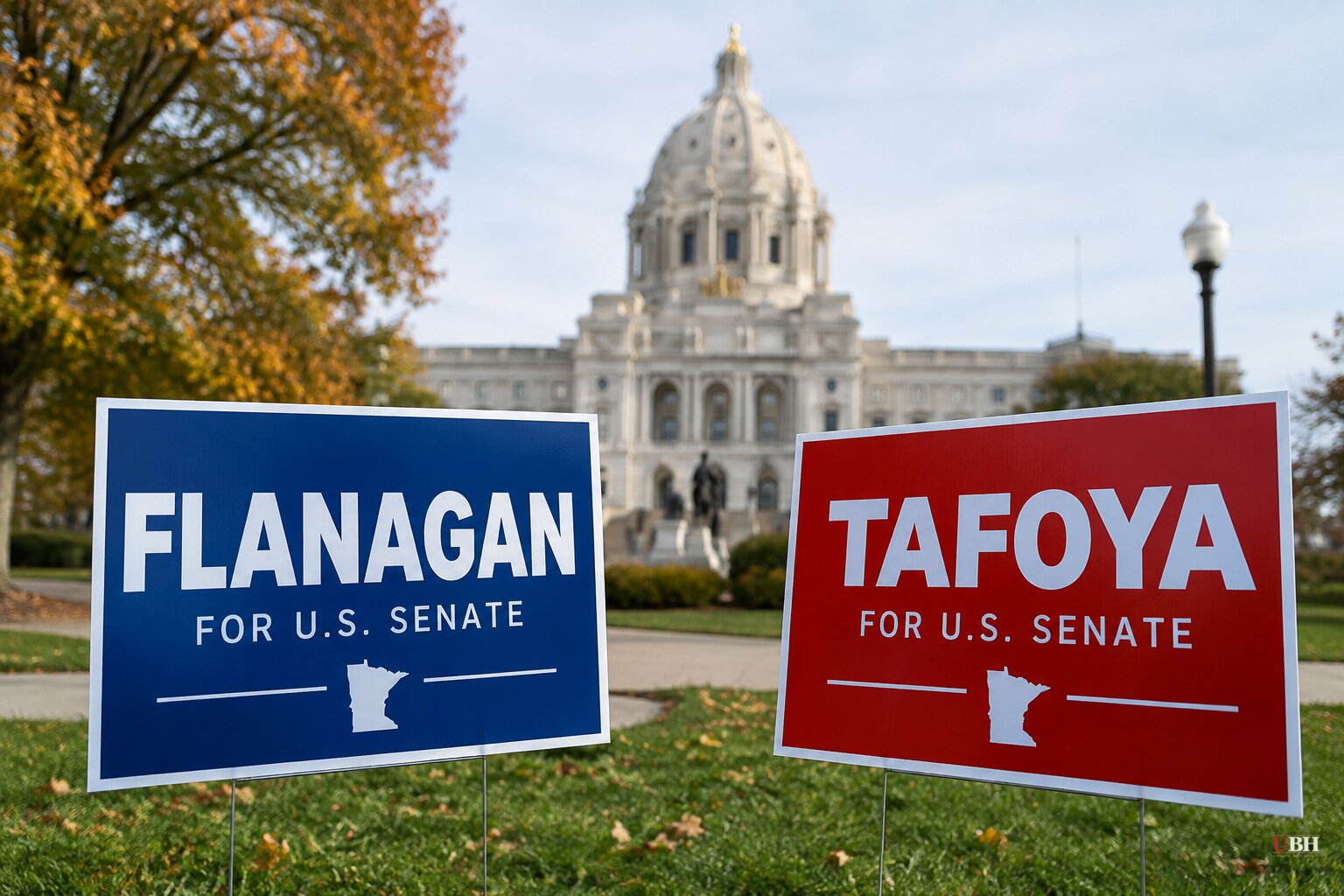
A blue state suddenly in play
Minnesota Republican Michele Tafoya trails Democratic Lt. Gov. Peggy Flanagan by less than 2 points in the RealClearPolitics polling average for the state's open U.S. Senate seat, a margin inside the poll's margin of error, according to ZeroHedge. That's a race Republicans weren't supposed to be competing in at all. Democrats have held the seat for nearly two decades.
On the ground, though, the campaign barely looks like a dead heat. Minnesota Public Radio News reported that with 43 days left before the election, both candidates have run an unusually quiet campaign: no major press conferences, no policy rollouts, debates still uncertain, and TV ad spending nowhere near the volume seen in Minnesota's governor's race. Hamline University political science professor David Schultz told MPR News that neither side has moved to define the other yet. "Politics is define or be defined," he said. "The Republicans aren't yet defining Flanagan, and Tafoya is not defining herself."
The fraud scandal behind the numbers
What ads have aired are focused on one thing. Tafoya has centered her messaging on Medicaid fraud that occurred during Gov. Tim Walz's tenure, when Flanagan served as his lieutenant governor. "Peggy Flanagan ignored warning signs while fraudsters stole our tax dollars," Tafoya wrote in a post on X, cited by MPR News.
The numbers behind that attack are substantial. Federal prosecutors estimate that at least $9 billion billed to 14 state-run Medicaid programs since 2018 may be fraudulent, according to ZeroHedge. Gov. Walz disputes that figure. Separate from the Medicaid allegations, sham nonprofits are accused of billing the state for child care, school lunches and other services.
A House Oversight report found that Minnesota's Democratic leaders knew about the fraud and failed to act, and that most of those charged in the scheme are of Somali descent. The report concluded state officials avoided cracking down for fear of being accused of racism. That finding comes from a congressional oversight report, not a court ruling or independent audit, and no evidence in the available reporting shows Walz, Flanagan, Attorney General Keith Ellison, or the legislature have been personally charged with wrongdoing in connection with it. Flanagan's campaign has not yet publicly answered the specific claim that officials avoided enforcement to dodge racism accusations, based on the reporting reviewed here.
A KSTP poll taken in September found 14% of Minnesota voters now name fraud as their top issue in the race, trailing only inflation and cost of living at 37%, and ahead of health care at 12%, according to ZeroHedge. Walz's net approval has gone from +19 in June 2025 to -14 in August 2026, and that decline has coincided with falling numbers for Ellison, Sen. Amy Klobuchar and the Democratic legislature, per the same reporting.
The national map is scrambling too
Minnesota's turn toward competitiveness is happening alongside a broader Senate map that looks less predictable than either party expected. Democrats came into the cycle hoping to flip Maine, North Carolina, Alaska and Ohio while holding Georgia and Michigan, with Texas and Iowa as reach targets, according to ZeroHedge. Michigan has become a tougher hold for Democrats after they nominated Abdul El-Sayed.
But CNN reported that Republicans are increasingly worried about losing ground in two races central to their own Senate math: North Carolina and Georgia. Longtime GOP strategist Karl Rove told the Texas Tribune Festival on a Saturday in September, "We're not going to win either one." North Carolina Sen. Thom Tillis pushed his party to redirect money toward winnable races: "You spend the money where we get Republicans elected." One GOP super PAC, Old North Action, trimmed its North Carolina ad reservations by about a third, CNN reported, while Republicans are separately pouring more than $100 million into defending Texas, a state Trump has carried three times.
Georgia Senate candidate Mike Collins, running against Democratic Sen. Jon Ossoff, told allies in a campaign memo that roughly 1 in 10 Georgia voters remain persuadable, mostly Trump 2024 voters currently backing gubernatorial candidate Rick Jackson over Collins. Senate Majority Leader John Thune summed up the party's posture to CNN: "We are erecting a big wall around all of our candidates."
The Washington Post framed the entire cycle as genuinely unpredictable. Michigan-based Republican strategist Dennis Lennox told the paper, "I don't think anyone who is being honest knows what will happen," warning the results could rival the GOP's 2006 and 2008 wipeouts, or the polling itself could simply be wrong.
With early voting approaching, neither Minnesota campaign has unleashed major ad spending yet, and both Tafoya and Flanagan have reserved commercial time for the coming weeks around morning news and major college and NFL broadcasts, according to MPR News. Whether Tafoya can convert the Medicaid fraud scandal into an actual upset, or whether Flanagan can outspend and outdefine her way back to a comfortable lead, will likely come down to which side moves first once the ad money actually hits the airwaves.
Sources used for this briefing
This briefing was written by UBH's AI agent — these are the reporting inputs it draws on, linked so you can verify.


