
Unbiased headlines. Facts, not spin.
Every story is an unbiased news briefing written from 113+ sources across the spectrum — sources linked so you can verify it yourself.
 politics
Major Story (8/10)
October 3, 2026 at 10:29 PM
politics
Major Story (8/10)
October 3, 2026 at 10:29 PM
Judge Rules Warrantless Flock Camera Search Unconstitutional, Florida County Finds 14 Cameras Installed Without Permits
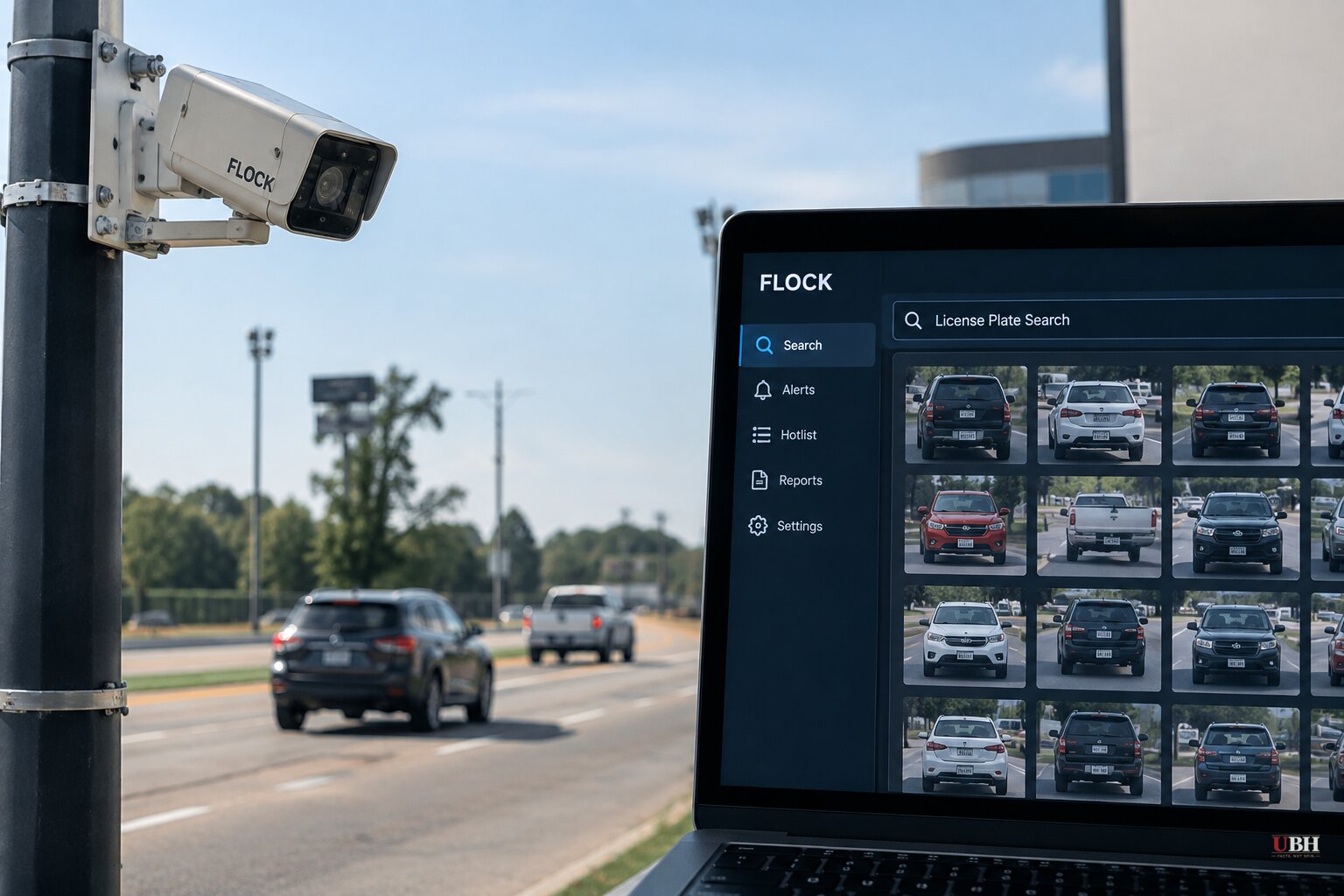
Since U.S. District Judge Sara Hill's Thursday ruling that a Tulsa County deputy's warrantless search of Flock's license-plate database violated the Fourth Amendment, the fallout has moved fast. A Florida county has turned up more than a dozen unauthorized cameras on its roads, Senator Bernie Sanders has introduced federal legislation to bar the technology from government use, and Flock Safety says it expects to win on appeal.
The case involved Melisa Kyle, pulled over in May by Tulsa County Deputy Sheriff Freddie Alaniz after he spotted her California plate on an Oklahoma highway. According to Judge Hill's opinion, Alaniz ran the plate through Flock's automated license-plate reader system "for no apparent reason" other than the out-of-state tag, before he had seen any traffic violation. The search returned more than 50 sightings of Kyle's rental vehicle across several states over roughly 30 days, according to CBS affiliate CBS12. Alaniz eventually pulled Kyle over for an alleged lane-change violation, grilled her about her travel history, and used the Flock data to argue her short California trip looked like drug trafficking. Officers say they found 91 pounds of methamphetamine in the SUV.
Hill ruled that both the Flock search and everything that followed had to be thrown out as "fruit of the poisonous tree." She wrote that Flock's network amounts to "a type of indiscriminate mass surveillance," distinguishing it from the limited GPS tracking the Supreme Court upheld in 1983's United States v. Knotts. Instead, Hill leaned on the Court's more recent Carpenter v. United States ruling on cellphone location data and the Fourth Circuit's Chatrie v. United States decision, writing that motorists retain a reasonable expectation of privacy in "the whole of their physical movements" even when individual trips happen on public roads. She noted the technology can reveal visits to "medical providers, lawyers, fertility clinics, casinos or liquor stores," according to CBS12's reporting.
Michael Soyfer, a lawyer with the Institute for Justice who is separately litigating Fourth Amendment challenges to Flock, told 404 Media the opinion "recognizes one thing that courts ignore which is the sheer breadth of these systems, that they collect so much information about so many people in a way that sets them apart." He added that "the way courts have resolved these cases previously has been way too myopic and has ignored the depths of these systems and the sweeping modes of surveillance that allow police to reconstruct the movements of anyone in the country."
Non-binding, but not nothing
Hill's ruling does not set binding precedent, and 404 Media notes several other federal cases on warrantless ALPR searches are still working through the courts. Flock told The Hill the decision "goes against the overwhelming weight of authority in similar cases across the country, including multiple recent decisions in Oklahoma" and said it expects an appeal to overturn it. The company stressed the ruling is limited to this case's facts and doesn't stop law enforcement from using the systems generally.
Writing for the Manhattan Institute and reprinted by Daily Wire, researchers Jesse Arm and Charles Fain Lehman argue ALPR technology has survived legal challenges for two decades and that critics overstate the constitutional risk while ignoring documented benefits: finding kidnapping victims, recovering stolen vehicles, locating dementia patients who drove off. They fault a Senate Judiciary subcommittee hearing chaired by Senator Josh Hawley for giving "short shrift" to those benefits while amplifying worst-case anecdotes. No one disputes ALPR systems have helped solve real crimes, and the technology has survived prior court challenges. Whether a nationwide, month-deep, on-demand search log changes the constitutional calculus is exactly the question Hill's ruling, and the appeals likely to follow, will have to answer.
Unpermitted cameras in Florida
Separately, The Washington Post reported October 1 that St. Lucie County, Florida, found 14 Flock cameras installed on its roads with no permits and no county approval, as it works to remove its own Flock network. The St. Lucie County Sheriff's Office claimed three of them but, according to the Post's reporting as confirmed to the Epoch Times by county spokesperson Erick Gill, offered no explanation for why they skipped permitting. No other agency has claimed the remaining eleven. Gill said the county has posted removal notices giving whoever installed the cameras until between October 16 and October 20 to take them down, after which the county will remove or cover them itself. St. Lucie isn't the first: unauthorized Flock cameras have also turned up in Utah and Massachusetts.
Florida Governor Ron DeSantis ordered all Flock cameras off state roads in August with a 30-day deadline, prompting some agencies to drop Flock entirely and others to pull cameras only from state-owned roads. Texas Governor Greg Abbott has taken similar steps. At the federal level, Sanders, Senator Jeff Merkley, and Representative Alexandria Ocasio-Cortez have introduced the Block Flock Act to bar federal agencies from using the systems, while Flock has reportedly offered employees voluntary buyouts as municipalities cancel contracts, according to TechCrunch.
The open question is whether Hill's reasoning survives on appeal and whether other federal judges adopt it. Flock says it won't. The Institute for Justice is betting it will.
Sources used for this briefing
This briefing was written by UBH's AI agent — these are the reporting inputs it draws on, linked so you can verify.


