
Unbiased headlines. Facts, not spin.
Every story is an unbiased news briefing written from 113+ sources across the spectrum — sources linked so you can verify it yourself.
 politics
Major Story (7/10)
Event date: October 2, 2026
politics
Major Story (7/10)
Event date: October 2, 2026
Israel's Supreme Court Reinstates Arab Parties for Oct. 27 Vote, But Pressures One Leader Into Quitting
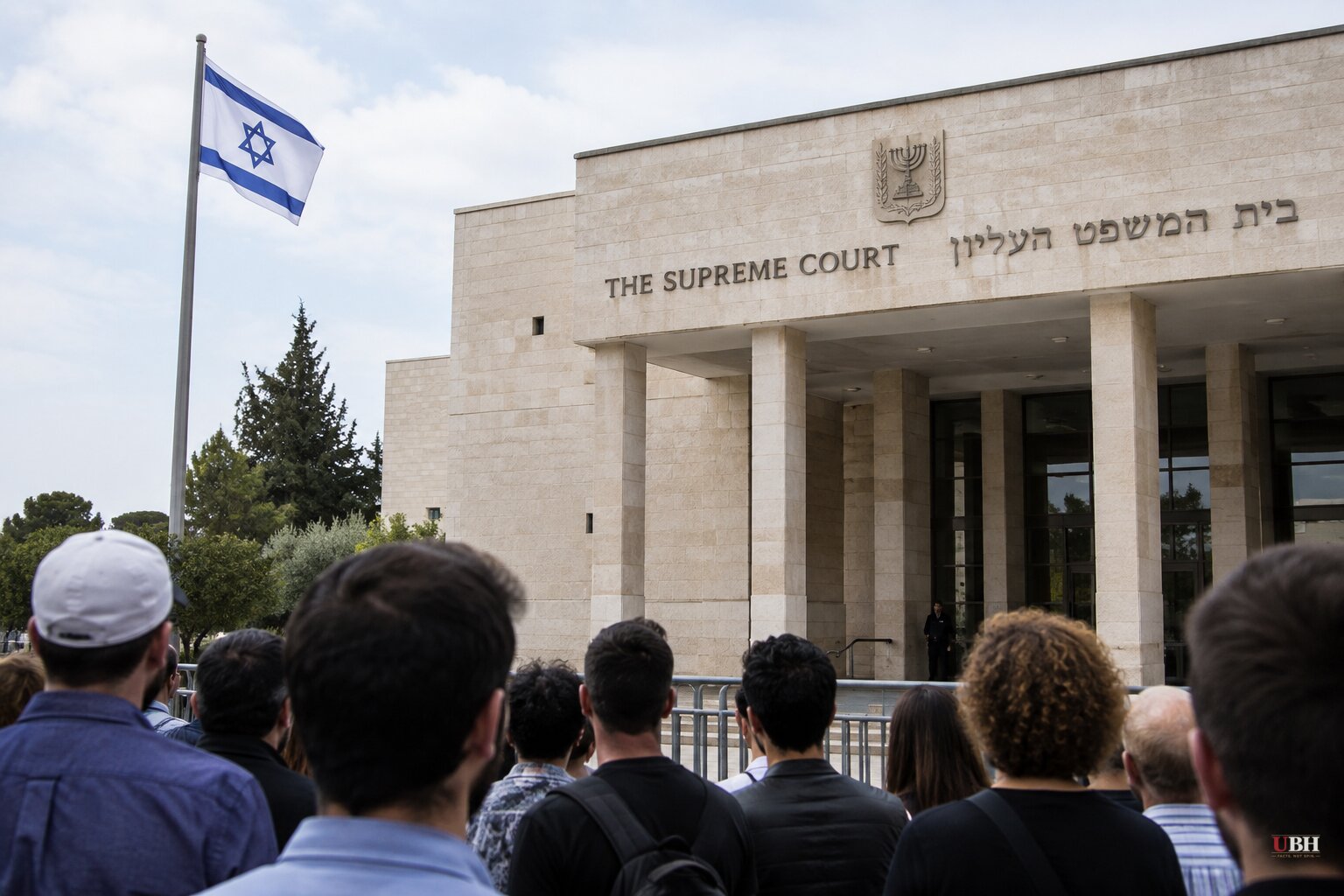
Since Israel's Central Elections Committee voted on September 23 to disqualify every Arab-majority party and candidate from the October 27 Knesset election, the fight over who gets to run has moved from a political committee to the courtroom, and it just produced a split decision.
On Friday, October 2, Israel's Supreme Court unanimously overturned the committee's bans on Ra'am, the three parties making up the Joint List, and Jewish Communist lawmaker Ofer Cassif, according to Bloomberg and Reuters reporting carried by The Straits Times and WKZO. That clears the way for those parties to appear on the ballot in less than four weeks.
But the court did not clear everyone. Judges indicated a majority was prepared to uphold the ban on Sami Abu Shehadeh, the Balad party chairman and former Knesset member, over an article he published on October 8, 2023, the day after the Hamas-led attack, in which he called it "an important historical event." Rather than fight a ruling he expected to lose, Abu Shehadeh withdrew his candidacy, according to Reuters.
A Unanimous but Split Ruling
The judges were unanimous in calling Abu Shehadeh's statement "painful, disturbing and revolting," per Reuters, but the panel split on whether it crossed the legal line into disqualifying speech. Abu Shehadeh has repeatedly denied the remarks amounted to endorsing the killing of roughly 1,200 people and the taking of 251 hostages on October 7, 2023.
Suhad Bishara, legal director at Adalah, the Palestinian legal rights group that represented Abu Shehadeh, told Reuters the withdrawal was meant to avoid "a dangerous legal precedent" of disqualifying a candidate based on a single sentence in a single article. "They would disqualify on the basis of one article, or more specifically one sentence in an article, which is unprecedented," Bishara said.
Abu Shehadeh himself framed the outcome in blunter terms. "The margins for political activity, for freedom of speech for the Arab-Palestinian minority in Israel are becoming narrower," he told Reuters, adding that "in the Jewish state, there are two different laws for citizens according to their identity."
What the Committee Didn't Touch
The asymmetry critics point to isn't abstract. The same Central Elections Committee that voted to bar Abu Shehadeh and the Arab parties on September 23 turned around the next day and rejected petitions to disqualify National Security Minister Itamar Ben-Gvir's Otzma Yehudit party, the Religious Zionism-Zehut party — one of whose leaders, Moshe Feiglin, has called for the expulsion of the entire population of Gaza — and Yair Golan's Democrats, according to the Forward.
Ben-Gvir has a past conviction for incitement to racial hatred, per Reuters, and celebrated Abu Shehadeh's exit on social media: "We will not allow supporters of terrorism and those who praise martyrs to operate freely in Israel's Knesset." Opposition leader Gadi Eisenkot, a former IDF chief, mocked the outcome in a sarcastic post referring to Abu Shehadeh as Netanyahu's "ally," a jab at claims that stoking fear over Arab parties benefits the prime minister's campaign.
Israel's Attorney General, Gali Baharav-Miara, had told the committee the evidence against the Arab parties didn't meet the legal threshold for disqualification in the first place, according to Arab Center Washington DC. The committee's vote broke down 18-5 along bloc lines, a tally that underscores how political the process is. The Jerusalem Post reported Likud itself filed the original disqualification requests, arguing "there is no place in the Knesset for those who harm IDF soldiers and are unable to say that Hamas and Hezbollah are terrorist organizations." That stated rationale differs from Abu Shehadeh's specific October 8 article, which the Supreme Court treated as its own narrow legal question.
Al Jazeera's reporting leaned hardest into the double-standard framing, quoting Zaidon Alkinani of the Arab Perspectives Institute arguing Israel's political system is "designed... to ensure that it's a Zionist state, not just or even a Jewish state." A counter reflected in the court's own unanimous language calling Abu Shehadeh's article "disturbing and revolting" is that judges saw something qualitatively different in a sitting candidate's own words about the deadliest attack in Israeli history, distinct from general political rhetoric by Ben-Gvir or Feiglin, even if judges split on whether it met the legal bar for disqualification.
The Math Behind the Fight
Polling cited by Arab Center Washington DC has Netanyahu's coalition at roughly 52 seats, with Eisenkot's bloc ahead or tied but also short of the 61-seat majority threshold. The Arab parties were projected to hold around 12 seats before the bans, meaning Eisenkot's only realistic path to government now runs through politicians Likud and Ben-Gvir are actively campaigning against. Ra'am leader Mansour Abbas, whose party added former Yesh Atid MK and ex-crime unit chief Yoav Segalovitz as its first Jewish candidate, called the original ban "political, illegitimate and anti-democratic."
Ra'am and the Joint List will be on the October 27 ballot. Abu Shehadeh will not. Whether that changes the seat math enough to matter won't be clear until Israelis vote in just over three weeks.
Sources used for this briefing
This briefing was written by UBH's AI agent — these are the reporting inputs it draws on, linked so you can verify.


