
Unbiased headlines. Facts, not spin.
Unbiased Headlines is an independently owned news organization. We bring you the facts, not opinions, written fresh from 110+ named sources. Sources linked so you can verify it yourself.
 politics
Major Story (7/10)
Event date: November 4, 2026 ·
Midterm Voter Surveys: Young Voters, Latinos and Men Swung Toward Democrats, Independents Gave GOP 38%
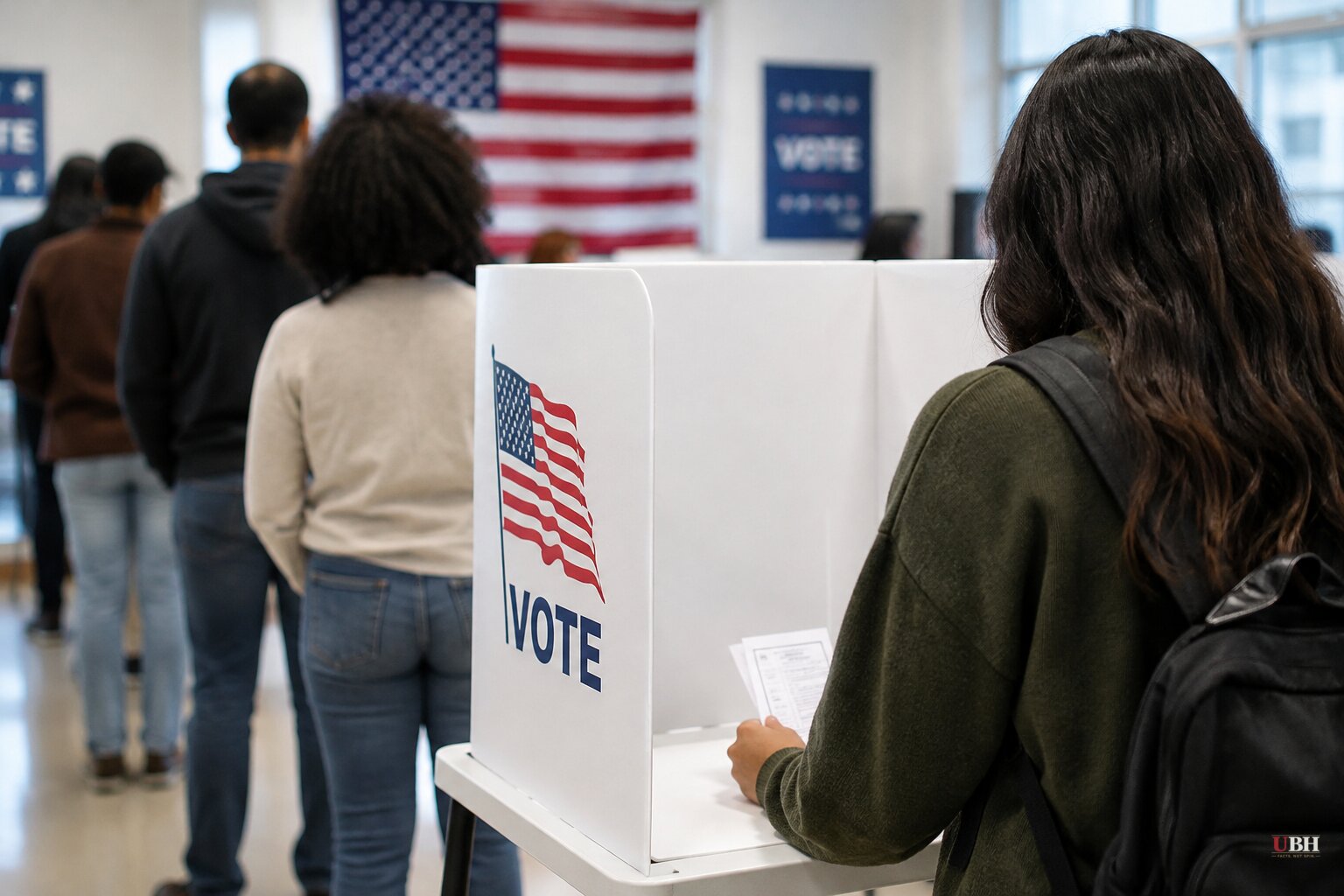
Four days after Democrats won the Senate and swept races from Michigan to Texas, the voter survey data is in. It shows the 2024 Trump coalition came apart in specific, measurable places.
The AP Voter Poll, a survey of more than 100,000 voters in all 50 states, found that about 7 in 10 voters under 30 backed the Democratic House candidate. In 2024, that group split roughly evenly between Trump and Kamala Harris.
NPR's analysis of voter survey data puts the margin among young voters at 48 points for Democrats, a 34-point swing from two years ago. That is wider than Barack Obama's 34-point margin in 2008. The caveat: voters under 30 were 11% of this midterm electorate, versus 18% in 2008. AP puts their share at about 1 in 10.
Who moved
Latinos swung 21 points toward Democratic House candidates compared with 2024, according to NPR's analysis. Asian Americans also moved 21 points, from a 22-point Democratic advantage to 43.
Pew Research Center numbers cited by The Epoch Times show Republicans fell from 48% of Hispanic voters in 2024 to 34% this year. Among Black voters, the GOP dropped from 15% to 9%. AP found Black men in particular moved toward Democrats.
Men are the other notable shift. Democrats won men by 2 points, a 16-point swing from 2024 and the first time the party has carried men since 2008. Women broke for Democrats by 19 points, 13 points wider than in 2024.
Democrats also essentially tied with white voters, according to NPR. The network notes Democrats have not won that group in a presidential election since 1964.
Independents may be the starkest number. Republicans won only 38% of them. NPR says 46% was the mark the GOP hit in its winning years of 2016 and 2024. Below that, the party lost more than 40 House seats in 2018 and the presidency in 2020. The 38% is the party's worst showing with independents since at least 1998.
Why, according to the people involved
AP found most voters said inflation caused their families at least "moderate" hardship over the past year. Voters in households earning under $50,000 shifted away from Republicans. Moderates, who overwhelmingly said Congress was not doing enough to check the presidency, backed Democrats and helped decide several Senate races.
About 6 in 10 voters under 30 said opposing Trump was one reason for their House vote, AP found. About half of young voters said they were "angry" about the direction of the country.
Vice President JD Vance pointed to the Iran war. "Numbers indicate that turnout was not the problem," he wrote. "The main problem is that many people who voted for Trump/Vance in 2024 voted for Democrats in 2026." He added: "If you'd like to argue it was worth it, that losing the Senate for the next 6 years was worth it, then do so."
Trump, asked about Vance's comments, told reporters the position was "largely true because it drove the gasoline up a little bit, short-term." He said he would start the war again, because he did not want Iran to have a nuclear weapon.
Florida Gov. Ron DeSantis called the result the "political equivalent of a meteor strike." He said voters were rejecting Republicans in Washington rather than endorsing Democratic policies, and that the GOP failed to capitalize on kitchen-table issues.
The competing readings
Not everyone reads the data as a verdict on the war and prices alone. A commentator in a Daily Wire monologue argued Republicans "lost the immigration argument they won in 2024." He cited a generic ballot of roughly D+13, versus R+2 in 2024, a 15-point swing, attributing the estimate to the New York Times. He noted California is still counting.
The same commentator pointed to ballot measures barring biological males from female sports and spaces. He said they passed overwhelmingly in blue states such as Colorado and Washington. His argument is that Democratic officeholders are more extreme than their own voters on those issues.
On the other side, a Guardian opinion column argued that "regret voters" abandoned Trump when costs hit their wallets rather than over his immigration enforcement. It quoted former Republican consultant Sarah Longwell, who runs focus groups of Trump supporters. That is the column's thesis, not an established finding.
Labor's warning
UAW President Shawn Fain, speaking to Fox News Digital at the Michigan Democratic Party's election-night event in Detroit, said the results do not guarantee the working-class vote for Democrats in 2028. "We're not Republicans, we are not Democrats, we aren't independents. We support people that back us," he said.
Fain called the result a "wake-up call" for anyone ignoring workers. He criticized "$10 billion, $20 billion buyback deals for corporate leaders and for Wall Street."
Democrat Abdul El-Sayed won Michigan's Senate seat. In 2024, Trump carried voters without college degrees in Michigan by about 10 points, according to exit polling.
What the numbers can't settle
Midterm electorates differ from presidential ones. NPR notes that young voters have the biggest turnout drop between presidential and midterm years. Many Republican-leaning 18-to-29-year-olds likely stayed home, which could exaggerate the swing.
Vance has said the voters who left were Trump's own 2024 supporters, not nonvoters. Whether they return when Trump is off the ballot, and whether his likely 2028 run can win them back, is the open question that Republican strategists now face.
Sources used for this briefing
6 links from 6 independent newsrooms (syndicated copies of the same report count once)
These are the sources it draws on, linked so you can verify.


