
Unbiased headlines. Facts, not spin.
Unbiased Headlines is an independently owned news organization. We bring you the facts, not opinions, written fresh from 110+ named sources. Sources linked so you can verify it yourself.
 politics
Major Story (8/10)
Herzog Tasks Gadi Eisenkot With Forming Israel's Next Government After Deadlocked Election
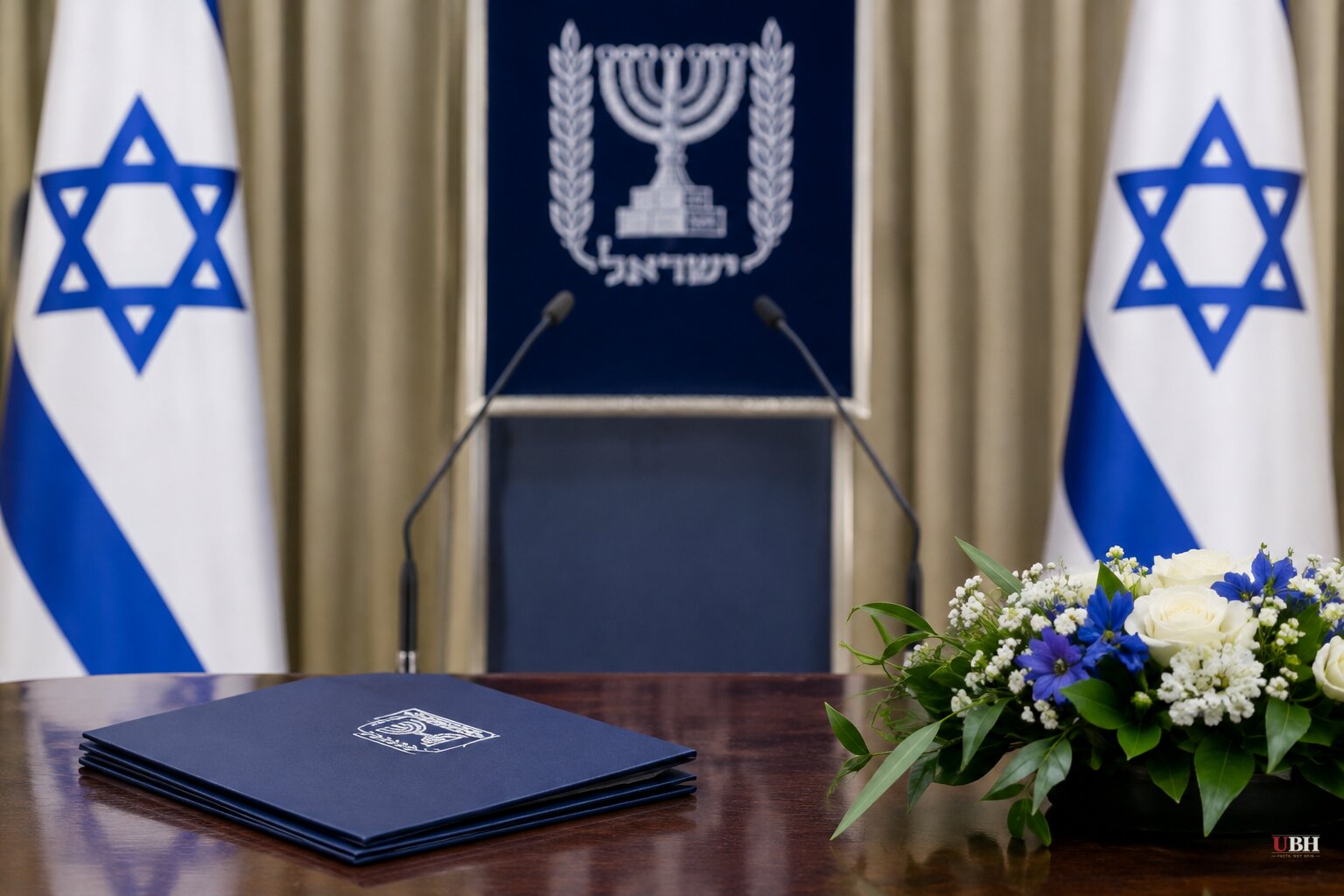
Israeli President Isaac Herzog told Gadi Eisenkot on Saturday night, Nov. 7, that he intends to task him with forming the next government. Herzog's office said the formal appointment will come at a ceremony Sunday at the president's residence in Jerusalem.
The decision follows the Oct. 27 election, which left neither side with a majority in the 120-seat Knesset. Eisenkot, a former military chief of staff who leads the Yashar party, now gets the first attempt to build a coalition.
The numbers
Eisenkot's four-party opposition bloc won 48 seats. Netanyahu's religious-nationalist bloc won 53. Arab-led parties turned out in record numbers and won 19 seats. A government needs 61.
Netanyahu's Likud is the largest single party, with 27 seats.
During consultations with Herzog this week, parties representing 67 lawmakers recommended Eisenkot, according to the president's office. Parties representing 46 lawmakers recommended Netanyahu. Both Arab-majority lists endorsed Eisenkot.
Eisenkot has 28 days to assemble a coalition, with a possible 14-day extension.
The Arab-party problem
The Arab parties make the arithmetic possible and the politics hard. An Arab party has joined a governing coalition only once in Israel's history.
The heads of the two largest Arab parties have said they are willing to help Eisenkot's bloc remove Netanyahu. But most of the Jewish-led parties opposing Netanyahu vowed before the election not to rely on Arab support to govern.
Eisenkot's own position is described differently depending on the account. Al Jazeera reports he has ruled out forming a government with the Arab-led parties. Other accounts say he has signaled openness to partnering with them if they meet conditions, including calling Hamas a terrorist group that must be destroyed.
Yashar's own statement says Eisenkot will include only parties and Knesset members who accept its principles, among them recognition of Hamas as a terrorist organization.
A minority government with outside Arab support is one option. Other members of his bloc have said they would reject that.
Other routes to 61
Al Jazeera reports that adding the two ultra-Orthodox parties, United Torah Judaism and Shas, would give Eisenkot exactly 61 seats. Both are part of Netanyahu's current coalition.
A broad unity government with major Jewish parties, Likud included, is another possibility. The gaps are wide. Netanyahu relies on religious parties that demand draft exemptions for ultra-Orthodox men. He also opposes a formal investigation into the failures surrounding the Oct. 7, 2023, Hamas-led attacks.
Netanyahu's response
Shortly before Herzog's announcement, Netanyahu released a video calling for a "national unity government." He warned against "hastily swearing in a government with terrorist supporters," language he uses for the Arab-led parties.
Netanyahu argued that a broad alliance is needed to confront regional threats, particularly Iran. He said such a government would "permanently remove the nuclear threat from Iran, preserve Israel as a Jewish state, and bring unity among us." Al Jazeera reports he also warned that a government backed by Arab-led parties would lead to Israel's collapse.
Netanyahu has also alleged that some Arab countries interfered in the election, and has claimed Arab parties "stole" it. No evidence has been presented for either claim. Din Livne, acting director-general of the Central Elections Committee, wrote in a Thursday letter to a committee member that "there is no basis to the claims regarding a systematic compromise of the integrity of the elections."
Yashar answered the video in a post on X. It urged Likud members to disavow their alliance with "radical parties," a reference to the far-right and settler-linked parties in Netanyahu's coalition.
Democratic Party chairman Yair Golan rejected the unity appeal. "Netanyahu's government must be replaced, and a government of salvation and change must be formed to safeguard Israel's democracy, security, and future," he wrote on X.
Eisenkot's first reaction, also posted on X: "Now is the time to form a national emergency government. I will do everything to ensure we are worthy."
Who Eisenkot is
Eisenkot, 66, was military chief of staff from 2015 to 2019. He sat as an observer in Netanyahu's war cabinet for the first eight months of the Gaza war.
He is not a dove. He opposes a Palestinian state and has vowed to end Hamas rule in Gaza and destroy its military wing. As commander during the 2006 Lebanon war, he devised the "Dahiya doctrine," which involves using massive force against civilian infrastructure in Hezbollah-controlled areas.
He has also promised to crack down on extremist West Bank settlers who attack Palestinians, calling recent incidents "Jewish terror" abetted by Netanyahu's government.
What comes next
The formal handover is set for Sunday, Nov. 8. Once the new Knesset is sworn in, Eisenkot's bloc and the Arab parties together would hold 67 seats, enough to act even without an agreed government. The open question is whether any coalition partner will accept that math before the clock runs out.
Sources used for this briefing
6 links from 6 independent newsrooms (syndicated copies of the same report count once)
These are the sources it draws on, linked so you can verify.


