
Unbiased headlines. Facts, not spin.
Unbiased Headlines is an independently owned news organization. We bring you the facts, not opinions, written fresh from 110+ named sources. Sources linked so you can verify it yourself.
 politics
Major Story (7/10)
Interior Weighs Overhaul of Park Service and Fish and Wildlife, Internal Documents Show
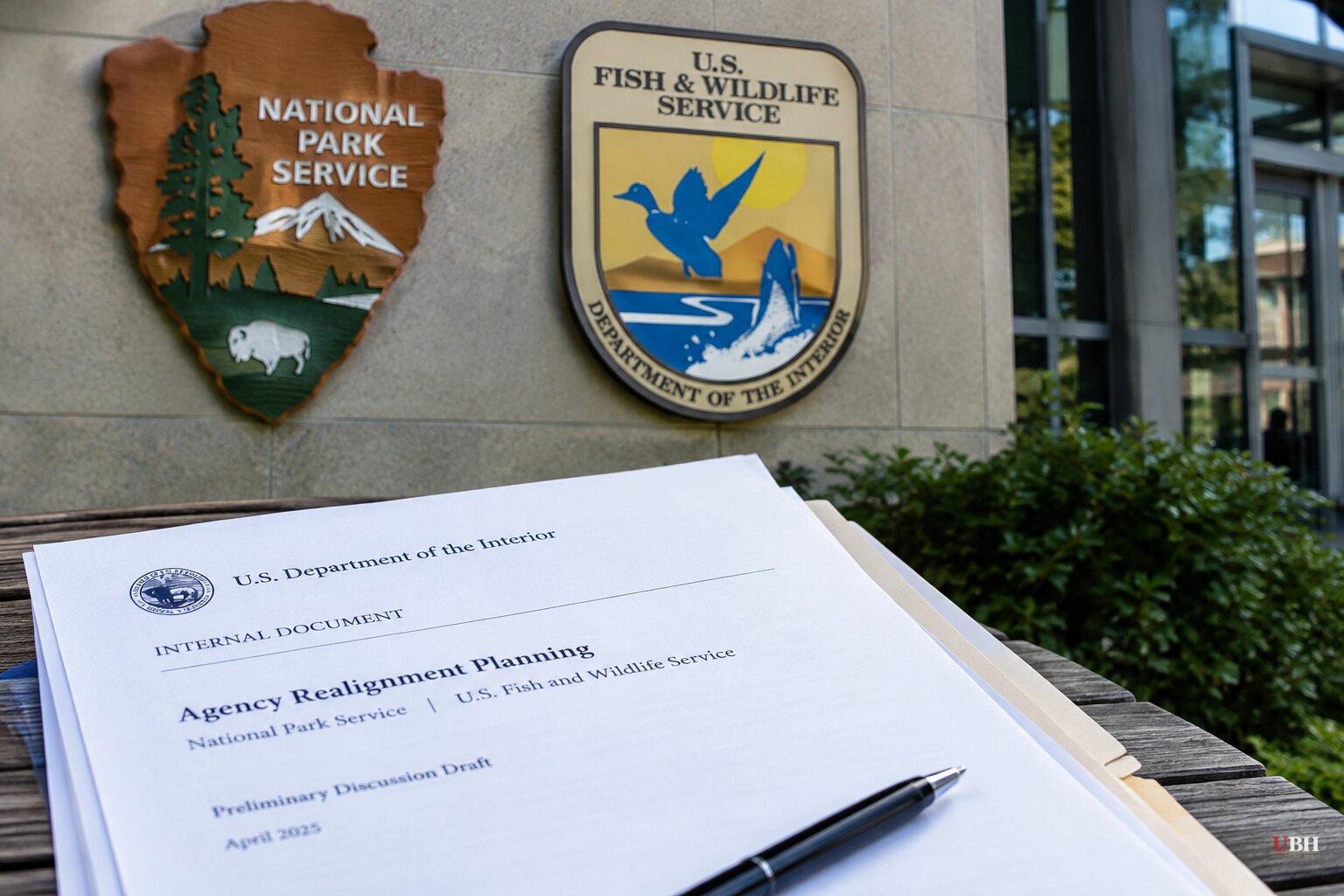
Since President Trump returned to office in January 2025 and began shrinking the federal workforce, the National Park Service has lost nearly a quarter of its permanent, full-time employees. Now the Interior Department is looking at restructuring that agency and the U.S. Fish and Wildlife Service.
Internal documents reviewed by The Washington Post show staff at both agencies are scheduled to meet this week and next to discuss what the department calls a "realignment." One Park Service session is set to cover "pending duty station changes," meaning where employees are assigned to work.
The documents do not say whether offices would close or move, or whether anyone would lose a job. The Interior Department did not respond to a request for comment.
The Fish and Wildlife report
The clearest signal came Friday, Nov. 6. Interior Secretary Doug Burgum and Fish and Wildlife Director Brian Nesvik unveiled a report titled "Rooted in Purpose" at a wildlife refuge in North Dakota. It contains 29 recommendations.
The central one: "reduce headquarters and regional office staffing and reallocate positions to refuge operations, prioritizing the people needed to manage habitat, maintain facilities, support public access and protect resources."
The agency oversees more than 500 national wildlife refuges covering about 93 million acres. An internal message to staff on Friday said the recommendations "give us a path forward" and that "our next responsibility is to turn them into practical actions."
That is the administration's stated case. Fewer desk jobs in Washington and regional offices, more people on the ground managing land. It is a pitch with obvious appeal to anyone tired of bureaucratic bloat.
The Park Service history
The Park Service has been in the crosshairs for more than a year. The administration has considered several restructuring plans since last year. In September, NOTUS reported on draft Interior documents describing a "hub and spoke" model, in which designated hub parks would direct operations at nearby parks and replace the regional management structure. It is unclear how much the current proposal differs.
Layoff plans drawn up at the Park Service last year were never carried out. The staff reductions came instead through firings, buyouts, deferred resignations and early retirements, according to federal personnel data cited by NOTUS.
The administration's fiscal 2027 budget request called for eliminating nearly 3,000 more Park Service positions. Senators from both parties objected at an April hearing with Burgum.
The Post reports the cuts have sometimes meant long lines, fewer tours and dirty bathrooms at parks, and that the administration has withheld millions in funding.
Pushback from park advocates and former superintendents
Ed Stierli, vice president of government affairs at the National Parks Conservation Association, acknowledged the administration's likely logic. "I think from their perspective, it seems as though that they're trying to find efficiencies by consolidating staff within DOI that maybe served different functions across these agencies," he said. "But I think in reality, it just seems to be causing more confusion and chaos."
A coalition of 20 former superintendents, including past leaders of Yosemite, Grand Canyon and Acadia national parks, wrote to Burgum in September. They said a restructuring would make it harder for the agency to serve the parks.
The Forest Service precedent
The plan follows a similar effort at the U.S. Forest Service, which sits under the Agriculture Department. In March, the administration launched a reorganization that included moving the agency's headquarters from Washington to Salt Lake City, along with hundreds of employees. It would also close some research stations and regional offices.
A judge has put that plan on hold, along with a wider reorganization of the Agriculture Department, amid legal challenges. Whether Interior's version draws similar lawsuits depends on what the final proposal actually does. None exists in public form yet.
What comes next
By law, Interior must notify Congress of any planned reorganization. That requirement lands at an awkward moment for the department. Democrats won both chambers in Tuesday's midterm elections and take over the committees that oversee Interior in January.
Several questions remain. Will the staff meetings produce a formal plan before the new Congress is seated? Will the notification to lawmakers arrive in the lame-duck window? And will the "duty station changes" mean closed offices, relocations or both? Interior has not answered any of them.
Sources used for this briefing
7 links from 5 independent newsrooms (syndicated copies of the same report count once)
These are the sources it draws on, linked so you can verify.


