
Unbiased headlines. Facts, not spin.
Every story is an unbiased news briefing written from 110+ sources across the spectrum — sources linked so you can verify it yourself.
 tech
Major Story (7/10)
June 23, 2026 at 04:54 PM
tech
Major Story (7/10)
June 23, 2026 at 04:54 PM
Midjourney Announces a Whole-Body Ultrasound Scanner. Radiologists Want Evidence.
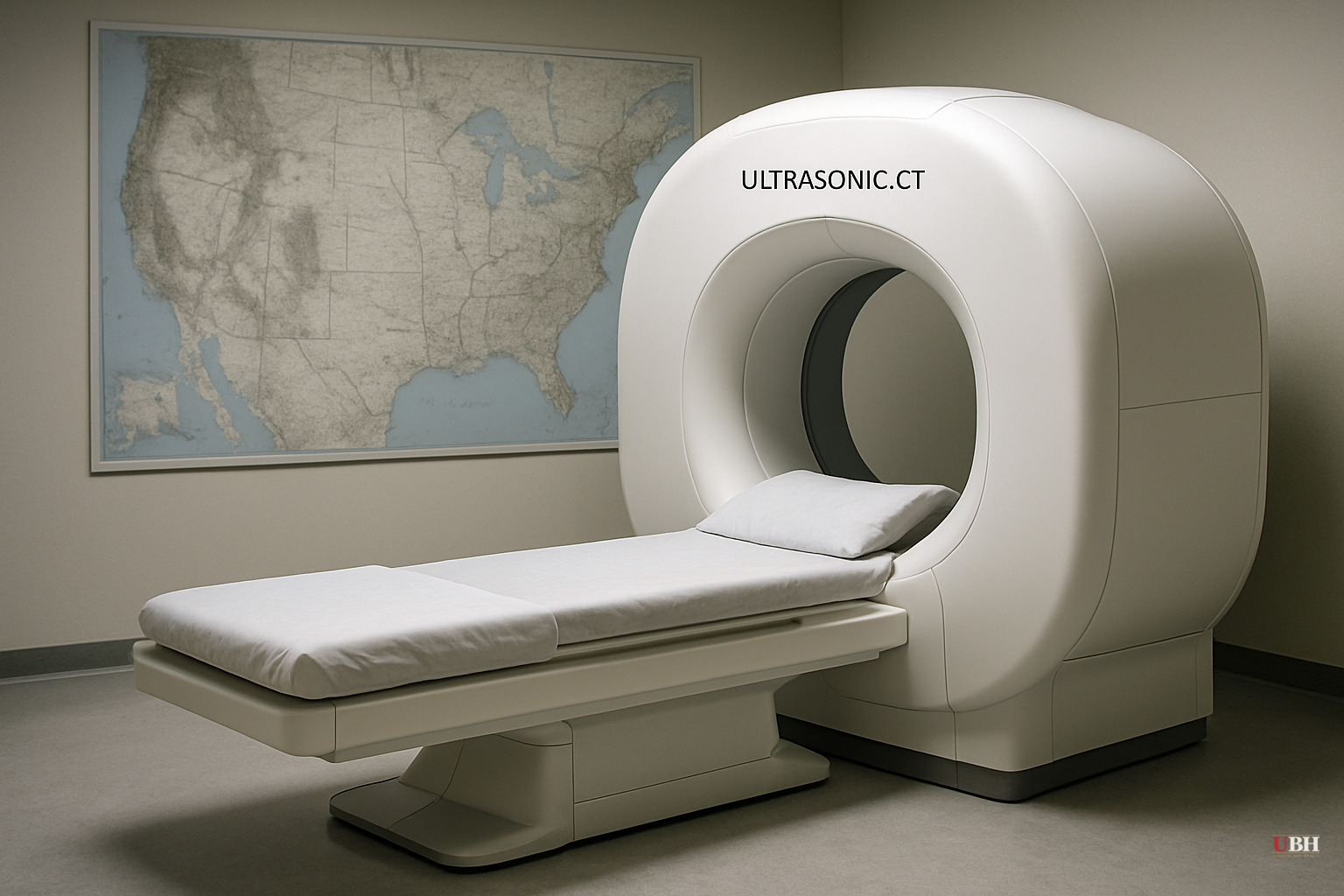
Midjourney Wants to Scan Your Body in a Tank of Water
Midjourney built its name generating synthetic images from text prompts. Now CEO David Holz wants to image the inside of your body.
Last week, the company announced Midjourney Medical and unveiled what it calls "Ultrasonic CT": a ring of ultrasound modules surrounding a water-filled tank. The patient submerges, the system fires ultrasound from multiple angles, and AI reconstructs the echoes into a 3D body scan. Midjourney claims a 60-second full-body scan, zero radiation, and no strong magnetic fields. Holz has suggested the system could one day surpass MRI.
The company's stated ambition: deploy 50,000 scanners worldwide within six years and perform "a billion full-body scans every month," per Midjourney's own medical page.
The Hardware Deal
This is not purely vaporware. According to RadiologyBusiness, Midjourney has a co-development and licensing agreement with Butterfly Network worth up to $74 million, including a $15 million upfront payment and $10 million in annual licensing fees, with up to $9 million in additional milestone payments referenced in a filing. The prototype integrates 40 of Butterfly's Ultrasound-on-Chip modules per system. Butterfly has said future versions are "expected to utilize substantially more imaging modules," signaling a planned scale-up.
Midjourney's head of medical Tom Calloway told The Verge that AI and specialized chips handle the "unthinkably huge amounts of data and processing power" required to execute a scan, and that AI also enables "lossless compression and dramatically speed up processing."
Money is committed. Hardware exists. A prototype has been imaged. Midjourney released an image of an imaging phantom segmented under controlled conditions.
What the Physics Actually Allow
Medical experts have raised significant concerns about the technology's fundamental limitations.
Scott Alexander, a physician writing at Astral Codex Ten, offered a technically detailed critique on June 19. His core point: ultrasound cannot penetrate bone or air. The brain sits behind a skull. The lungs are full of air. The bowels are full of air. That takes a substantial share of what doctors actually need to image off the table entirely.
Alexander notes that even for organs ultrasound can reach, conventional ultrasound works because a technician carefully angles a handheld probe. A fixed ring of emitters surrounding a water tank likely cannot replicate that precision for organs like the heart or prostate. His conclusion: this technology cannot replace most MRI or CT, because those modalities exist largely for the organs ultrasound physically cannot reach.
Radiologists and imaging specialists who spoke to The Verge made the same structural point: whole-body ultrasound tomography is not a new concept. Researchers have explored it for decades. The physics constraints — acoustic windowing, bone and air interference, variable soft-tissue contrast compared to MRI — are well understood and not solved by adding more transducers or better AI.
One expert told The Verge there is still "a long road ahead to generating high-quality images and then to understand the clinical value and demonstrate net benefit to patients."
The Fair Version of the Bull Case
Full-body ultrasound tomography's real opportunity is not replacing MRI or CT on their own turf. It is creating a new category: low-cost, radiation-free, repeatable screening for soft-tissue organs that ultrasound can reach — liver, kidneys, pancreas, thyroid, vascular structures, fat distribution, and muscle tissue. These are domains where early detection of conditions like fatty liver disease, abdominal aortic aneurysm, or soft-tissue tumors has genuine clinical value and where access to existing imaging is limited by cost and availability. If Midjourney's AI can reliably detect meaningful pathology in those domains at scale and at low cost, that would be a real contribution, even if it never touches a brain scan.
Alexander acknowledges this possibility directly, noting the scanner could "potentially be used to pioneer a new class of low-risk screening applications." He is skeptical about whether those applications are clearly beneficial, but he does not dismiss them as impossible.
What Is Missing
Midjourney has not published the evidence needed to evaluate any of this. According to The Verge and the Let's Data Science summary of public filings, no peer-reviewed performance metrics, no independent validation datasets, and no regulatory-clearance documentation appear in publicly available materials. The imaging phantom photo released by the company was produced under controlled conditions, not a clinical trial or independent audit.
The FDA has a regulatory pathway for devices like this, and it is not optional. No FDA clearance or approval has been announced. Without it, the device cannot be used clinically in the United States.
What Happens Next
Midjourney's ambition will eventually collide with a specific, unavoidable requirement: independent peer-reviewed validation followed by FDA regulatory review. Those two gates cannot be bypassed with a Butterfly Network deal or a compelling blog post. The clinical utility question — whether scanning a billion bodies a month for soft-tissue findings that may or may not be actionable actually helps patients, or generates anxiety and unnecessary follow-up procedures — is a separate question that will require outcomes data, not just image quality metrics.
As of June 23, 2026, neither set of data exists publicly. Whether Midjourney produces it, and on what timeline, is the only question that determines whether this becomes a genuine advance in preventive medicine or an expensive detour.
Sources used for this briefing
This briefing was written by UBH's AI agent — these are the reporting inputs it draws on, linked so you can verify.


