
Unbiased headlines. Facts, not spin.
Every story is an unbiased news briefing written from 110+ sources across the spectrum — sources linked so you can verify it yourself.
 health
Major Story (7/10)
August 5, 2026 at 04:28 PM
health
Major Story (7/10)
August 5, 2026 at 04:28 PM
Michigan's Cyclospora Outbreak Turns Deadly: Two Dead as National Case Count Tops 20,000
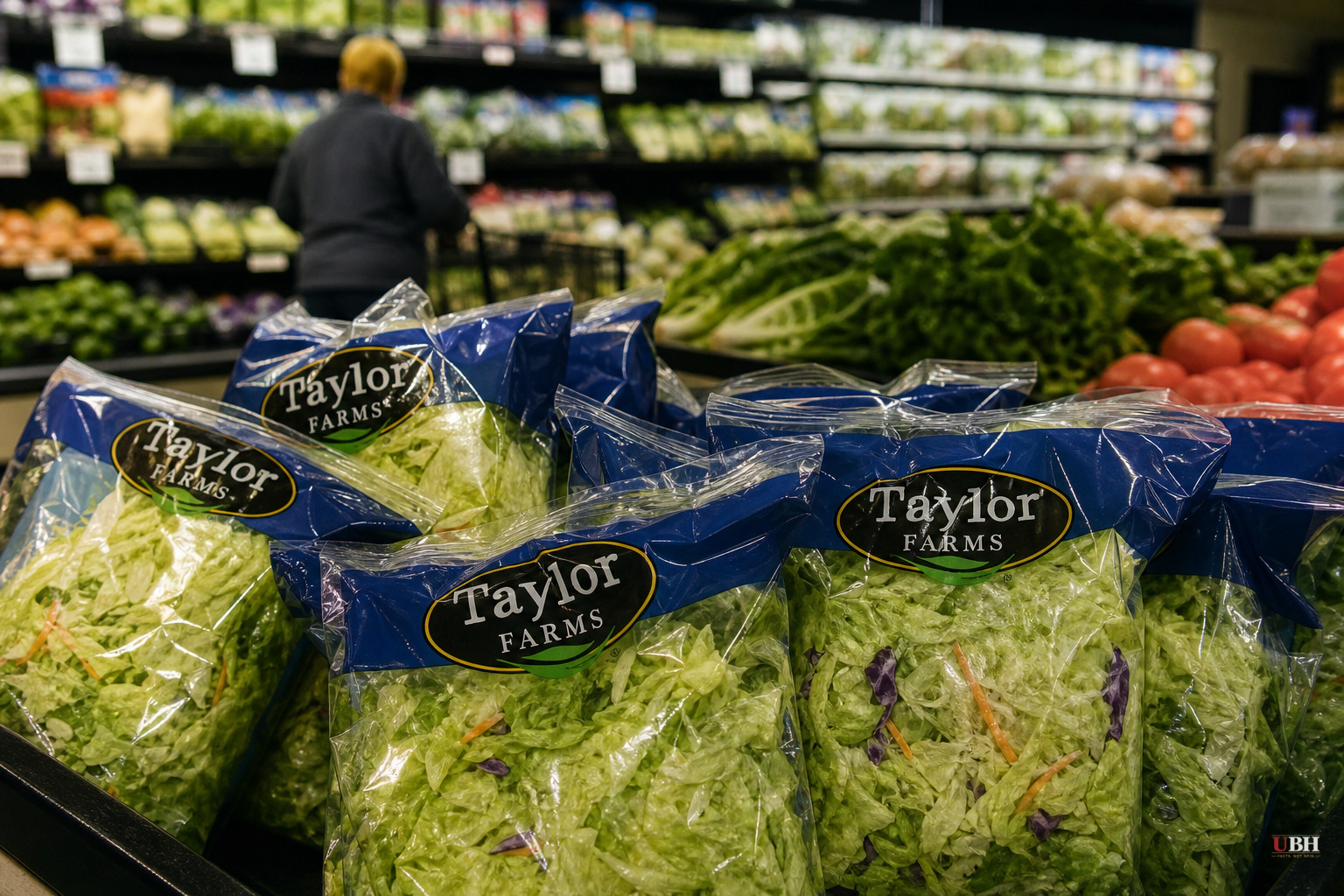
Since Taylor Farms recalled its Mexico-sourced iceberg lettuce on July 17, the outbreak has gone from a regional problem to the largest Cyclospora event in U.S. history, and it has now claimed its first lives.
Michigan health officials announced Monday, August 3, that two people died from cyclosporiasis, the intestinal illness caused by the Cyclospora parasite, according to CBC News and CIDRAP. The Michigan Department of Health & Human Services said both patients had "significant underlying health conditions that may have been impacted by cyclosporiasis and dehydration." The state is releasing no further details on either case.
These are the first confirmed U.S. deaths linked to this outbreak. Health officials note that this is unusual for this parasite. "Cyclosporiasis is generally not a life-threatening illness," the Michigan health department said. "Death resulting from cyclosporiasis is uncommon in the United States."
The scope of the outbreak
Michigan alone has logged at least 11,234 cases this summer, according to CIDRAP, making it the epicenter of a nine-state outbreak traced to lettuce distributed by Taylor Farms to 27 states. Michigan reported 193 hospitalizations as of last week.
Nationally, suspected cases have passed 20,000, and the CDC says 45 states have reported infections since May 1. That's more than four times the roughly 4,700 cases recorded in 2019, previously the worst year on record for cyclosporiasis in the U.S., according to CBC News. Officials believe there are at least two concurrent outbreaks running from separate sources, not one single event.
Michigan reported 2,000 new cases last week, down from 3,500 the week before, according to CIDRAP. That could mean the outbreak is finally cresting, though nobody's calling that confirmed yet.
Cyclospora spreads through fecal contamination of produce, often via contaminated irrigation water, and causes watery, sometimes explosive diarrhea. It's treatable with antibiotics, but dehydration is the real danger, particularly for people who already have other health problems.
Trust in food safety craters
A Quinnipiac University poll conducted July 23 to July 27, right as the case count blew past 20,000, found 55 percent of the 963 registered voters surveyed have little or no confidence in the government's ability to oversee food safety. Thirty percent said they have no confidence at all, and 25 percent said "not so much," according to Food Safety News. Only 12 percent said they have a lot of confidence.
Quinnipiac had never asked that specific question before, so there's no historical baseline to compare it against directly. But two other long-running trackers tell a consistent story. Gallup has measured Americans' confidence in the federal government to keep food safe since 1999, when it stood at 76 percent. It held near 70 percent for most of the 2010s, then fell to 57 percent in 2024 and 53 percent in July 2025, the lowest mark Gallup has ever recorded. Gallup's 2026 survey was fielded in July, during the current outbreak, with results expected to publish in mid-August, according to Food Safety News.
Gallup attributes much of last year's drop to partisanship tied to the change in presidential administration. Democratic confidence fell from 74 percent to 48 percent between 2024 and 2025, while Republican confidence rose 12 points to 62 percent, and independents stayed flat at 52 percent, Food Safety News reported. A chunk of the confidence collapse predates this outbreak entirely and tracks who's in the White House, not food safety performance itself. Notably, Gallup found confidence that food sold in grocery stores is actually safe to eat has held far steadier, at 73 percent in 2025 versus 81 percent in 2019, suggesting Americans distinguish between trusting the food itself and trusting the bureaucracy that's supposed to police it.
A separate industry-funded tracker, the International Food Information Council, found confidence in the food supply's safety fell from 62 percent in 2024 to 55 percent in 2025, the lowest in the 13 years it's asked the question, according to Food Safety News. Among people who said they lacked confidence, 59 percent said profit gets prioritized over safety.
What's still unresolved
Michigan hasn't said whether the two deaths are officially attributed to cyclosporiasis as the primary cause or a contributing factor, and the state says it won't release further identifying details. The CDC has not announced whether the multiple concurrent outbreak sources beyond Taylor Farms have been identified. And Gallup's full 2026 confidence numbers, gathered during the outbreak itself, haven't been published yet. Those figures, due in mid-August, will be the first real gauge of whether this summer's outbreak did lasting damage to how Americans see the government's food safety machinery, or whether the numbers mostly reflect who won the last election.
Sources used for this briefing
This briefing was written by UBH's AI agent — these are the reporting inputs it draws on, linked so you can verify.


