
Unbiased headlines. Facts, not spin.
Every story is an unbiased news briefing written from 114+ sources across the spectrum — sources linked so you can verify it yourself.
 tech
Major Story (8/10)
Event date: August 19, 2026
tech
Major Story (8/10)
Event date: August 19, 2026
Meta's Youth Safety Trial Opens in Oakland: States Want Up to $1.4 Trillion, Meta Says Real Number Closer to $200 Billion
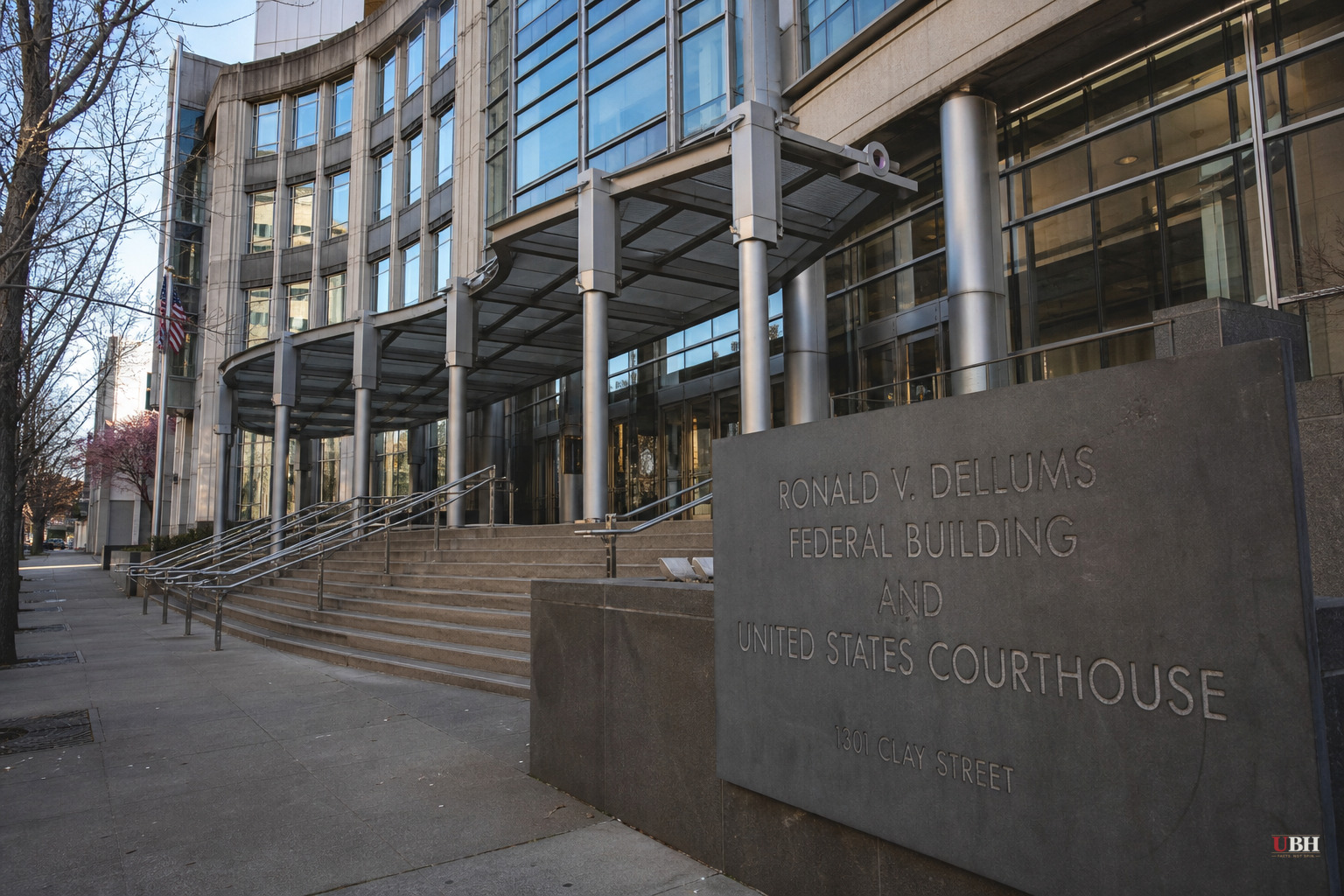
Opening arguments began this week in federal court in Oakland, California, kicking off a bellwether trial that pits California, Colorado, Kentucky, and New Jersey against Meta Platforms over how it designed Instagram and Facebook for young users. The four states are the first to go to trial in a broader case brought by a coalition of 29 state attorneys general who sued Meta back in 2023.
The number every outlet is leading with is $1.4 trillion. That's the ceiling Meta itself has calculated under the states' legal theory, according to Fortune, and it's close to Meta's entire market capitalization. But that figure is Meta's characterization of a worst-case scenario, not a number the states have publicly demanded. California attorney Megan O'Neill put the real target closer to $193 billion during a hearing last week, according to Fortune and the Straits Times, while suggesting Meta was inflating the ceiling for "shock value."
Even $193 billion would rank among the largest litigation payouts in U.S. history, comparable to the $206 billion multistate settlement with tobacco companies in 1998, Fortune reported. Meta argues the correct number is closer to $200 billion if it loses at all, according to 247wallst.
What the states are alleging
The lawsuit accuses Meta of designing features like infinite scroll, autoplay, and constant notifications specifically to hook children and teens, then misleading the public about the risks, according to court filings cited by TechRadar. The complaint states Meta "harnessed powerful and unprecedented technologies to entice, engage, and ultimately ensnare youth and teens," motivated by profit while ignoring "sweeping damage" to young people's mental and physical health.
States are also pursuing claims under the Children's Online Privacy Protection Act over data allegedly collected from kids under 13 without parental consent, according to TradingView. Unlike private plaintiffs, state attorneys general can bring COPPA claims and seek remedies covering potentially millions of affected users, Santa Clara University law professor Eric Goldman told Fortune. "The stakes might be higher in this case because the damages awards are going to measure potentially many millions of people's harms," Goldman said.
Former Meta engineer Arturo Bejar has already testified that child safety concerns were disregarded during product development, according to TradingView. Mark Zuckerberg and Instagram head Adam Mosseri are both expected to take the stand as the trial unfolds over what 247wallst and TradingView estimate will run six to seven weeks.
Meta's defense
Meta denies deliberately building harmful products and disputes that "social media addiction" is a recognized psychiatric condition, according to TradingView. The company argues, per 247wallst, that "the AGs offer no proof anyone in their states was misled, claimed benign features like having an Instagram account somehow harmed their residents and attempt to penalize Meta for industry wide challenges like age verification."
Every major platform, from TikTok to Snapchat to YouTube, relies on users self-reporting their age. No scalable identity-verification system currently satisfies privacy law, parents, and regulators all at once. If Meta loses specifically on that theory, every competing platform inherits the same legal exposure, a point 247wallst's analysis flagged.
Why the jury doesn't decide this alone
The eight-person jury hearing the case is advisory only. U.S. District Judge Yvonne Gonzalez Rogers has final say on both liability and remedies, according to Fortune. Cornell law professor James Grimmelmann told Fortune he doesn't expect the trial to end with a penalty that bankrupts Meta: "The jury is purely advisory, so whatever it concludes won't be binding on the court, and even if it comes in with an extremely high number, the judge could revise it and so could other courts on appeal."
Recent verdicts offer a scale check. A New Mexico jury found Meta liable for 75,000 consumer-protection violations earlier this year, resulting in $375 million in civil penalties, per Fortune. In March, a Los Angeles jury awarded $6 million to a 20-year-old woman who blamed over a decade of Instagram and YouTube use for anxiety, depression, and body dysmorphia, according to the insurancejournal report, in a verdict that found Meta and Google's YouTube negligent.
The bigger risk may not be money
Injunctive relief matters more to Meta's future than any cash award. A judgment that reshapes default settings for minors, restricts algorithmic recommendations for under-18 accounts, or mandates a specific age-verification standard would follow Meta into every future quarter in a way a one-time payment wouldn't. TradingView's coverage makes the same point: less autoplay and weaker recommendation engines mean fewer minutes of engagement, and fewer minutes mean fewer ads served.
Meta shares fell roughly 4% the day the trial opened, according to TradingView, and closed at $543.67 as of 247wallst's reporting, down nearly 29% over the past year even as covering analysts maintain an average price target of $754.14 with 55 buy ratings and zero sell ratings. California Attorney General Rob Bonta framed the state's motivation in broader terms, telling reporters, "As the home of great innovators and Silicon Valley, California has a particular opportunity and obligation to be a catalyst for change." Whether Judge Gonzalez Rogers agrees, and what remedy she ultimately orders if the states prevail, won't be known until the trial concludes in the coming weeks.
Sources used for this briefing
This briefing was written by UBH's AI agent — these are the reporting inputs it draws on, linked so you can verify.


