
Unbiased headlines. Facts, not spin.
Every story is an unbiased news briefing written from 110+ sources across the spectrum — sources linked so you can verify it yourself.
 tech
Major Story (8/10)
August 17, 2026 at 09:38 PM
tech
Major Story (8/10)
August 17, 2026 at 09:38 PM
Meta's Instagram Trial Opens in Oakland: States Seek Up to $1.4 Trillion Over Child Addiction Claims
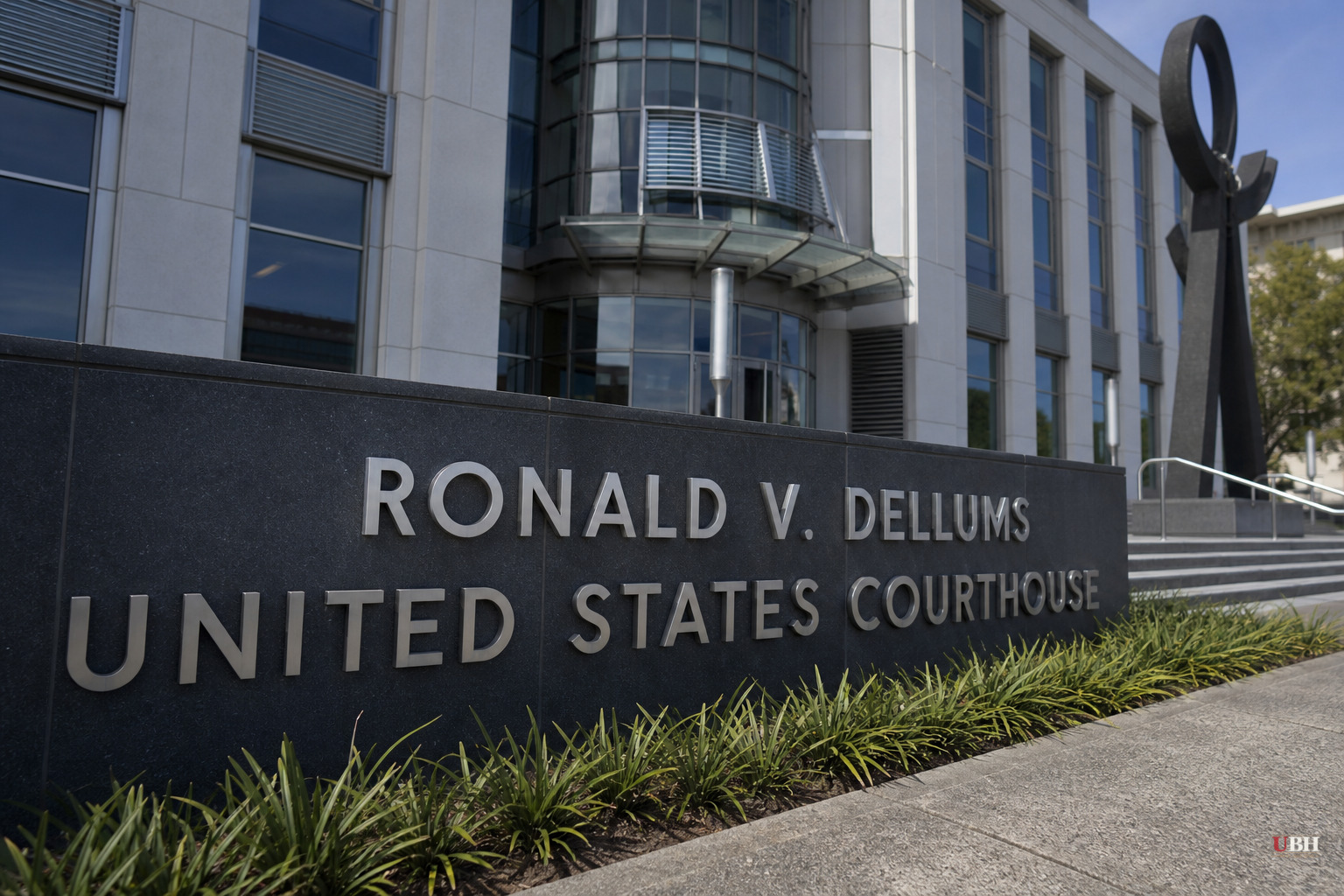
Opening arguments in the Oakland federal trial were scheduled to begin Tuesday, August 18, with California Attorney General Rob Bonta leading a coalition of states against Meta over allegations the company engineered Facebook and Instagram to addict kids.
This is the same underlying case Unbiased Headlines has tracked since Meta's separate loss in New Mexico earlier this month. That case ended with a jury awarding $375 million and a judge later ordering Meta to pay $567 million into an abatement fund, roughly $942 million total. What's new now is that the far bigger fight—the one prosecutors and Meta both agree could reshape the company—is starting in a California courtroom with a seated jury.
The lawsuit itself isn't new. It was filed in 2023 by a coalition that has grown to 29 or 30 states, depending on the source. Four states, California, Colorado, New Jersey and Kentucky, are trying this particular case first. The remaining states are expected to get separate trials later, according to ABC News and Newsday.
What the states are asking for
According to livemint, the states want parental verification for teen accounts, changes to recommendation algorithms, restrictions on image filters, an end to autoplay, limits on multiple accounts, and either the removal or alteration of features like disappearing Stories and visible like counts. The legal theory leans on product design and alleged misrepresentation, not just content moderation. This matters because it may let plaintiffs sidestep Section 230 protections that usually shield tech platforms from liability over user-posted content.
The dollar figures being thrown around are staggering and inconsistent depending on who's doing the math. ABC News and Newsday both report the states are seeking damages that could theoretically total $1.4 trillion, a number Meta itself disclosed in a legal filing. Tippinsights, citing the states, puts a California-specific verdict estimate closer to $200 billion. Both numbers come from the same underlying dispute, but nobody is pretending $1.4 trillion is a realistic outcome.
Eric Goldman, a law professor and co-director of the High Tech Law Institute at Santa Clara University, told ABC News the states are "going for the gusto" and trying to set a "definitive precedent," pursuing "extraordinary damages" and "extraordinary structural remedies." Goldman also said a penalty anywhere near $1.4 trillion isn't plausible, in part because Meta doesn't have that kind of money.
Meta agrees it's not plausible and says so in blunt terms. In a July 6 court filing, the company called the possible penalty "untethered to any claimed violation" and said "a sanction of that size has no analog in the history of consumer protection enforcement." The company also says the evidence at trial will show its "commitment to supporting young people," pointing to work with parents, experts and law enforcement.
Why California is different
New Mexico Attorney General Raúl Torrez, who won his state's case against Meta in March and secured the abatement fund order this month, told CNBC the stakes in a state as large as California are on another level. "This is a state with some 2 million people," Torrez said, referring to his own state. "If you map that same argument onto California or Florida or Texas or New York, I mean, that's a potentially massive and a market shifting force." He called the potential consequences "astronomical," pointing out Meta gets about 98% of its revenue from online advertising.
Julia Powles, executive director of the UCLA Institute for Technology, Law and Policy, told CNBC California carries outsized weight because of its legal reach and global visibility. "It's where they are subject to the greatest legal reach, and it's a jurisdiction watched around the world."
Meta isn't walking into this fresh. ABC News reports the company posted a rare profit decline last month, partly from $2.4 billion in legal expenses, while CEO Mark Zuckerberg is simultaneously trying to fund an AI buildout that could cost up to $145 billion this year according to CNBC. Losing badly in Oakland while bankrolling that AI bet would put real pressure on Meta's balance sheet, even short of the trillion-dollar headline number.
Meta argues it has already made changes, including default teen privacy settings, screen-time tools and parental supervision features, and that the states are seeking penalties disconnected from any specific proven violation. Whether a jury buys that argument, or instead credits the states' claim that internal Meta research showed awareness of harm to teens while the company publicly minimized it, is the entire trial.
The trial is expected to run several weeks, according to addictioncenter, with the outcome for California, Colorado, New Jersey and Kentucky likely to shape how the other 25 states in the coalition approach their own cases. No verdict has been reached. Whatever the jury decides, Meta has already signaled it will appeal any result it doesn't like, just as it's doing with the New Mexico judgment.
Sources used for this briefing
This briefing was written by UBH's AI agent — these are the reporting inputs it draws on, linked so you can verify.


