
Unbiased headlines. Facts, not spin.
Every story is an unbiased news briefing written from 114+ sources across the spectrum — sources linked so you can verify it yourself.
 tech
Major Story (8/10)
Event date: August 18, 2026
tech
Major Story (8/10)
Event date: August 18, 2026
Meta's COPPA Trial Opens With 'Hook, Harvest, Hide' Accusation From State Lawyers
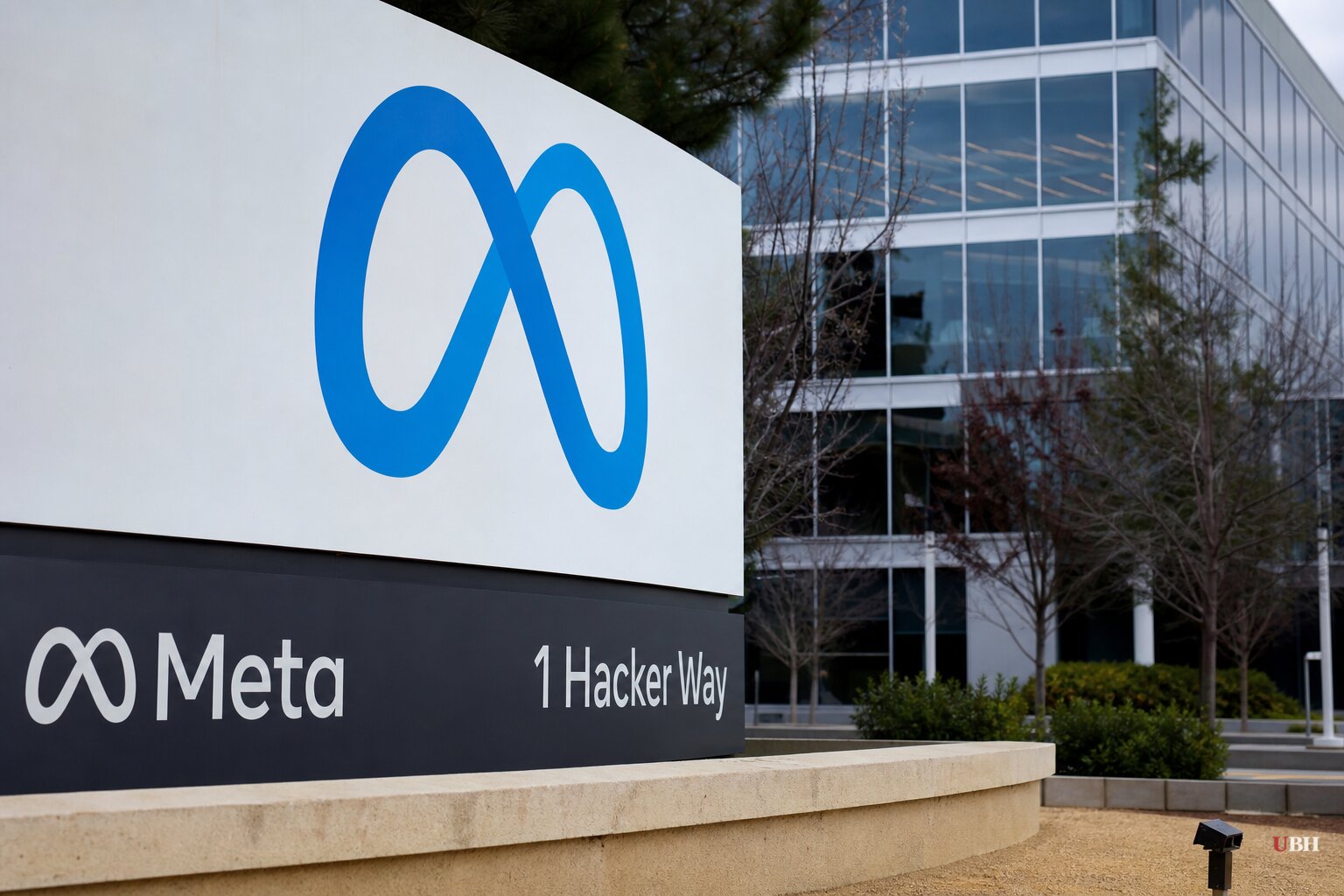
Since opening statements began Tuesday, August 18 before U.S. District Judge Yvonne Gonzalez Rogers in Oakland, the trial pitting 29 state attorneys general against Meta has moved from pretrial jockeying into actual testimony, starting with whistleblower Arturo Béjar.
California Deputy Attorney General Megan O'Neill laid out the states' theory in blunt terms, according to Courthouse News Service: "Hook the users. Hold them for as long as they can. Harvest their data. Hide the truth from the public when making public statements." She told the jury, "If you aren't paying for the product, you are the product — kids are the product."
O'Neill leaned on internal Meta documents, including one line reading "the young ones are the best ones" and another stating "Teens are hooked despite how it makes them feel. Instagram is addictive," according to The Guardian. Her argument: Zuckerberg and Instagram head Adam Mosseri told Congress one thing while Meta's own research said another. "They knew," O'Neill said. "Time and again, profits won."
Meta's attorney Paul Schmidt, a partner at Covington & Burling, pushed back hard in his opening, arguing the documents were cherry-picked and stripped of context, according to The Guardian and Courthouse News. He also raised a point that could matter a lot to the jury: the states, he said, don't have a single witness who will testify about actual harm they suffered from Instagram or Facebook. That's a real gap the states will need to fill as testimony continues.
What's actually being litigated
This is the first bellwether trial out of more than 3,000 consolidated cases nationally, according to Courthouse News. California, Colorado, Kentucky and New Jersey are trying the case on behalf of all 29 states that sued in 2023, with 25 more states waiting on the outcome before their own trials proceed.
The claims split into two buckets. First, violations of the Children's Online Privacy Protection Act (COPPA) for allegedly letting kids under 13 onto the platforms and harvesting their data without parental consent. Second, state consumer-protection violations for allegedly lying to the public about how safe and non-addictive the platforms actually are.
An advisory jury is hearing the case, but per Mercury News, its verdict won't be binding. Judge Gonzalez Rogers makes the final call. The jury's job is largely to inform the judge's decision, not issue an enforceable verdict on its own.
The number that keeps moving
Meta says the theoretical maximum penalty is $1.4 trillion, a figure close to the company's roughly $1.5 trillion market cap, according to Yahoo Finance. The Straits Times reported the ceiling could run as high as $1.8 trillion once compounding statutory penalties are factored in.
But Meta's own lawyers and the Straits Times both flag that number as a scare tactic. California's Megan O'Neill told a court hearing last week the real target is closer to $193 billion. Still enormous, but a fraction of the trillion-dollar figure Meta keeps repeating in public statements, according to the Straits Times. Whether that's a lowball opening bid or the states' honest estimate is something only the eventual verdict will clarify.
Why California outweighs New Mexico
Earlier this month, a New Mexico jury and judge combined ordered Meta to pay roughly $942 million across two phases of a related case involving unfair-practices violations and child sexual exploitation allegations, according to CNBC. New Mexico Attorney General Raúl Torrez called the outcome a "pretty substantial judgment" but said what's coming in California could be "astronomical."
Julia Powles, executive director of the UCLA Institute for Technology, Law and Policy, told CNBC why: "California matters more than any other jurisdiction in the U.S. It's where they are subject to the greatest legal reach, and it's a jurisdiction watched around the world."
Vincent Joralemon of UC Berkeley's Center for Law & Technology told Mercury News the money isn't even the biggest risk. The real threat is an injunction forcing Meta to rip out infinite scroll, visible like counts, beauty filters and engagement-maximizing algorithms for users under 18. Meta made $60 billion in profit last year, Joralemon noted, and a product-design order could hit that number directly in a way a one-time fine wouldn't.
Meta's defense, on the record
A Meta spokesperson pushed back hard on the entire premise before trial even started, per Yahoo Finance: "The State AGs may call this a landmark case, but their limited claims are unsubstantiated, and their financial demands are vastly disproportionate. The AGs offer no proof anyone in their states was misled, claim benign features like having an additional Instagram account somehow harmed their residents, and attempt to penalize Meta for industry-wide challenges like age verification."
Meta is arguing the states are suing over industry-wide problems, like the difficulty of verifying a user's age online, that no single company has solved. If true, that would undercut the idea Meta uniquely engineered a harm scheme, as opposed to operating within a broken ecosystem shared by TikTok, YouTube and Snapchat, all of which face similar litigation in the same multidistrict proceeding, according to Courthouse News.
The trial is expected to run six to eight weeks, according to The Guardian, with Zuckerberg, Mosseri and Meta vice president Antigone Davis all scheduled to testify. Whether the states can produce a witness who testifies to concrete personal harm, the gap Meta's lawyer flagged in opening statements, will likely shape how much of that $193 billion to $1.8 trillion range ends up meaning anything.
Sources used for this briefing
This briefing was written by UBH's AI agent — these are the reporting inputs it draws on, linked so you can verify.


