
Unbiased headlines. Facts, not spin.
Unbiased Headlines is an independently owned news organization. We bring you the facts, not opinions, written fresh from 110+ named sources. Sources linked so you can verify it yourself.
 tech
Notable (6/10)
Event date: November 20, 2026 ·
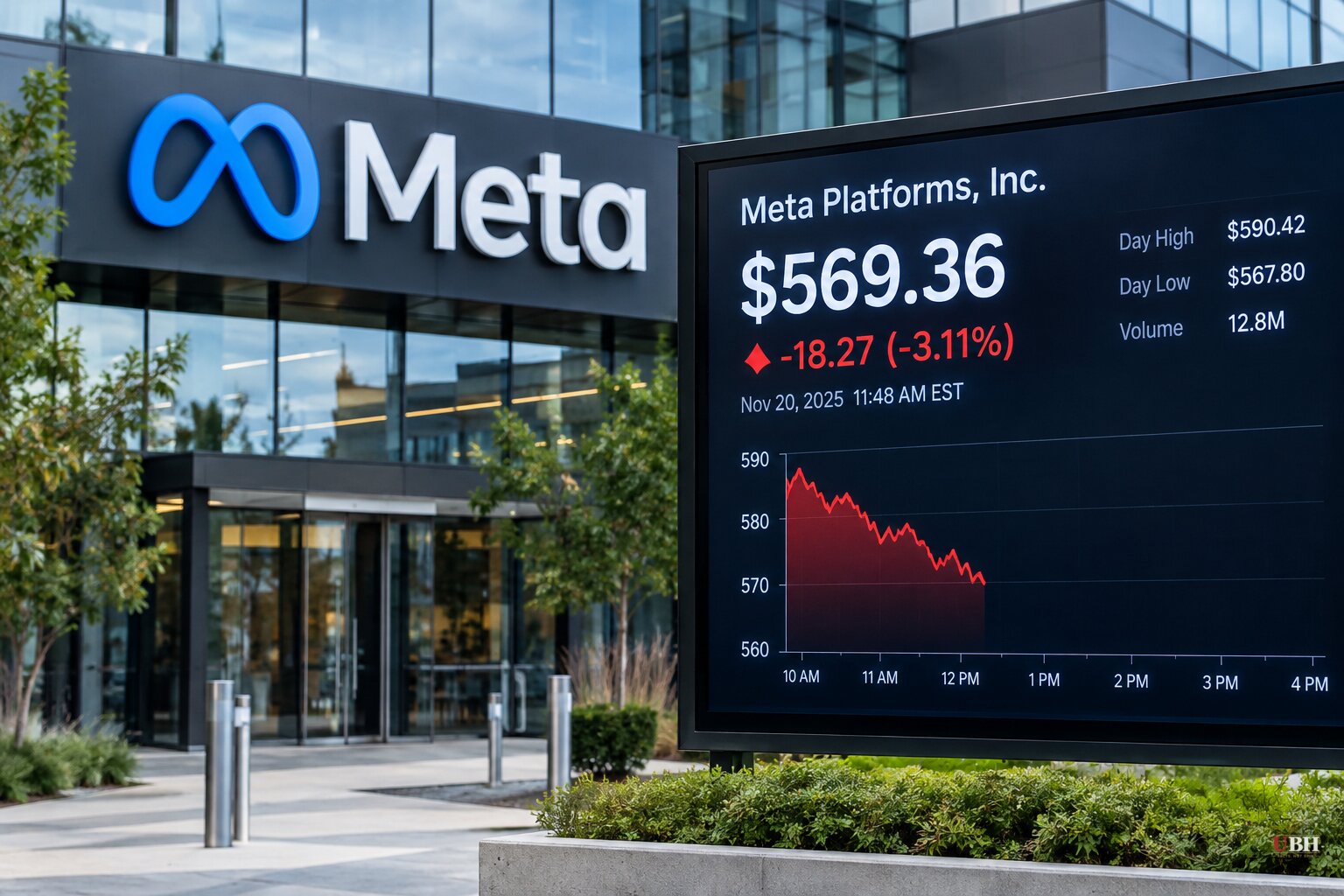
Meta Shares Fall Below the $625 Price of Its Recent Stock Sale as 2026 AI Spending Guidance Hits $135B to $145B
Meta Platforms is spending at a rate that dwarfs its own history, and the stock is feeling it.
The company narrowed its 2026 capital expenditure guidance to between $135 billion and $145 billion, up from an earlier range of $130 billion to $145 billion. The top end did not move. The floor rose. Meta spent roughly $72 billion on capex in 2025, so the new range is close to double that.
The quarter in numbers
The business itself is not struggling. Third-quarter revenue hit $64.6 billion, up 26% from a year earlier. Advertising made up $63.06 billion of it.
Ad impressions rose 10%. The average price per ad climbed 14%. Daily active users across Meta's apps averaged 3.64 billion.
Net income was $9.9 billion, with diluted earnings per share of $3.83. Meta guided fourth-quarter revenue to $73 billion to $76 billion.
Google Search, by comparison, grew 12% to $63.4 billion in the same period, according to CNBC's analysis. Meta's ad business is now nearly the same size, and it is growing more than twice as fast.
Where the cash went
The cost side is the weak spot. Capital spending in the quarter reached $34.9 billion, more than Meta generated from operations. Free cash flow came in at negative $2.12 billion.
Costs grew about 68% against that 26% revenue gain, according to an analysis by shattered.io. The Motley Fool's Neil Patel noted that the spending has also paused Meta's share buybacks.
The money covers data centers, chips, networking gear, and the systems needed to train the company's Llama models. Meta says the AI work is already improving content recommendations, ad impressions, and revenue per ad.
A new class of stock
Meta plans to introduce a non-voting Class C share and is looking to raise up to $95 billion through equity offerings to help pay for the buildout. The structure brings in outside money without diluting Mark Zuckerberg's voting control.
On Oct. 26, Meta sold $37.5 billion of new stock at $625 a share, according to TradingNews. Buyers in that offering hold shares that were priced below that level in Friday trading.
That is the tradeoff for outside shareholders: more capital goes into the company, with no additional say in how it is spent.
The stock reaction
Meta shares were trading at $569.36 late Friday morning, Nov. 20, down 4.5% from Thursday's close of $596.22, per TradingNews. The Nasdaq Composite was down 3.34% at the time and had turned negative for 2026.
From Thursday's intraday high of $630.06, the stock had lost about 9.6% in under two sessions. At that price Meta's market value was about $1.455 trillion.
The 52-week high is $779.82, which put the stock roughly 27% below its peak. TradingNews put Meta's decline for the year at 9% to 13%.
U.S. markets are closed for the weekend, so Friday's final close is the last confirmed regular-session mark heading into Monday.
Two readings of the same numbers
The skeptical case comes from Patel at The Motley Fool. He wrote that it is "much harder now to believe that Zuckerberg is following the right strategic path," pointing to the metaverse project, negative free cash flow, and spending he says is likely to be much higher next year. He also floated the idea that long-term AI winners may be businesses that use the technology to serve customers, rather than the infrastructure providers building it.
The bullish read comes from TradingNews analyst Itai Smidt. He argues the market is valuing Meta on the cost of its AI ambitions rather than on the strength of its core ad business. He notes the stock trades at 19.4 times forward earnings and sets a $625 upside target, with $562 as the level guarding the downside.
Smidt also cites 2027 capital spending forecasts above $225 billion. His own conclusion is that the stock needs evidence of AI returns before it can recover.
Both sides agree on the numbers. They disagree on whether a business growing ad revenue at 26% can keep funding spending of this size.
What comes next
The next test is the fourth-quarter report, against Meta's own $73 billion to $76 billion revenue guidance. If ad pricing and impressions keep rising at the rates seen in the third quarter, the company has a case that the AI outlay is feeding the ad machine. If they slow while capex stays near $140 billion, the $95 billion equity raise and a 2027 budget that forecasts put above $225 billion will draw sharper questions from shareholders who have no vote.
Sources used for this briefing
4 links from 4 independent newsrooms (syndicated copies of the same report count once)
These are the sources it draws on, linked so you can verify.


