
Unbiased headlines. Facts, not spin.
Unbiased Headlines is an independently owned news organization. We bring you the facts, not opinions, written fresh from 110+ named sources. Sources linked so you can verify it yourself.
 tech
Notable (6/10)
Event date: November 19, 2026 ·
Intel Says It Signed Its First Outside 18A Customer, Declines to Name It
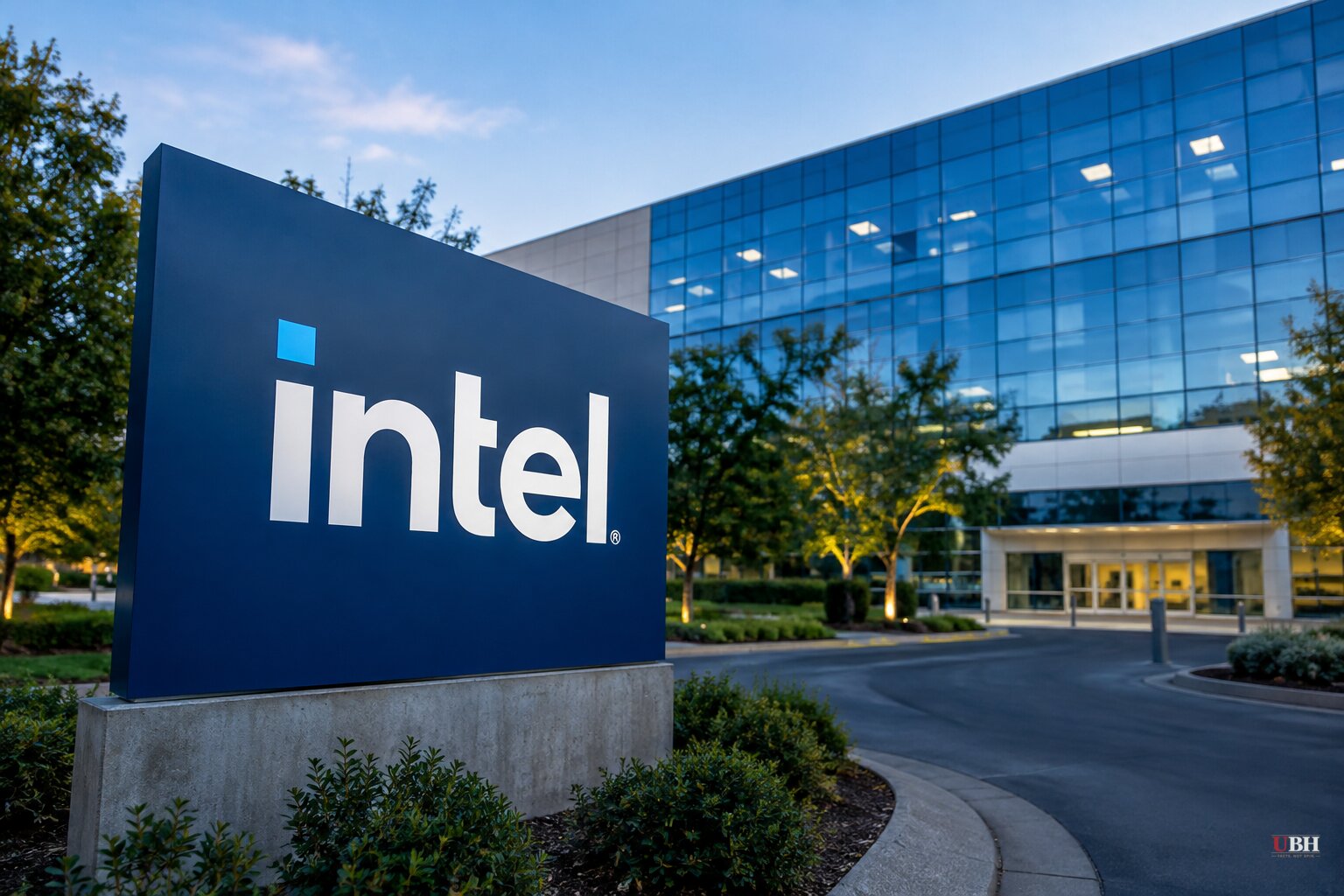
Intel CEO Lip-Bu Tan said Wednesday, Nov. 18, that the company has signed its first outside customer for its 18A chipmaking technology. He did not say who it is.
"Resilient supply on the foundry is very important," Tan said at the TomorrowX Summit in Austin, Texas. "And then 18A, I'm involved in production and we just signed the first customer."
Intel's chief technology officer, Pushkar Ranade, later said on X that the customer signed up for 18A-P, a variant of the 18A process that entered risk production in June. Risk production means real wafers run through the line in limited volumes before full manufacturing begins. Intel says 18A-P is fully compatible with 18A designs.
What Intel has and has not said
Intel has not disclosed the customer's identity, how many chips it plans to order, or any revenue tied to the deal.
Crypto Briefing, citing Tan's remarks, reported that he also said 18A yields have reached 70%. Yield is the share of chips on a wafer that come out working. Tan said yields were poor when he took over as CEO in March 2025.
Intel did not explain how the new deal differs from an earlier one. In August, Japanese chip designer Socionext said it planned to use 18A-P for custom chips aimed at AI, high-performance computing and datacenter workloads.
Reports in May indicated Apple and Intel were close to a deal for Intel to make some Apple chips. Neither company has confirmed one.
The packaging win
Tan also announced that Microsoft is the first publicly named customer for Intel's EMIB advanced packaging technology. EMIB, short for Embedded Multi-die Interconnect Bridge, will be used for Azure first-party silicon.
Intel Foundry General Manager Naga Chandrasekaran said EMIB could help scale future Azure infrastructure through co-optimization of silicon, packaging, compute, memory and software.
Packaging is the step where finished chips are assembled and connected into a larger system. Intel is a leader in that area. Wafer manufacturing for outside customers is the harder sell.
Why a named customer matters
Until now, Intel has had no marquee customer for its foundry business. It has mostly built its own processors, including at a large new campus in Arizona.
The five-year push to challenge Taiwan Semiconductor Manufacturing Co. rests on persuading other chip designers to hand Intel their business.
"It's a huge win for foundry," Ben Bajarin, an analyst at Creative Strategies, told CNBC.
Bajarin pointed to Nvidia, Apple and the big hyperscalers that design their own processors as possible candidates. "Amazon, Microsoft and Google are struggling to get capacity for their CPU ambitions at TSMC," he said. "So it makes sense that you go somewhere for at least some capacity."
He was speculating. Intel has said nothing about who signed.
A rough stretch for the stock
The news landed after a brutal October. Intel shares fell 45% that month, the largest monthly decline on record, after the company forecast fourth-quarter revenue of $15 billion to $16 billion. CNBC reported the guidance came in at least $1 billion short of analyst estimates, with Intel citing a PC sales slump and supply chain challenges.
CNBC reported the stock has lost more than half its value since the end of September.
At the same time, Intel said it was redirecting part of its Oregon factory output from 18A wafers to wafers on the older Intel 3 process for its data center products. In July, it announced a deal with Fortinet to build a security processor on Intel 4, a more mature process than 18A.
Nvidia's 13F filing, covered by Yahoo Finance, showed it sold about 25% of its Intel stake in the third quarter, roughly 53.69 million shares. Intel shares fell Tuesday after the disclosure.
Intel shares rose between about 2.6% and 5% in after-hours trading Wednesday following Tan's remarks, according to different accounts. U.S. markets are closed for the weekend, so Monday's open will be the next test of whether the gain held.
Taxpayers have a stake
The U.S. government took a 10% stake in Intel in August 2025, and Nvidia followed with a $5 billion investment. Both bets assumed U.S.-made chips could reduce near-total reliance on Taiwan.
Tan said in late October that he sees the global server processor market growing as much as five times over five years, to about $200 billion. He acknowledged Intel cannot currently meet customer demand.
What comes next
On the October earnings call, Tan said "a couple of customers" would be ready to announce over the next two quarters. The 18A-P client may be one of them, or may be separate.
The open questions are specific: who signed, how many wafers they will order, and whether 18A-P moves from risk production to volume manufacturing at the yields Tan describes. Intel has not given a date for naming the customer.
Sources used for this briefing
7 links from 7 independent newsrooms (syndicated copies of the same report count once)
These are the sources it draws on, linked so you can verify.


