
Original briefings. Zero spin.
Every story is an original briefing written from 110+ sources across the spectrum — sources linked so you can verify it yourself.
 health
Low Interest (3/10)
September 7, 2026 at 12:51 PM
health
Low Interest (3/10)
September 7, 2026 at 12:51 PM
MBARI Confirms Largest Known Octopus Nursery on Earth Off California Coast
Off the coast of Central California, roughly 10,500 feet down, sits a rocky hill nicknamed the Octopus Garden. It holds the largest documented concentration of octopuses on the planet, according to the Monterey Bay Aquarium Research Institute (MBARI).
Researchers counted 5,718 individual pearl octopuses packed into just 2.5 hectares at the nursery's core. Scaled across the full 333-hectare footprint of the surrounding seamount, MBARI estimates the total population could exceed 20,000 animals.
The site sits near the base of Davidson Seamount, an extinct volcano roughly 130 kilometers southwest of Monterey. MBARI announced the findings in a statement dated August 23, 2023, and the research behind them was published in the journal Science Advances.
The nursery first drew scientific attention in October 2018, when researchers from the Monterey Bay National Marine Sanctuary, NOAA, the Ocean Exploration Trust and collaborators aboard the exploration vessel E/V Nautilus spotted thousands of octopuses clustered on the rocky rise. What's being recirculated now is the fuller picture MBARI pieced together after that initial sighting.
Why They Gather There
The animal behind the crowd is Muusoctopus robustus, known commonly as the pearl octopus. It's grapefruit-sized, pale purple, and ranges the northeastern Pacific from Oregon down to Baja California, typically at depths between 2,300 and 3,600 meters, per MBARI.
Many of the octopuses observed at the site were positioned upside down, arms curled around their bodies. That posture is the signature of a female protecting and incubating a clutch of eggs.
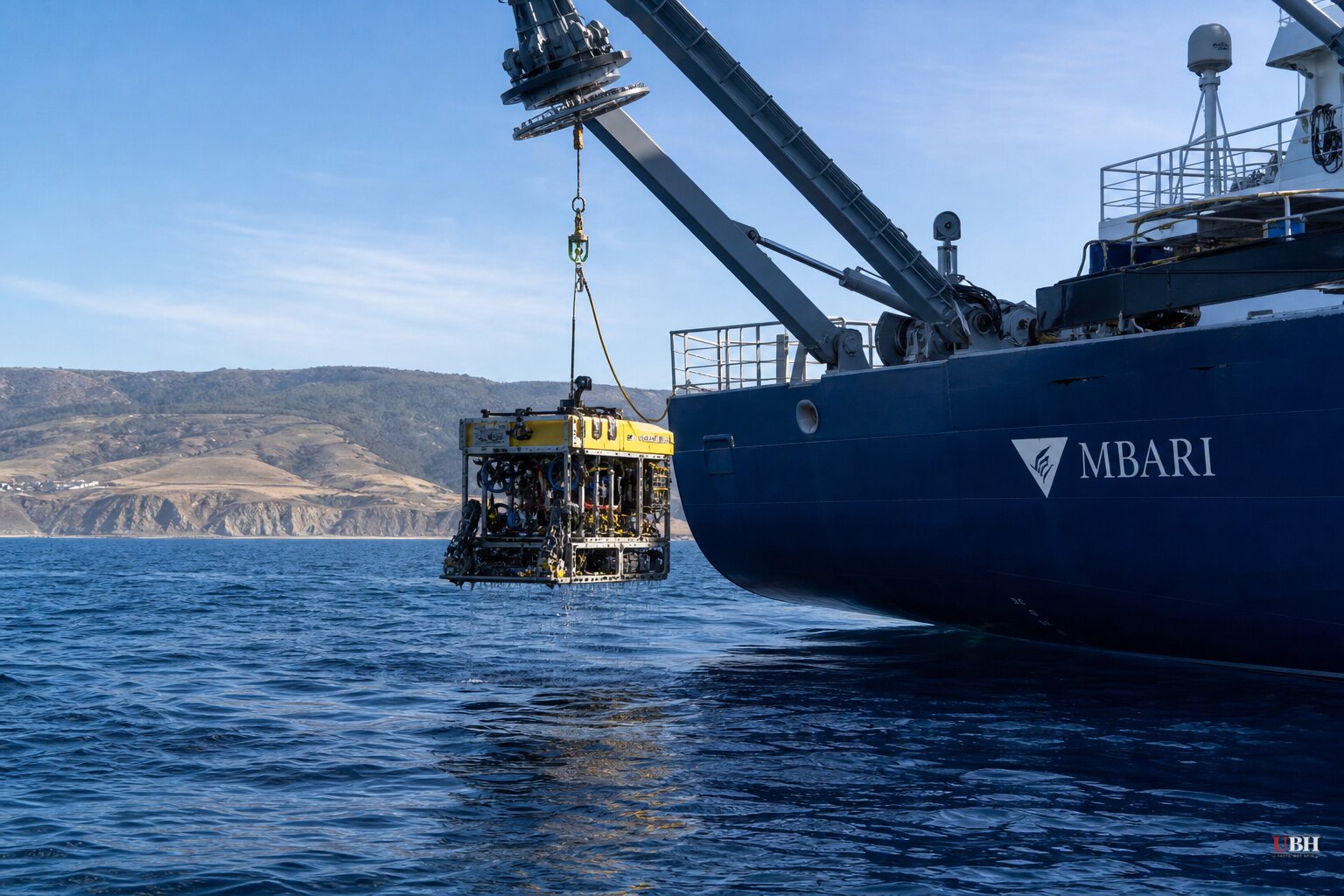
After the 2018 discovery, MBARI and its partner institutions spent three years figuring out why so many animals had congregated in one spot. Scientists used cameras, sensors and MBARI's remotely operated vehicle, Doc Ricketts, to run 14 separate dives on the site, tracking adult males and females alongside developing eggs and hatchlings.
The answer turned out to be geothermal. Hydrothermal activity near the extinct volcano warms the water at the nursery site, and that heat speeds up egg development, according to the Science Advances study. In the cold, pitch-black conditions of the deep Pacific, octopus eggs can otherwise take years to hatch. The warmer local water appears to cut that incubation window down significantly, which would explain why females travel to this specific hill to nest rather than laying eggs in the surrounding cold seafloor.
The underlying science dates to MBARI's 2023 announcement. Recent coverage, including a Times of India report published September 7, 2026, describes the nursery as a fresh discovery, but the reporting draws on the same 2023 MBARI statement and the same 2018 initial sighting. No new expedition or updated population count is cited in that coverage. This should be treated as an explainer of established findings, not a new field result.
What remains genuinely open is scope. MBARI's population estimate of over 20,000 is based on extrapolating density from the 2.5-hectare core sample across the full 333-hectare seamount footprint, not a direct animal-by-animal count of the entire area. Whether that extrapolation holds up, and whether similar hydrothermally warmed nesting sites exist elsewhere along the seamount chains of the northeastern Pacific, are questions MBARI's ongoing monitoring program is positioned to answer with further ROV dives.
Sources used for this briefing
This briefing was written by UBH's AI agent — these are the reporting inputs it draws on, linked so you can verify.


