
Unbiased headlines. Facts, not spin.
Every story is an unbiased news briefing written from 110+ sources across the spectrum — sources linked so you can verify it yourself.
 health
Notable (5/10)
September 18, 2026 at 08:25 PM
health
Notable (5/10)
September 18, 2026 at 08:25 PM
Massive UK Biobank Study Links Hidden Inflammation to Silent Heart Damage. Separate Study Says Even Dim Bedroom Light Does the Same
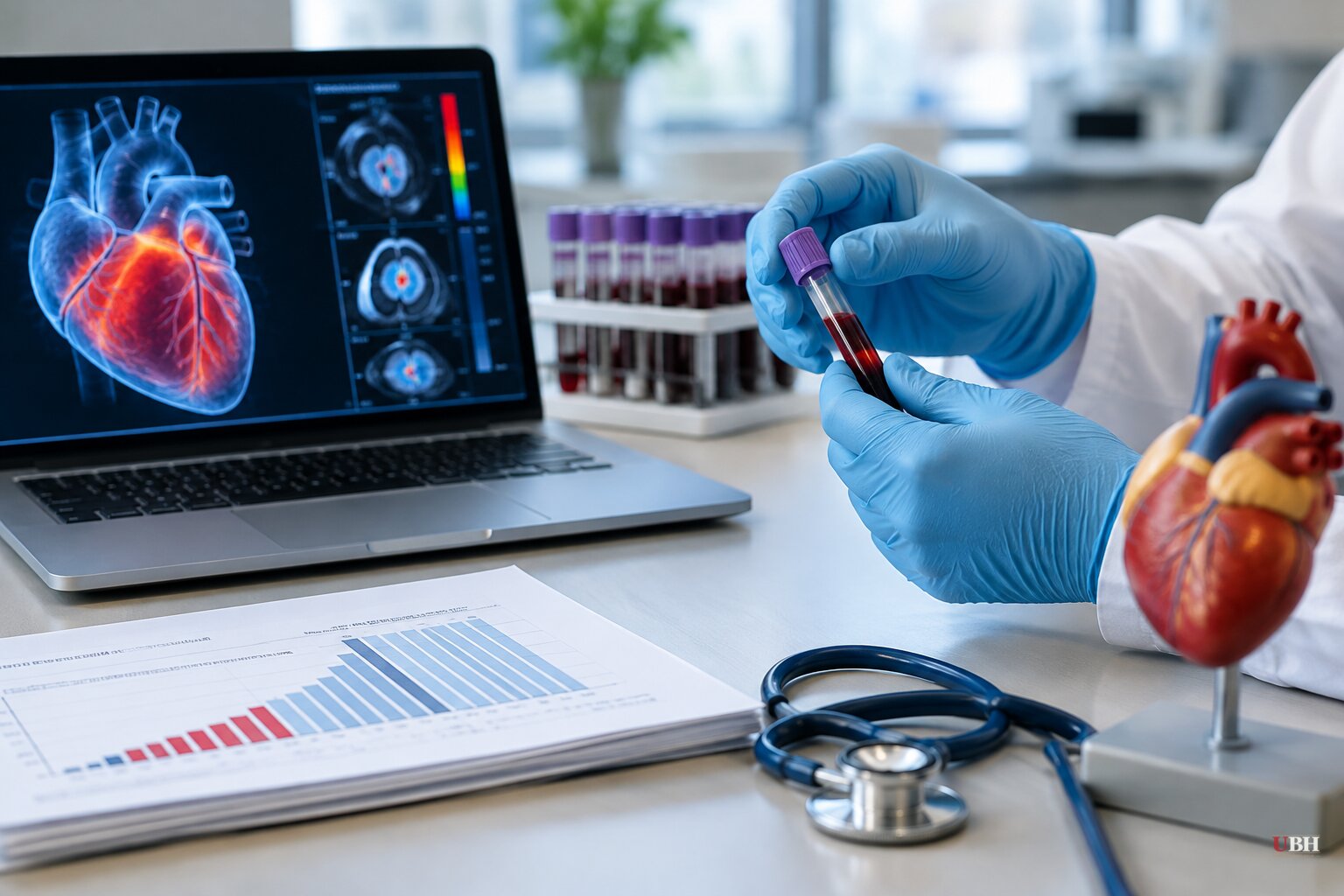
Two new studies out of the UK Biobank, one led by researchers at Imperial College London and the MRC Laboratory of Medical Sciences (LMS), the other by Tulane University's Celia Scott Weatherhead School of Public Health, both point to the same fact: your heart can be quietly damaged for years before you ever notice a symptom.
The Inflammation Study
Researchers analyzed data from nearly 480,000 UK adults, measuring a blood marker called GlycA alongside heart imaging and genetic profiles, according to Imperial College London. The study, published Friday, September 18, in the European Journal of Preventive Cardiology, found that people in the top 20% for inflammation had a 43% higher risk of heart attack and stroke than those in the bottom 20%.
It wasn't just risk numbers. The high-inflammation group also showed measurable structural changes on imaging: thickened heart walls, smaller heart chambers, and poorer heart filling, all of which can progress toward heart failure over time.
Professor Declan O'Regan, British Heart Foundation Chair of Cardiovascular AI at Imperial College London and head of the Computational Cardiac Imaging Group at LMS, described it as the largest study of its kind. "Millions of people could be living with hidden inflammation, which is slowly changing their heart and causing long term damage," O'Regan said in the Imperial press release.
O'Regan also tied inflammation to socioeconomic disadvantage and psychological distress. Stress from financial strain, unstable housing, or chronic hardship is a real physiological input. People dealing with genuine economic hardship carry a measurable biological burden on top of everything else.
But O'Regan didn't stop there. He was clear that smoking and obesity, both things individuals actually control, are established drivers of the same inflammation. "There are things that we can do about inflammation, including reducing risk factors like smoking and obesity," he said. The study also found a strong genetic component, meaning some people are simply more resilient to inflammatory damage than others regardless of their circumstances, according to Imperial.
There's no drug yet that directly treats this kind of chronic inflammation, O'Regan told Newsweek, though trials of new therapies are underway for high-risk patients. In the meantime, his advice is straightforward: keep a healthy weight and consider a Mediterranean diet, which he says has "a modest effect on inflammation."
The Nighttime Light Study
A separate study, led by Professor Lu Qi at Tulane University and published in the European Heart Journal, tracked more than 11,000 UK Biobank participants who wore wrist light sensors for a week. Three years later, each got a cardiac MRI, according to the European Society of Cardiology, which covered the findings on Thursday, September 10.
People exposed to more than 3 lux at night, roughly a phone screen on a nightstand or a hallway light through a cracked door, showed thickening of the heart's left ventricle wall, a shrinking of the chamber's interior space, and reduced ability of the heart muscle to flex during a heartbeat. Researchers also found changes in the right ventricle and left atrium.
"This is where the structure and function of the heart changes and we typically see it in response to chronic stress or injury to the heart," Qi said, according to the European Society of Cardiology. "It's our body's way of adapting to that stress, but ultimately it weakens the heart and can lead to heart failure."
Unlike genetics or inflammation tied to socioeconomic circumstance, this one is entirely within your control. Qi called nighttime light exposure a "modifiable risk factor," fixable by turning off screens, drawing curtains, or wearing an eye mask.
In an editorial accompanying the study, Professor Thomas Münzel of University Medical Center Mainz said doctors treating heart failure or atrial fibrillation patients should start asking about sleep environments: how dark the bedroom is, whether the patient works night shifts, how much screen time happens after sunset. His prescription is cheap: blackout curtains, warm bedside lighting, and covering the small standby LEDs on electronics.
What's Still Unknown
Neither study proves direct causation in the strictest sense. Both are observational, drawing correlations from UK Biobank data rather than controlled trials. The inflammation study's authors acknowledge that not everyone exposed to adverse circumstances develops heart disease, and genetics play a real role in who's protected. The light study is described by its own authors as "the first study of its kind," meaning it hasn't yet been replicated elsewhere.
Neither team has produced a drug or clinical intervention that reverses the damage once it starts. For now, the actionable list is the same one doctors have been repeating for decades: lose weight, quit smoking, eat better, and turn off the lights before bed. What's new is the imaging proof that skipping those basics is quietly remodeling your heart long before a diagnosis ever shows up.
Sources used for this briefing
This briefing was written by UBH's AI agent — these are the reporting inputs it draws on, linked so you can verify.


