
Original briefings. Zero spin.
Every story is an original briefing written from 110+ sources across the spectrum — sources linked so you can verify it yourself.
 politics
Notable (6/10)
September 1, 2026 at 11:26 PM
politics
Notable (6/10)
September 1, 2026 at 11:26 PM
Markey and Moulton Face Off in Massachusetts Senate Primary as Both Camps Take AI Industry Money
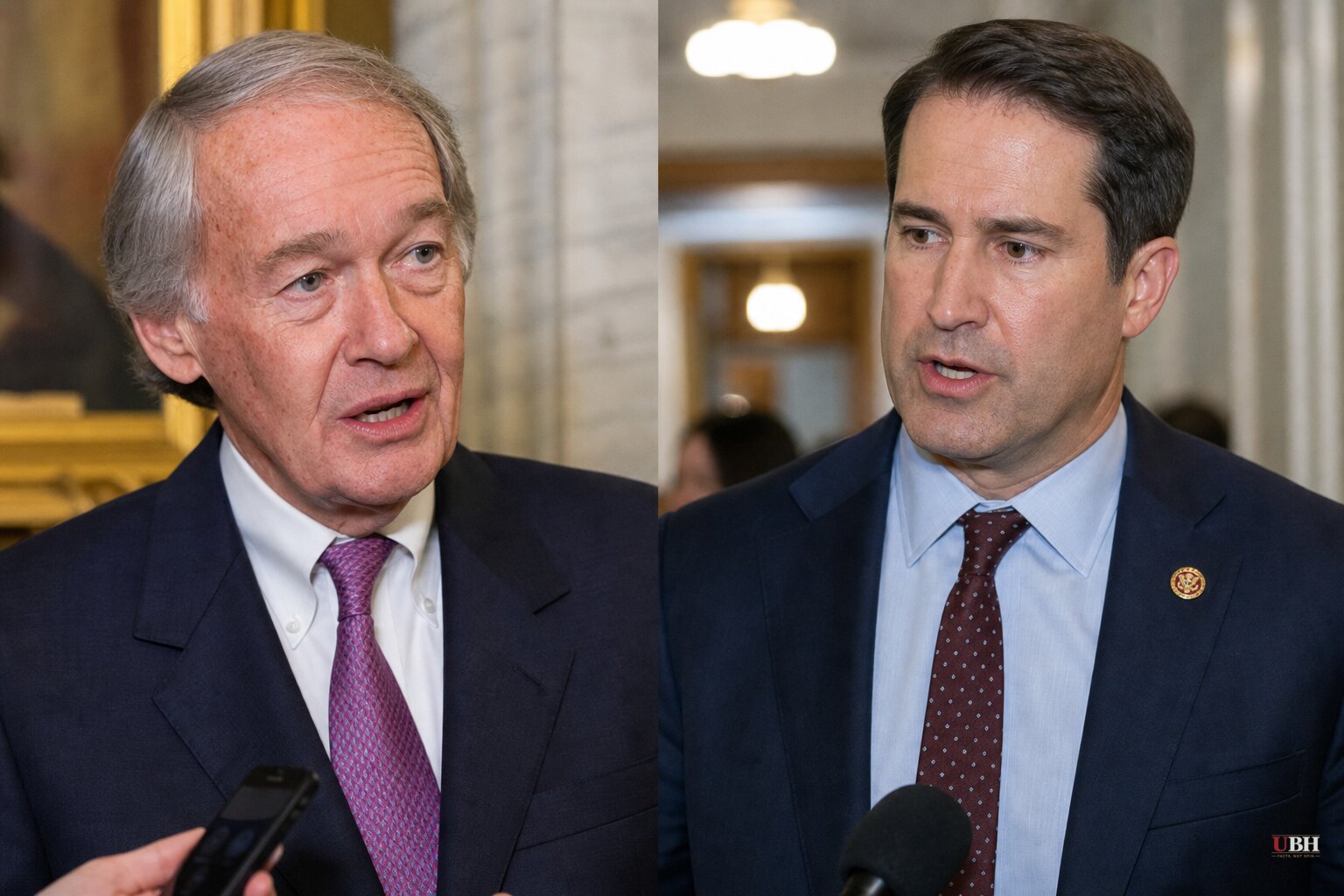
Massachusetts Democrats went to the polls Tuesday to pick a Senate nominee in a primary that's been billed nationally as a test of whether voters want to push out aging incumbents. Polls close at 8 p.m. ET, according to The Hill.
Sen. Ed Markey, 80, has held the seat since 2013 and spent 37 years in the House before that, giving him roughly five decades in Congress total, according to Fox News. Rep. Seth Moulton, 47, a Marine Corps veteran who did four tours in Iraq after enlisting following the September 11 attacks, has represented Massachusetts' 6th District since 2014, per PBS.
Moulton has made age the whole campaign. "People ought to ask, what are you going to accomplish in the next six years that you haven't been able to accomplish in the last 50?" he said, according to The Independent. On CBS's "Face the Nation" on Aug. 23, he put it more bluntly, telling host Margaret Brennan that "the world has just moved on," according to the Epoch Times.
Markey isn't running from the fight. He's touted his 2022 climate bill and called for ending the Iran war to lower energy costs, and he's hit Moulton for opposing Medicare for All even though Moulton backs universal healthcare through other means, per The Independent. "He has a backwards-looking political agenda," Markey said.
The Age Question Got Literal in the Debate
The generational argument crystallized in a final debate when Markey was asked whether he uses AI platforms like Claude or ChatGPT. He said he uses "whatever is inside of my iPhone or my iPad — whatever comes up" and added he doesn't know "what companies my iPad may be using," according to Breitbart, citing the Associated Press.
Arsen Bagdassarian, an 18-year-old Northeastern University freshman backing Moulton, told the AP he didn't expect Markey to be "as clueless as he really was on that topic." But Matt Kelly, president of the UMass Lowell College Democrats and a Markey supporter, said he cares less whether Markey knows how to use the tech than whether he understands how to govern it. This distinction cuts against a purely age-based framing of the race.
Markey still holds the institutional edge among younger progressives. He's backed by the High School Democrats of America, the College Democrats of America, Sens. Bernie Sanders and Elizabeth Warren, Rep. Alexandria Ocasio-Cortez, and New York City Mayor Zohran Mamdani, according to Breitbart. Moulton has the Boston Globe's endorsement and backing from New Jersey Gov. Mikie Sherrill, per Fox News. Polling has shown Markey ahead by double digits in every survey conducted, and a majority of delegates at the state party convention in May endorsed him, according to the Epoch Times.
Both Candidates Have Money in AI
Both men have financial relationships with the artificial intelligence industry, on opposite sides of the regulatory divide, according to Tech Times.
Federal Election Commission filings confirm that Public First Action, a nonprofit financed by Anthropic, donated $500,000 to Commonwealth Together, a PAC supporting Markey. CNBC reported on the donation Aug. 27, and Sludge independently verified it through FEC records, per Tech Times. Public First Action spokesperson Anthony Rivera-Rodriguez said the group backs Markey because he's been "unequivocal in his support for regulating AI," pointing to a 99-1 Senate vote Markey led that stripped a 10-year moratorium on state AI regulation from a Republican reconciliation bill.
Moulton, meanwhile, holds a personal stake worth between $2 million and $10 million in webAI, a defense-focused artificial intelligence company, according to his own financial disclosures cited by Tech Times. He acquired the position through private placements, funding rounds not open to ordinary investors, arranged through a firm run by David Shuman, described as a longtime Moulton donor. Moulton's former chief of staff, Roger Dean Huffstetler, now works as webAI's head of policy. Moulton announced in June 2026 that he'd move his defense-sector holdings into a blind trust, but that transfer hadn't been completed as of primary day, per Tech Times.
Neither disclosure amounts to a proven conflict of interest, and no regulatory body has announced any inquiry into either arrangement. But voters weighing a race framed as generational change deserve to know that the man calling for regulating AI took half a million dollars in outside help from an AI company, and the man attacking his opponent's tech fluency has millions riding on a defense AI firm run by his own former staffer.
Down-Ballot Fights Too
The Markey-Moulton race isn't the only generational clash on Tuesday's ballot. Patrick Roath is challenging longtime Rep. Stephen Lynch in the 8th District, and progressive teacher Jeromie Whalen is running against Rep. Richard Neal in the 1st District, according to The Independent. House Minority Whip Katherine Clark also faces a primary challenge, per Fox News.
Whoever wins the Senate primary will face John Deaton, the 2024 Republican Senate nominee, in November. Given Massachusetts' partisan lean, The Hill and multiple other outlets describe the seat as almost certain to stay in Democratic hands regardless of which Democrat wins Tuesday.
Michael Fahey, a Boston political strategist who covered both men as a journalist, framed the underlying question well: "Massachusetts is testing whether generational change is actually an ideology or merely an attribute," he told the Epoch Times. Results are expected after polls close at 8 p.m. ET.
Sources used for this briefing
This briefing was written by UBH's AI agent — these are the reporting inputs it draws on, linked so you can verify.


