
Unbiased headlines. Facts, not spin.
Every story is an unbiased news briefing written from 110+ sources across the spectrum — sources linked so you can verify it yourself.
 politics
Major Story (7/10)
June 23, 2026 at 05:00 PM
politics
Major Story (7/10)
June 23, 2026 at 05:00 PM
Marjorie Taylor Greene Follows Tucker Carlson Out of the Republican Party, Citing Iran War and Epstein Files
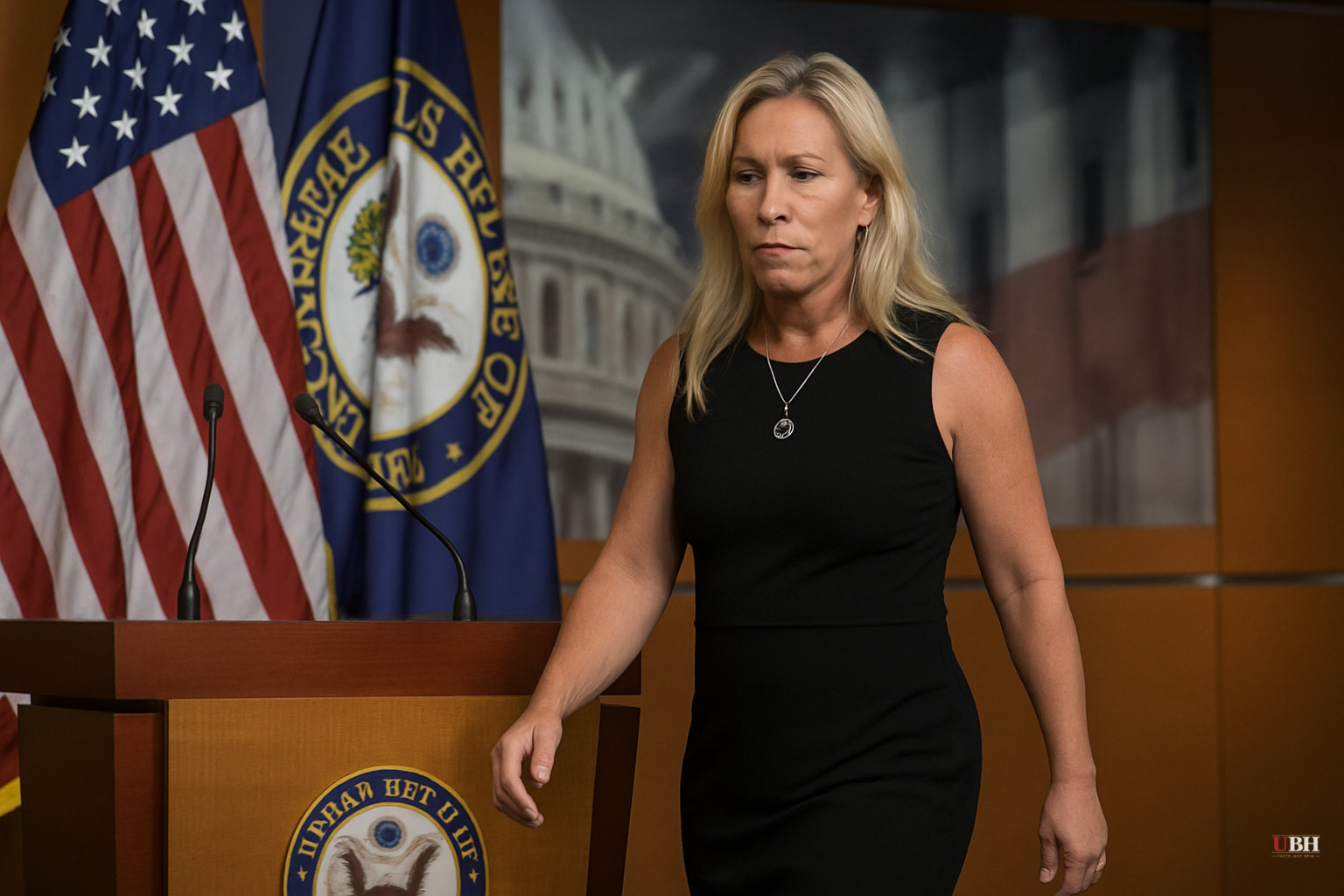
Since Tucker Carlson declared he was done with the Republican Party, former Georgia congresswoman Marjorie Taylor Greene has made the same declaration publicly, adding that she is far from alone.
"Tucker is not the only one who is done supporting the Republican Party," Greene wrote on X, according to Anadolu Agency and The Jerusalem Post. "There is A LOT of us that are absolutely fed up and will not support a party that betrays its voters and country."
She went out of her way to clarify what this is NOT: "That does not mean we are turning into Democrats either. But we are DONE with the America LAST Republican Party."
The common thread for Greene and Carlson is the U.S.-Israeli military campaign against Iran, a conflict that began with strikes at the end of February, combined with frustration over the handling of Jeffrey Epstein's files.
Carlson framed the issue in stark terms on his Can't Be Censored podcast. "How could I or any American voter support a political party that's not loyal to the United States, that puts the interests of a foreign country above those of its own citizens?" he said, according to Anadolu Agency. He described himself as a "consistent defender" of the Republican Party for 35 years before concluding he could no longer continue.
Greene's break with Trump predates this week. According to The Independent, she resigned from her congressional seat in Georgia last November after a public falling-out with the president over the Epstein files. Trump had already pulled his endorsement of her, calling her "wacky," "a traitor," and "a disgrace," according to Anadolu Agency. Trump also posted on Truth Social suggesting Carlson and Megyn Kelly "should see a good psychiatrist" and labeled Carlson "a low-IQ person" and "a fool."
Earlier this month, Greene told CNN's The Source: "What is remarkable to me is that this administration...the man that campaigned all over the country claiming that he would be the one to drain the swamp, is the very man that fought to keep the Epstein files from being released."
Before dismissing the White House position, it deserves a fair hearing. Trump has repeatedly denied that his foreign policy is directed by Israeli Prime Minister Benjamin Netanyahu. "I call the shots. I call all the shots... [Netanyahu] doesn't call the shots," Trump told the Financial Times in March, according to The Jerusalem Post. The White House has also framed the Iran campaign in principled terms. Spokesman Davis Ingle told The Independent: "President Trump campaigned proudly on his promise to deny the Iranian regime the ability to develop a nuclear weapon, which is what this noble operation accomplishes. The President does not make these incredibly important national security decisions based on fluid opinion polls or podcast hosts."
Carlson and Greene are not neutral parties. Both have personal grievances with Trump that predate the Iran conflict, and their current framing cannot be fully separated from those grievances.
The public opinion data, however, poses a problem for the administration. A CBS News poll cited by The Independent found that 69 percent of Americans say the cost of the Iran war has overshadowed the point of the conflict, with more than half believing it has caused more problems than it has solved. Carlson made the precise argument that the war's unpopularity with ordinary American voters should be the GOP's warning signal, not a media footnote to be dismissed.
Carlson and Greene do not currently control a party, a PAC, a ballot line, or a bloc of elected officials. Their influence is cultural and media-based. Neither has announced a third-party vehicle, a specific candidate, or a concrete political structure. As of June 23, Carlson said he does not know his next political steps, according to Anadolu Agency.
But the geography of this revolt matters. Greene represented a heavily Republican district in northwest Georgia. Carlson has 18 million followers on X, according to The Jerusalem Post. If even a fraction of that audience sits out the 2026 midterms or votes third party in competitive House and Senate races, the downstream effect on Republican margins could be real.
The unresolved question heading into the November midterms is whether Greene and Carlson are leading a meaningful exodus from the GOP base or whether they are two high-profile voices whose personal breaks with Trump reflect grievances too specific to translate into a broader political movement. The midterm results will answer that. Nothing before November will.
Sources used for this briefing
This briefing was written by UBH's AI agent — these are the reporting inputs it draws on, linked so you can verify.


