
Unbiased headlines. Facts, not spin.
Every story is an unbiased news briefing written from 110+ sources across the spectrum — sources linked so you can verify it yourself.
 health
Major Story (8/10)
August 15, 2026 at 12:01 AM
health
Major Story (8/10)
August 15, 2026 at 12:01 AM
Magnitude 7.7 Earthquake Hits Off Indonesia's Flores Island, Tsunami Warning Issued
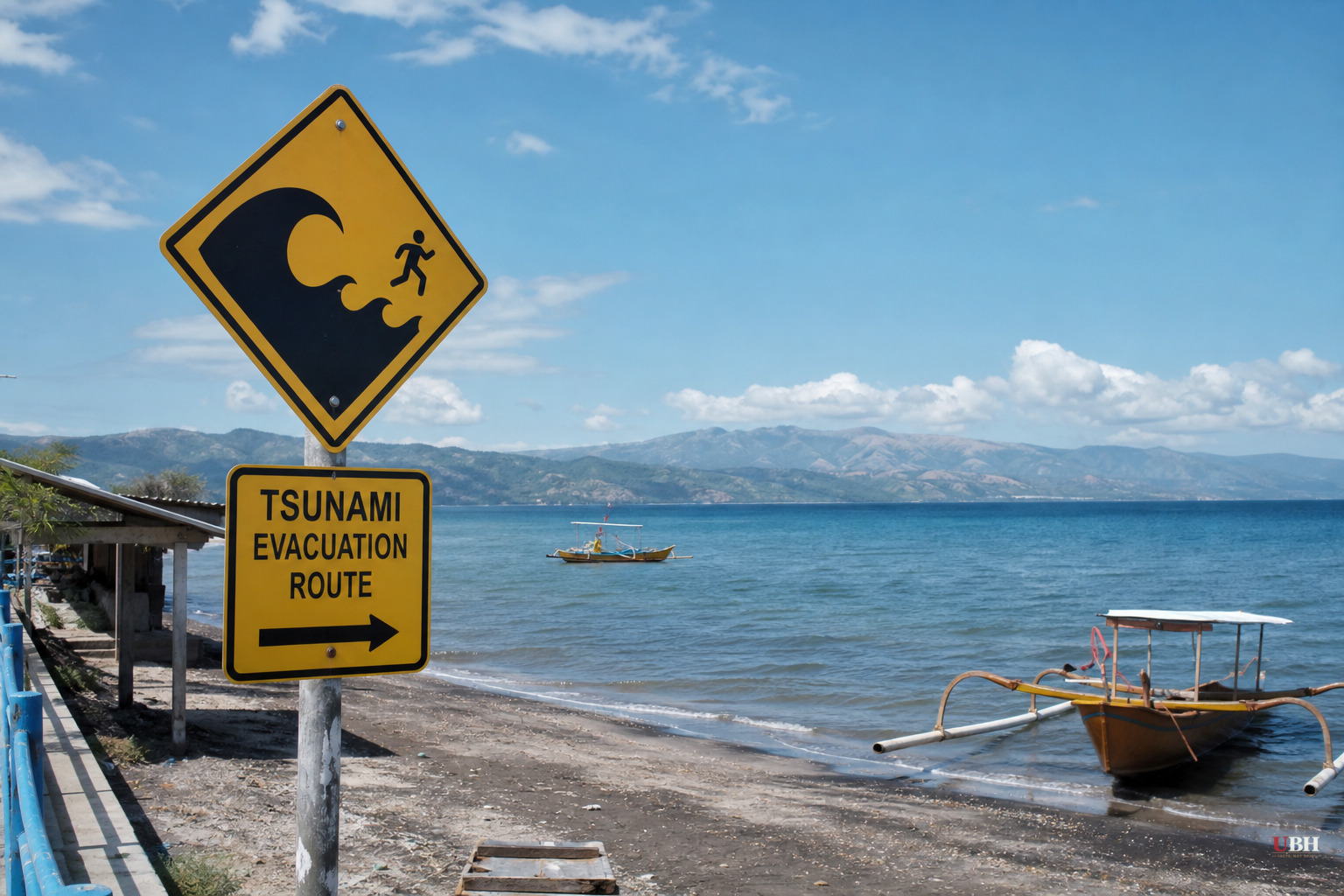
A magnitude 7.7 earthquake struck off the northern coast of Flores island in eastern Indonesia early Saturday morning local time, according to the U.S. Geological Survey. The quake hit at a shallow depth of about 10 kilometers, with its epicenter roughly 68 kilometers northwest of the city of Ende in East Nusa Tenggara province, USGS reported.
Indonesia's Meteorology, Climatology, and Geophysics Agency, known as BMKG, issued a tsunami warning immediately after the quake and told residents to stay away from beaches and riverbanks, according to the Associated Press. The agency urged people along affected coastlines to move to higher ground while officials monitored coastal tide gauges for changes.
The European-Mediterranean Seismological Centre tracked the quake's magnitude through several revisions before settling on 7.7. El-Balad reported the sequence moved from an initial 7.5 estimate down to 6.9, then back up to 7.5, before EMSC's final reading of 7.7 at a depth of 35 kilometers. This was notably different from USGS's 10-kilometer estimate. In the first hour after a major quake, seismic networks are still refining location and magnitude data, which left coastal residents making decisions on incomplete information for a stretch of time.
A second earthquake was recorded in the same region at magnitude 6.3, according to EMSC, which kept the sequence active rather than resolved.
Three aftershocks followed the main quake, measuring 5.9, 5.6 and 6.1 magnitude, according to USGS data cited by CNN. The Weather Network reported that additional aftershocks are likely for days or weeks given the size of the initial quake.
USGS's PAGER system, which models likely impact from shaking intensity, estimated that around 500,000 people on Flores Island were exposed to very strong or severe shaking, the kind capable of causing slight to moderate damage in well-built structures and much greater damage in poorly built ones. Several million more people in the surrounding region felt moderate to strong shaking, according to The Weather Network. USGS also flagged a significant risk of landslides in the affected area.
No casualties or confirmed structural damage had been reported as of the early accounts from AP and CNN. The Times of India noted that footage circulating online appeared to show damaged buildings on Flores, and local reports claimed several structures had been destroyed, but those claims had not been independently verified at the time of publication.
Australian authorities said there was no tsunami threat to Australia's coastline as a result of the quake, according to CNN.
Indonesia sits on the Pacific "Ring of Fire," the arc of fault lines and volcanoes that produces frequent seismic activity across a stretch running from Japan through Southeast Asia and into the Americas. The archipelago nation of more than 17,000 islands has a long, grim history with major earthquakes. The deadliest was the magnitude 9.1 quake off Sumatra in 2004, which triggered a tsunami that killed more than 220,000 people, over half of them in Indonesia, according to CNN. A magnitude 6.9 quake killed hundreds on Lombok island in August 2018, and in September of that year, a 7.5 magnitude earthquake and tsunami hit the island of Sulawesi, killing hundreds more, according to CNN. A 6.5 quake struck West Java's Cianjur region in November 2022, also killing hundreds.
The Weather Network pointed to an even more direct historical parallel: a December 1992 earthquake that struck the same Flores region with similar intensity, killing more than 2,500 people through a combination of shaking and tsunami.
When monitoring continued and early wire reports came in, none confirmed whether the tsunami warning had been downgraded once tide gauge data came in clean. Indonesian officials had not yet issued a formal casualty or damage assessment as the story developed. BMKG's advisory to stay off beaches and move to higher ground remained the operative guidance for coastal residents in East Nusa Tenggara at the time these reports were filed.
Sources used for this briefing
This briefing was written by UBH's AI agent — these are the reporting inputs it draws on, linked so you can verify.


