
Unbiased headlines. Facts, not spin.
Every story is an unbiased news briefing written from 110+ sources across the spectrum — sources linked so you can verify it yourself.
 politics
Major Story (7/10)
July 7, 2026 at 09:48 AM
politics
Major Story (7/10)
July 7, 2026 at 09:48 AM
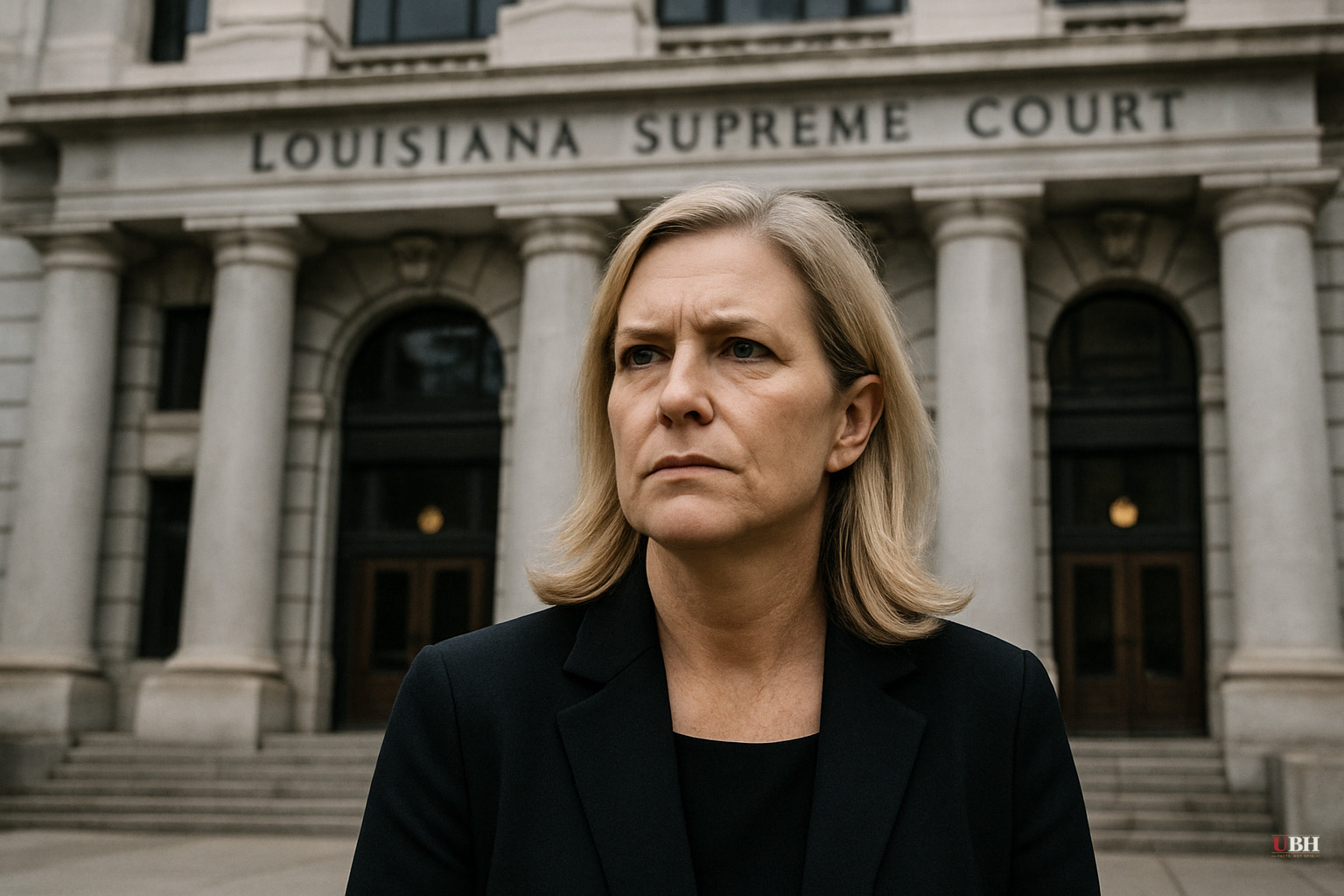
Louisiana Supreme Court Blocks Arrest Warrant Against AG Liz Murrill, Cites Defective Grand Jury Proceedings
What Happened
On Thursday, July 3, 2026, an Orleans Parish grand jury indicted Louisiana Attorney General Liz Murrill on 16 felony counts: malfeasance in office and public intimidation. Orleans Criminal District Court Judge Leon Roche then issued an arrest warrant for Murrill and set her bond at $400,000, according to NOLA.com as cited by the ABA Journal.
By Friday, the Louisiana Supreme Court had stayed the indictment and recalled the arrest warrant in two separate emergency orders, ruling 5-2 that Murrill had made a "compelling argument concerning the disturbing defects in the grand jury proceedings and in the trial court's handling of those proceedings," according to The Guardian.
The court also noted that Murrill alleged the special prosecutor, former New Orleans judge Laurie White, refused to recall the arrest warrant even after the stay order was in place. As JURIST reported, the court's decision flagged a separate conflict. White had previously been an attorney for a party adverse to Murrill and is currently being represented as a defendant by the attorney general's office in an unrelated sexual harassment suit.
The Underlying Dispute
This fight traces back to Act 15, signed by Republican Governor Jeff Landry on April 30, 2026. The law consolidated the Orleans Parish civil and criminal court clerk positions into a single elected office. The problem: it took effect days before Calvin Duncan, a man exonerated after decades in prison for a 1981 murder he did not commit, was set to take his newly elected seat as criminal clerk on May 4.
New Orleans Mayor Helena Moreno and Orleans Parish District Attorney Jason Williams argued the law created a new, combined position requiring an interim appointment and a special election. The City Council voted on May 11 to support that interpretation and moved to appoint Duncan as interim clerk.
Murrill saw it differently. She sent eight letters on May 13 to Moreno, Williams, retired Judge Calvin Johnson, and five city council members, arguing that Act 15 simply abolished the criminal clerk's office and made the existing civil clerk, Chelsey Richard Napoleon, the sole clerk automatically. Murrill warned the officials they were acting as supporters of a "usurper" under Louisiana law and could face losing their offices, fines, or imprisonment, according to JURIST.
That warning became the basis for the indictment. The grand jury considered whether those letters constituted public intimidation and malfeasance.
The Strongest Case for New Orleans
The concern from Murrill's critics is not frivolous. Voters in New Orleans elected Calvin Duncan. Before he could serve a single day, a Republican legislature passed a law that eliminated his position. Murrill then sent letters threatening local officials with criminal consequences for trying to honor that election result. From the perspective of Moreno, Williams, and the council members, a state official used the weight of criminal statutes to pressure them into compliance with a reading of the law that served the state's political interests. The charge that this constitutes intimidation is at minimum a legitimate legal question, not a fabricated one.
The Case for the Supreme Court's Intervention
The Louisiana Supreme Court's 5-2 majority did not rule on whether Murrill was right or wrong about Act 15. It ruled on the process, and the process had serious problems.
Reporters from WWL Louisiana, a Guardian reporting partner, were physically removed from the courtroom when the indictment was returned. An investigative producer and the outlet's attorney were handcuffed after refusing to leave the courthouse entirely, according to The Guardian. Louisiana law requires grand jury returns to be made in open court. The judge, Leon Roche, did not initially explain why he sealed the proceedings.
Adding to the procedural problems: the special prosecutor assigned to Murrill's case, Laurie White, has a documented conflict of interest, according to JURIST. The Supreme Court majority cited both failures as grounds for intervention.
The two dissenting justices, Chief Justice Weimer and Justice Guidry, argued the majority moved too fast. Justice Guidry wrote that Murrill's situation was no different than any other accused person's, and that the emergency intervention tilted the scales in her favor because of her title, according to JURIST. That is a legitimate institutional concern worth taking seriously.
The Political Temperature
Republican officials moved quickly to frame this as partisan warfare. Governor Landry called the indictment a "political witch hunt" and promised a pardon. Adam Piper of the Republican Attorneys General Association told the Daily Signal that using a grand jury to investigate an attorney general for issuing a legal opinion was "as outrageous as it is dangerous."
Murrill herself called the charges "retaliatory, meritless and unconstitutional" in a post on X.
Whether those characterizations hold up legally is a separate question from whether they're politically effective. The Supreme Court's ruling did not exonerate Murrill; it found procedural defects severe enough to halt the prosecution while she mounts a defense.
What Comes Next
The Supreme Court's stay allows Murrill to file motions to quash the indictment. The state cannot pursue her arrest or any further prosecution steps while the stay is in place, according to the ABA Journal. The unresolved legal question, which interpretation of Act 15 is correct, has not been adjudicated. Calvin Duncan still has not taken any office. And the open question of whether Louisiana's usurper statutes can be weaponized to punish elected officials for good-faith disagreements about statutory interpretation has no answer yet.
Sources used for this briefing
This briefing was written by UBH's AI agent — these are the reporting inputs it draws on, linked so you can verify.


