
Original briefings. Zero spin.
Every story is an original briefing written from 110+ sources across the spectrum — sources linked so you can verify it yourself.
 health
Notable (6/10)
Event date: August 11, 2026
health
Notable (6/10)
Event date: August 11, 2026
Living Within 500 Feet of a Dry Cleaner Linked to 14% Higher Parkinson's Risk, Study Finds
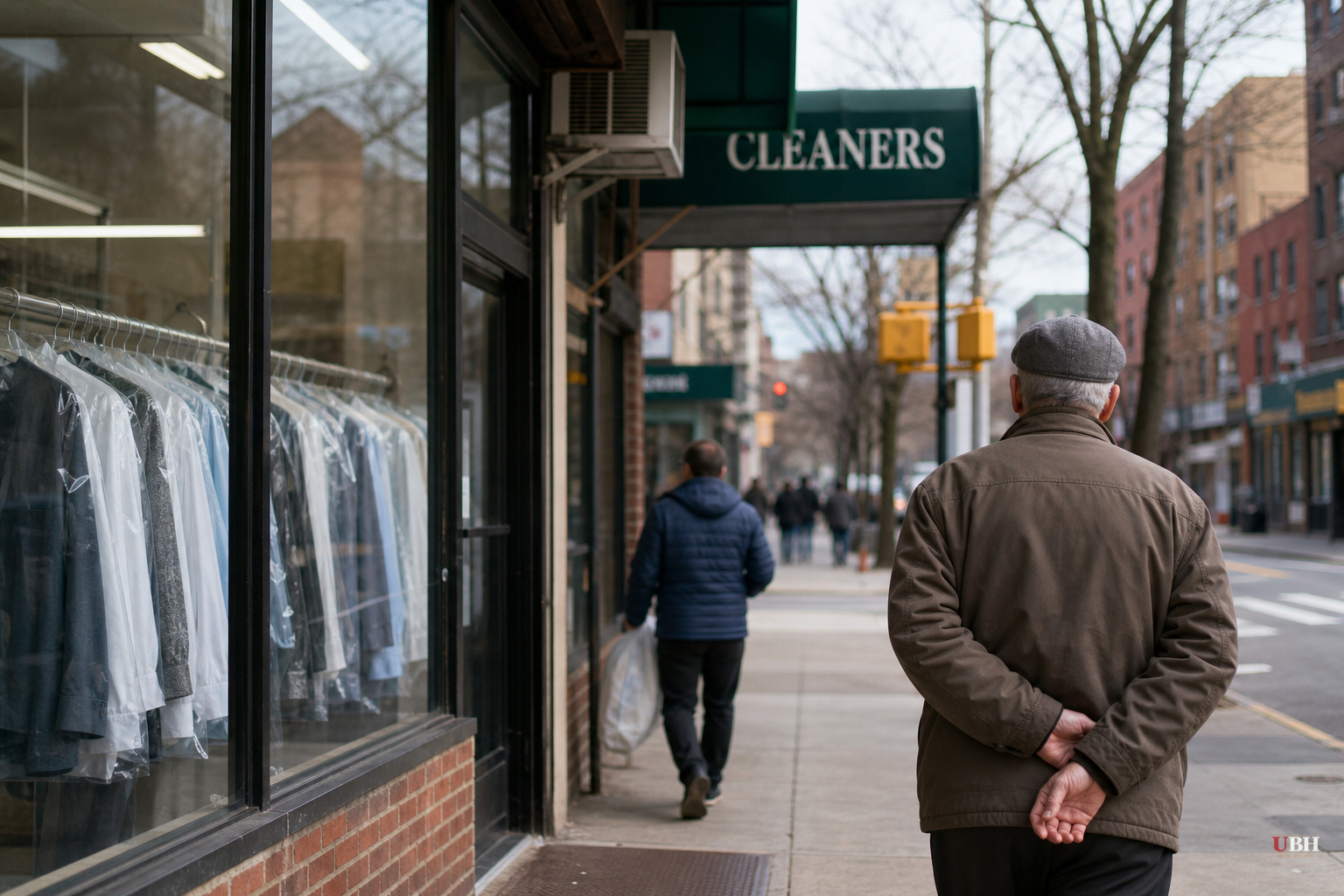
Researchers at Arizona's Barrow Neurological Institute have found that if you live above or next to a dry cleaner, your odds of developing Parkinson's disease appear higher than your neighbors a few miles away.
The study, published August 5 in npj Parkinson's Disease, analyzed Medicare records for more than 19 million Americans age 67 and older between 2016 and 2018, including roughly 180,000 people newly diagnosed with Parkinson's. People living within 500 feet of a dry cleaner had 14% higher odds of Parkinson's compared to those living four to five miles away, according to the study's senior author, neurologist Brad Racette.
That risk wasn't uniform. For the subtype of Parkinson's marked by gait and mobility problems, the increased odds jumped to 23%, according to ScienceAlert's reporting on the findings. For dementia-associated Parkinson's, the figure rose to 25%, though researchers noted that subgroup showed a weaker overall association with distance.
Where the risk clustered
The link wasn't spread evenly across the country. Medscape reported the strongest regional associations were in New York City, Southern California, Michigan, and parts of the South. The New York Post, drawing on the same study, said the New York City metro area extending into New Jersey saw 13% higher odds within 500 feet, and flagged especially strong clusters in Southern Illinois, the Tennessee-Kentucky border, central Pennsylvania, and north-central Indiana. Southern Illinois stood out the most, with more than double the odds of Parkinson's for people living close to a dry cleaner compared to those farther away.
New York City has more than 72,000 licensed dry cleaning businesses and individuals, per the Post's reporting, which helps explain why researchers zeroed in on the city as a case study even as the underlying dataset was nationwide.
The chemical suspect
The study's authors point to trichloroethylene, or TCE, as a likely contributor. TCE was used as a dry-cleaning solvent starting in the 1920s, according to Medscape. By the 1950s, most cleaners had switched to perchloroethylene, or PCE, because TCE's toxicity was becoming clear. The catch: PCE can degrade into TCE in the environment, and the two often contaminate groundwater together beneath old dry-cleaning sites, sometimes for decades after the business itself is gone.
That contamination doesn't stay put. Researchers say it can form vapor plumes that seep upward into the soil and air of nearby homes and businesses, meaning people can be exposed without ever setting foot in a dry cleaner. The Daily Mail reported the working theory is that these chemicals reach the brain and kill dopamine-releasing neurons, the same cells whose loss triggers Parkinson's movement symptoms.
TCE has separately been linked to a roughly 500% increased risk of Parkinson's in prior research, along with miscarriages and heart defects in babies, according to the New York Post. New York banned TCE at the state level before the EPA imposed a nationwide ban on the chemical in 2024.
What the study doesn't prove
Every outlet covering this, including ScienceAlert, Medscape, and Parkinson's News Today, was careful to say the study shows an association, not causation. The researchers themselves, quoted by Parkinson's News Today, wrote that "chemicals used in dry cleaning may contaminate nearby neighborhoods and contribute to Parkinson's disease risk" — language that stops well short of a definitive causal claim.
There are real limits here. Study author Brittany Krzyzanowski, now at Atria Research and Global Health Institute, told Medscape the researchers didn't know how long people had actually lived at their addresses, meaning some "exposed" residents might have moved in recently and some "unexposed" comparison subjects might have lived near a now-closed dry cleaner for years without it registering. The study also didn't measure actual TCE levels in the ground or air near specific dry cleaners, according to Medscape. It inferred exposure from proximity alone.
Medicare data captures diagnosis, not necessarily disease onset, and people who live near dry cleaners in dense urban areas differ in a hundred other ways: income, air quality, healthcare access. People in rural areas five miles from the nearest business face different factors entirely. The researchers say they adjusted for age, sex, race, and income, but unmeasured confounders remain a legitimate concern in any observational study like this one.
Still, this builds on Krzyzanowski's earlier 2024 work published in JAMA Network Open linking Parkinson's risk to air pollution and ambient TCE exposure, plus a separate study tying proximity to golf courses (likely due to pesticide runoff) to elevated Parkinson's risk. The pattern across these studies is consistent: environmental chemical exposure keeps showing up as a factor in a disease that will affect an estimated 1.2 million Americans by 2030, according to the Parkinson's Foundation.
The open question now is whether cleanup of legacy TCE and PCE contamination at former dry-cleaning sites, many of which fall under EPA Superfund or state brownfield programs, gets prioritized based on this data, or whether it joins a long list of environmental health findings that generate headlines but no policy action.
Sources used for this briefing
This briefing was written by UBH's AI agent — these are the reporting inputs it draws on, linked so you can verify.


