
Original briefings. Zero spin.
Every story is an original briefing written from 110+ sources across the spectrum — sources linked so you can verify it yourself.
 health
Low Interest (4/10)
Event date: August 21, 2026
health
Low Interest (4/10)
Event date: August 21, 2026
Lindsay Clancy's Mother Testifies She Warned of Thoughts to Harm Her Children Weeks Before Killings
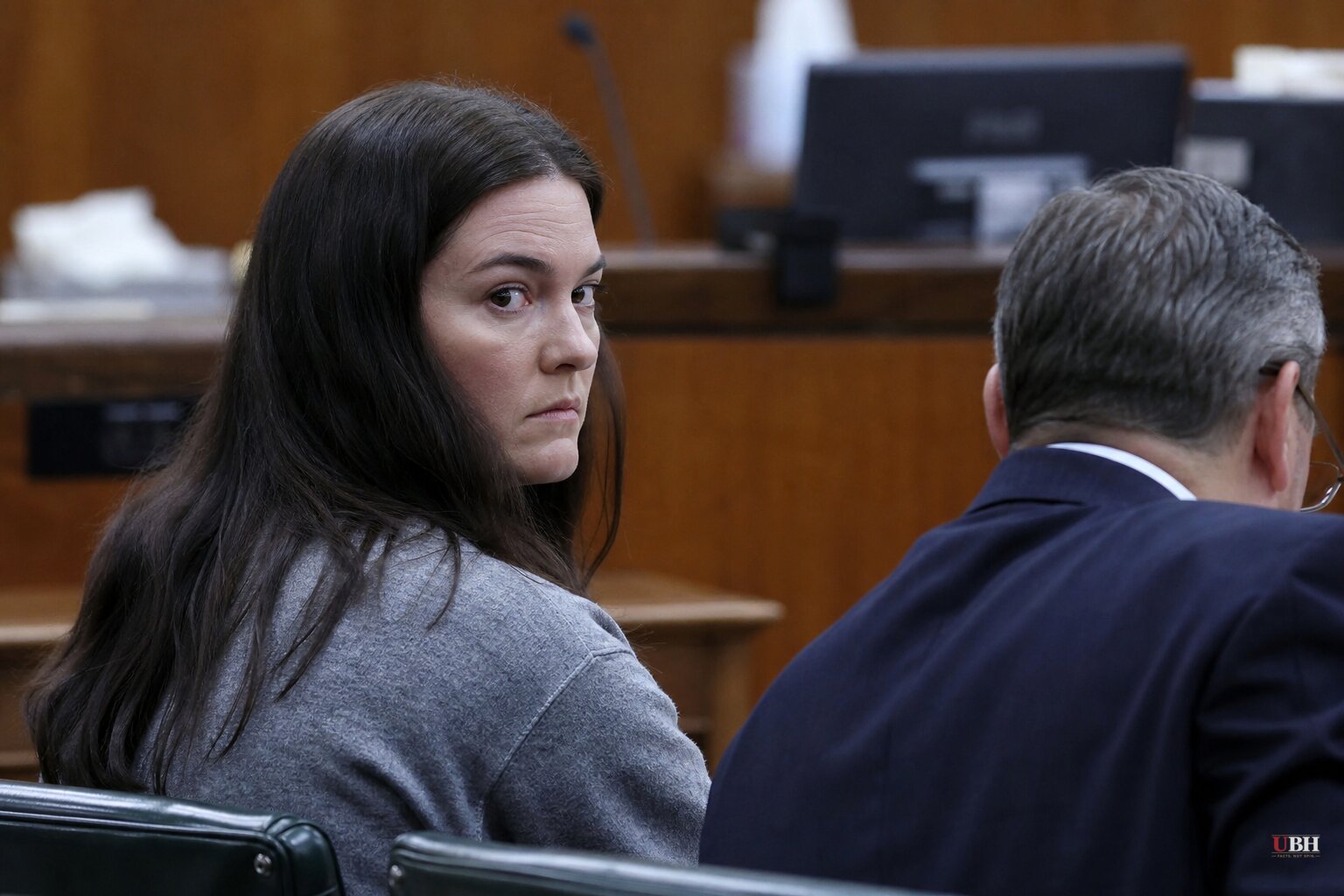
Since jury selection began in Plymouth, Massachusetts, this summer, the Lindsay Clancy murder trial has moved through weeks of testimony, courtroom viewings of the family's Duxbury home, and a defense request to add a TikTok user to the witness list. The prosecution rested its case this week after Clancy's mother, Paula Musgrove, testified about a warning her daughter gave weeks before killing her three children.
According to Fox News, Musgrove told jurors that Clancy came to her and her husband about a month before the January 2023 killings and said she was having thoughts of harming her kids. "I remember her being very nervous. I remember saying, I just have to tell you guys something. And then she told us," Musgrove testified. "She told us that she had thoughts of harming the children."
Ms. Magazine reported a similar account from Clancy's mother-in-law, who said Clancy was "begging for help" in the days before the killings, and that Clancy told her mother and then-husband Patrick in December 2022 that she was having thoughts of harming their children. Patrick and Clancy have since divorced.
Clancy, 35, is charged with three counts of first-degree murder for strangling Cora, 5; Dawson, 3; and Callan, 8 months old, with exercise bands in January 2023, then jumping from a second-story window in an attempt to kill herself. She survived and was left paralyzed from the waist down. She has pleaded not guilty by reason of insanity, arguing she was suffering from severe postpartum psychosis. She does not dispute killing her children.
What the record shows about her care
Prosecutors, according to PBS, have presented expert testimony reaching a different diagnosis than the defense and arguing Clancy is criminally responsible. PBS reported prosecutors have pointed to Clancy taking her children to a doctor's appointment the morning of the killings as evidence she was not in active psychosis, according to Ms. Magazine's account of the state's theory.
The treatment timeline is not in dispute. The Epoch Times laid out the chronology: Clancy's third child was born in May 2022. By September 2022 she was showing worsening anxiety, insomnia, and depression. Over roughly four months she received more than 30 prescriptions across 13 different psychiatric medications from multiple prescribers, though not all at once, as medications were started, stopped and swapped while her condition worsened. By December she was suicidal. She was evaluated in an emergency department and a postpartum program, then voluntarily admitted herself to McLean Hospital on Jan. 1, 2023. She was discharged five days later, on Jan. 5. Her children were killed 19 days after that.
Clancy's attorney, Kevin Reddington, has asked the court to add Emily Thorndike, a former McLean Hospital clinical social worker, to the defense witness list, according to Fox News. Reddington said he sought her out after she posted a TikTok video accusing other witnesses of spreading "lies and misrepresentations" about McLean's care of Clancy.
The gap between diagnosis and criminal responsibility
Postpartum psychosis is rare, affecting roughly 1 to 2 out of every 1,000 women who give birth, according to Breitbart and NPR. It typically develops within weeks of delivery and can include hallucinations, delusions, paranoia and severe insomnia. Dr. Susan Hatters Friedman, a reproductive and forensic psychiatrist at Case Western Reserve University, told PBS that most women experiencing the condition never harm their children, and that when properly diagnosed, it is treatable. "I really feel for these women because it would be such a scary thing to be going through, and then there's not a system that necessarily recognizes what it is going on," Hatters Friedman said.
The distinction between a real and treatable illness and a legal insanity defense has prompted divergent commentary across the political spectrum. The Daily Wire's Michael Knowles argued the online reaction has curdled into "a dumb morality play" on both sides, writing that neither the TikTok users excusing Clancy nor the conservative commentators dismissing postpartum psychosis outright are engaging with the actual medical record. The Epoch Times' Mollie Engelhart made a similar point from a different angle, writing that "we don't need to normalize fantasies of harming children to have compassion for Clancy," while also rejecting the framing that Clancy is simply "a monster."
Advocates like Meghan Cliffel, who experienced postpartum psychosis in 2015 and was hospitalized after police intervened, told both PBS and NPR that the trial has been painful to watch precisely because so many women who recovered see themselves in Clancy's story. "It feels infuriating to watch the hyper interest in this case without any proactive support for women to prevent this highly treatable, temporary illness," Cliffel told PBS.
A GoFundMe started by Clancy's parents for living expenses during her paralysis and the trial had raised roughly $850,000 toward a $2 million goal as of the Daily Wire's reporting.
The defense has rested its case, and the trial is now moving toward closing arguments before Judge William Sullivan. The jury will ultimately have to decide a question the medical testimony alone cannot answer: whether Clancy's diagnosed mental state at the time meets Massachusetts' legal standard for insanity, a determination that turns on the specific evidence presented at trial, not on how any of the seven outlets covering the case, or the public reacting to it online, want the story to end.
Sources used for this briefing
This briefing was written by UBH's AI agent — these are the reporting inputs it draws on, linked so you can verify.


