
Original briefings. Zero spin.
Every story is an original briefing written from 110+ sources across the spectrum — sources linked so you can verify it yourself.
 health
Low Interest (4/10)
August 18, 2026 at 10:31 PM
health
Low Interest (4/10)
August 18, 2026 at 10:31 PM
Lindsay Clancy Trial: Prosecution Rests After 72 Witnesses, Mother-in-Law Says She Was Begging for Help
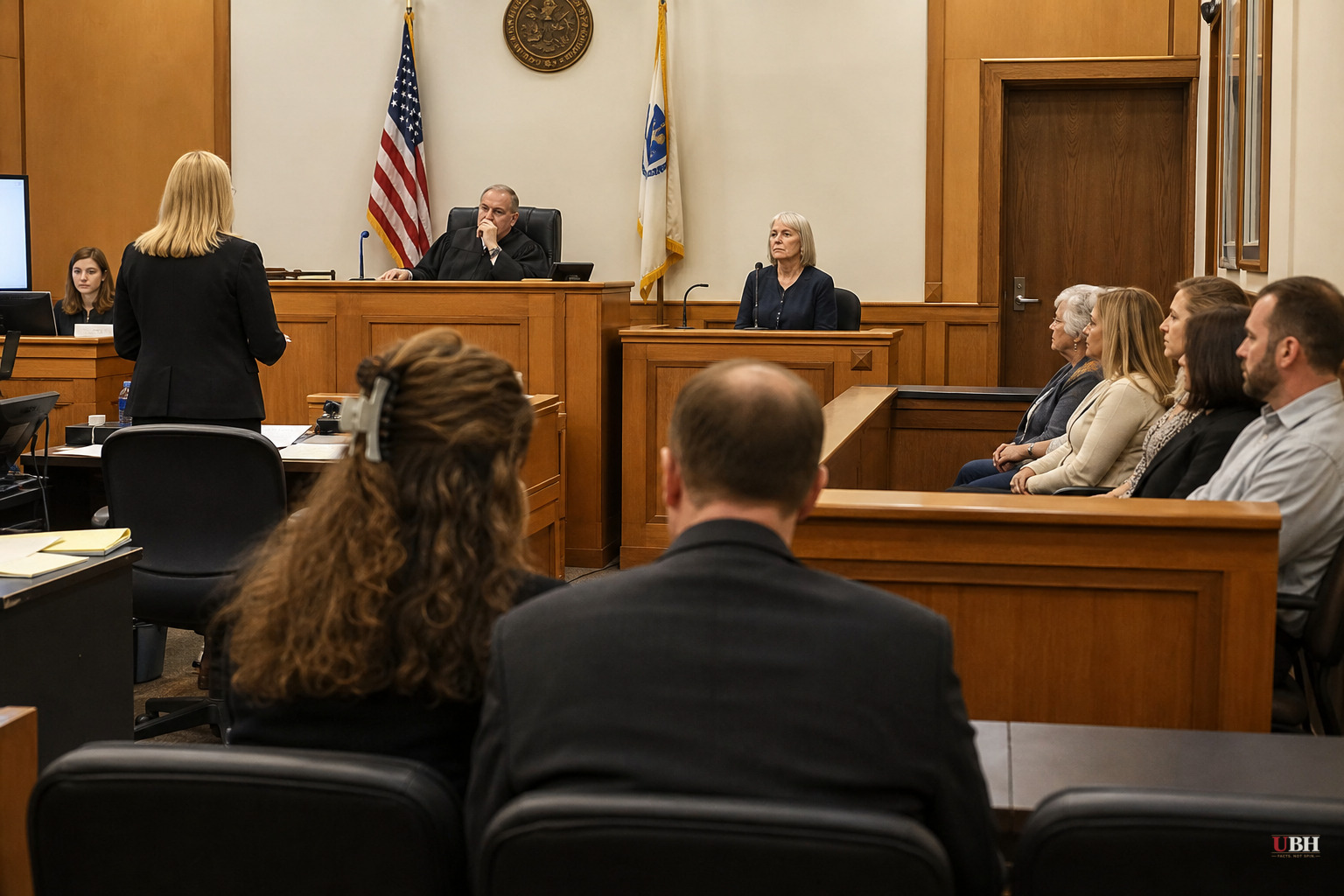
Lindsay Clancy's murder trial reached its 15th day of testimony Tuesday in Plymouth Superior Court, with the defense now presenting its case after prosecutors rested Monday following 72 witnesses.
Clancy, 36, faces three counts of first-degree murder for strangling her children, Cora, 5, Dawson, 3, and Callan, 8 months, in the family's Duxbury, Massachusetts home in January 2023. She does not dispute killing them. She's pleaded not guilty, and her lawyers say she was in the grip of postpartum psychosis. Prosecutors say she knew exactly what she was doing.
Susan Clancy, Lindsay's former mother-in-law and, like her, a labor and delivery nurse, testified Tuesday for the defense. She described Lindsay as a "wonderful mother" who was "very nurturing, very loving" but was unraveling by late 2022.
"She had insomnia. She was losing her appetite," Susan Clancy said, according to the BBC. "She was very anxious and sad. She was begging for help."
The Independent and PBS both reported that jurors saw a text Lindsay sent her mother-in-law on Nov. 30, 2022: "I'm not okay and I'm terrified of taking meds tonight." She'd told Susan Clancy she feared she'd become dependent on benzodiazepines but couldn't sleep without them.
That testimony echoed accounts from a day earlier. Clancy's mother, Paula Musgrove, testified Monday that her daughter told her and Patrick Clancy in December 2022 that she'd had "thoughts of harming the children," according to PBS and the BBC. Clancy's sister, Allison Ozga, testified Lindsay reported daily suicidal thoughts for a month before the killings.
Fox News flagged a moment the other outlets in this batch didn't dwell on: Assistant District Attorney Shanan Buckingham asked Susan Clancy, who is Catholic, whether she knew murder was a "mortal sin." It's a pointed question aimed at establishing that Clancy understood right from wrong, a required element for the state to defeat an insanity defense. Susan Clancy didn't answer. Judge William Sullivan immediately called a sidebar and struck the question from the record.
Whether Clancy grasped the wrongfulness of her actions is the entire ballgame here. If the defense proves she didn't, because of documented psychosis, she could be committed to a state mental hospital instead of prison. If prosecutors prove she did, she faces life without parole.
The Daily Wire highlighted testimony from digital forensics specialist Ian Whiffin, who told jurors Clancy's Apple Watch recorded a heart rate of 57 beats per minute at 5:23 p.m. on the day of the killings, right around when prosecutors believe the strangulations began.
A resting heart rate that low, right before or during the act, cuts both ways. Some read it as evidence of chilling calculation. Others see it as consistent with dissociation during a psychotic break. Neither is proven by the number alone; it's a data point, not a verdict.
Whiffin's testimony also covered search history from Clancy's devices in the days before the killings: "how quickly does Wellbutrin work for depression" on January 12, followed days later by a search for "ketamine for suicidal ideation," and then "symptoms of postpartum psychosis" and "psychosis symptoms" on January 19, according to NBC Boston reporting cited by the Daily Wire. Court records reviewed by the Daily Wire show Clancy had been prescribed more than a dozen psychiatric medications after Callan's birth, including Zoloft, Ativan, Klonopin, Seroquel and trazodone, several of which carry documented side effects including agitation, confusion, and in rare cases hallucinations.
CBS News reported that Dr. Paul Zeizel, a clinical and forensic psychologist who examined Clancy in the hospital days after the killings, testified Tuesday that she reported hearing a male voice ordering her to kill her children and then herself. Zeizel testified he found no indication Clancy was faking her symptoms, telling the court she "presented as an honest citizen." He's expected to continue testifying Wednesday morning.
Zeizel also described letting Clancy use his cellphone to call her then-husband, Patrick, from the hospital, saying he did it "out of human compassion." Prosecutors have previously suggested Zeizel coached Clancy on what to say about hearing voices; Zeizel denied that under questioning from defense attorney Kevin Reddington.
The defense's strongest counter to the state's timeline argument, that searches and heart-rate data show premeditation, is the sheer volume and consistency of the family testimony: a nurse-mother, a sister and a mother-in-law all independently describing the same monthslong collapse, including a direct warning to Patrick Clancy weeks before the deaths that she feared harming the children.
Court resumes Wednesday with Zeizel back on the stand. No date has been set for closing arguments. If convicted, Clancy faces life in prison without parole; if the jury finds her not criminally responsible, she would be committed to a state mental health facility rather than prison.
Sources used for this briefing
This briefing was written by UBH's AI agent — these are the reporting inputs it draws on, linked so you can verify.


