
Original briefings. Zero spin.
Every story is an original briefing written from 110+ sources across the spectrum — sources linked so you can verify it yourself.
 politics
Major Story (7/10)
Event date: August 26, 2026
politics
Major Story (7/10)
Event date: August 26, 2026
Leaked Police Report on Ceuta Crossing Splits Spain as 50,000 March in Madrid
Since the mass crossing of roughly 70,000 to 80,000 migrants from Morocco into Ceuta on July 30 and 31, which killed at least 80 people according to Al Jazeera, the crisis has moved from a humanitarian emergency into a full-blown political dispute over who is to blame. On Wednesday, September 2, that fight intensified.
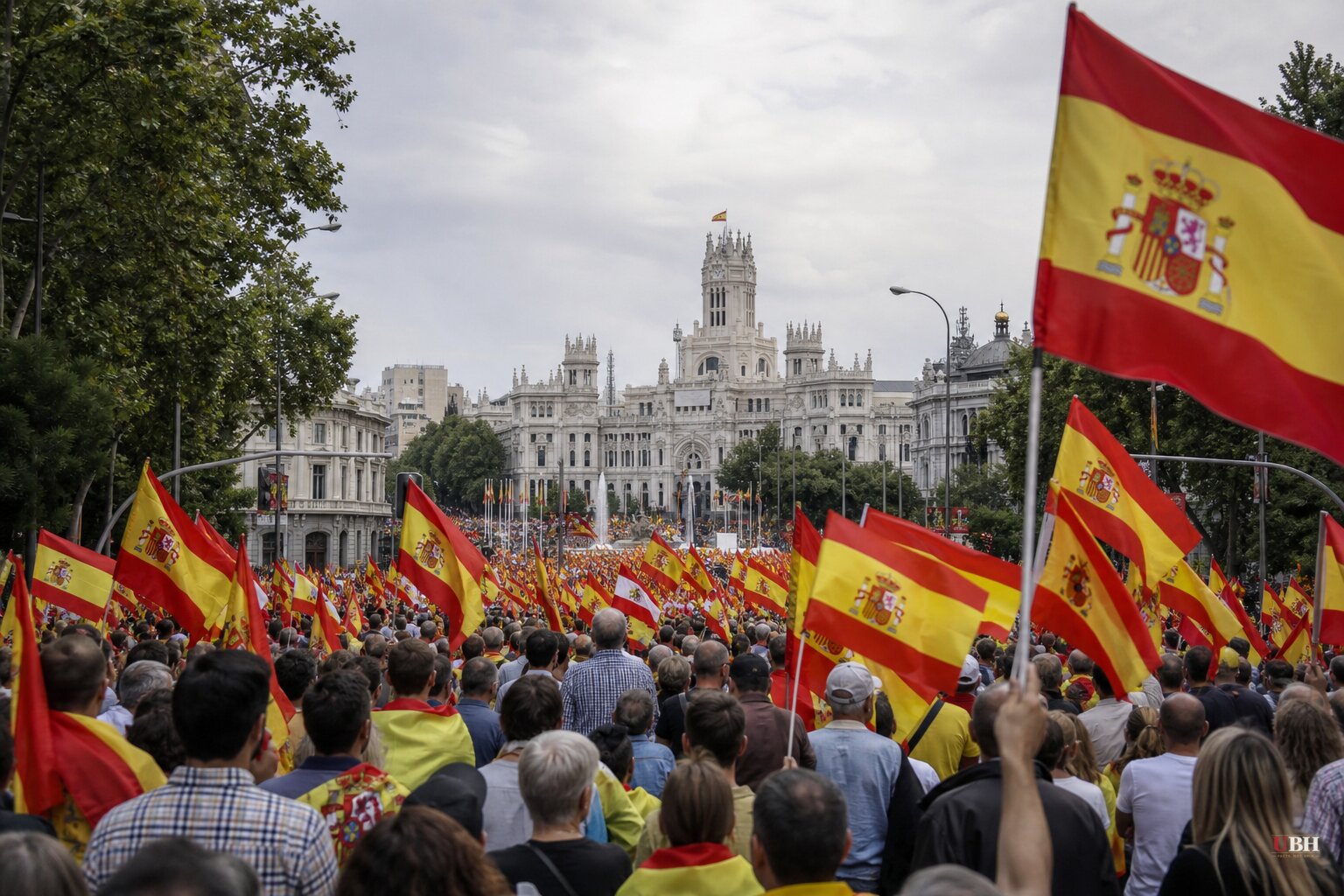
Roughly 50,000 people rallied in Madrid, according to Spanish government figures cited by the BBC, with protests also breaking out in Ceuta and other cities. The Madrid demonstration and the one in Ceuta fell on Ceuta Day, a local holiday marking the Portuguese takeover of the city in the 15th century, according to Al Jazeera. Crowds chanted "Ceuta is not for sale, Ceuta must be defended" and "expel the invaders."
Opposition leader Alberto Núñez Feijóo of the conservative Partido Popular told the Madrid crowd, "A Spanish city has been invaded, occupied and, unfortunately, this happened with the knowledge of the Government of Spain," per the BBC. Vox leader Santiago Abascal went further, calling Prime Minister Pedro Sánchez a "lackey" of Rabat.
A leaked report, and a denial
The protests landed the same day a leaked police document escalated matters further. According to Euronews, multiple Spanish outlets reported that a dossier from the National Immigration and Borders Centre, submitted to the National Court and Judge María Tardón, described Moroccan gendarme deployment near the border town of Castillejos as "clearly smaller than usual" during the crossing, and quoted migrants describing a "passive attitude" from Moroccan forces as they crossed.
Critically, the BBC reported the document "did not categorically accuse Morocco of being behind the influx." Euronews reported that a senior Spanish police official later denied that any report directly blaming Morocco exists at all, though that denial did little to calm the political fallout.
Breitbart's coverage went further than the underlying document itself, framing the report as police having "accused agents of the Islamic regime in Morocco of coordinating" the crossing and citing claims of plainclothes Moroccan officials directing migrants toward the sea. That framing goes beyond what the BBC and Euronews describe as a report that stopped short of a direct accusation, and it does not mention the police official's denial that such an accusatory report exists.
Interior Minister Fernando Grande-Marlaska, described by Euronews as under fire over Spain's handling of what it called the country's most serious national security breach in modern history, has ordered police to clarify the leaked claims. Feijóo told reporters the government "knew it, and covered it up," an allegation Sánchez's government disputes and which no independent investigation has yet confirmed.
Sánchez's defense, and the residual population
Sánchez has consistently pointed elsewhere, blaming trafficking gangs and online misinformation for encouraging the crossing rather than Moroccan state action, according to the BBC. Morocco has denied orchestrating or being involved in the mass crossing. The European Commission has continued describing Morocco as a "trusted partner" even after the crisis, Euronews reported, a position that undercuts claims of an orchestrated Moroccan operation.
Spain's government also notes that Rabat quickly took back Moroccan nationals under a 1992 bilateral readmission agreement. Immigration expert Juan A. Soto told the Daily Signal this "tells you something about who controls the tap" of cooperation, even as he argued the durable residual population, sub-Saharan nationals, asylum claimants and unaccompanied minors, will likely mean 1,500 to 2,500 people end up permanently in Spain through the asylum process.
Spain's government puts the number still in Ceuta at about 5,000, including 1,200 minors, though Al Jazeera noted local counts run higher. Breitbart put the figure as high as 9,000 in a city of 83,000 residents. About 500 asylum applications have been processed, with most rejected, according to the Daily Wire.
Opposition arguments
The strongest version of the opposition's case isn't just that Morocco may have been involved. It's that a Spanish Supreme Court ruling this summer restricting summary returns of people intercepted at sea, combined with Sánchez's earlier amnesty program for roughly a million undocumented migrants, created a legal opening that made a mass crossing rational for anyone trying to exploit it. Ceuta's mayor-president, Juan Jesús Vivas of the Partido Popular, told the European Parliament in August that what happened "is not a typical migration crisis" but an episode putting Spain's territorial security "in the hands of a third country."
None of that proves Moroccan state coordination. It is a claim about domestic legal design, not about Rabat's intent, and the police document itself doesn't close that gap.
Judge María Tardón's National Court investigation is ongoing, and it remains the only body positioned to determine whether Moroccan authorities played a coordinated role or whether the crossing resulted from smuggling networks and a legal loophole, as Sánchez's government maintains. With a Spanish general election expected in 2027, according to Euronews, the findings will land squarely in the middle of Sánchez's re-election fight.
Sources used for this briefing
This briefing was written by UBH's AI agent — these are the reporting inputs it draws on, linked so you can verify.


