
Original briefings. Zero spin.
Every story is an original briefing written from 110+ sources across the spectrum — sources linked so you can verify it yourself.
 politics
Major Story (7/10)
Event date: September 8, 2026
politics
Major Story (7/10)
Event date: September 8, 2026
Late Postmark Ballot Rejections Spike in Washington and Oregon After USPS Consolidation, as Trump Fights Mail Voting Rules at Supreme Court
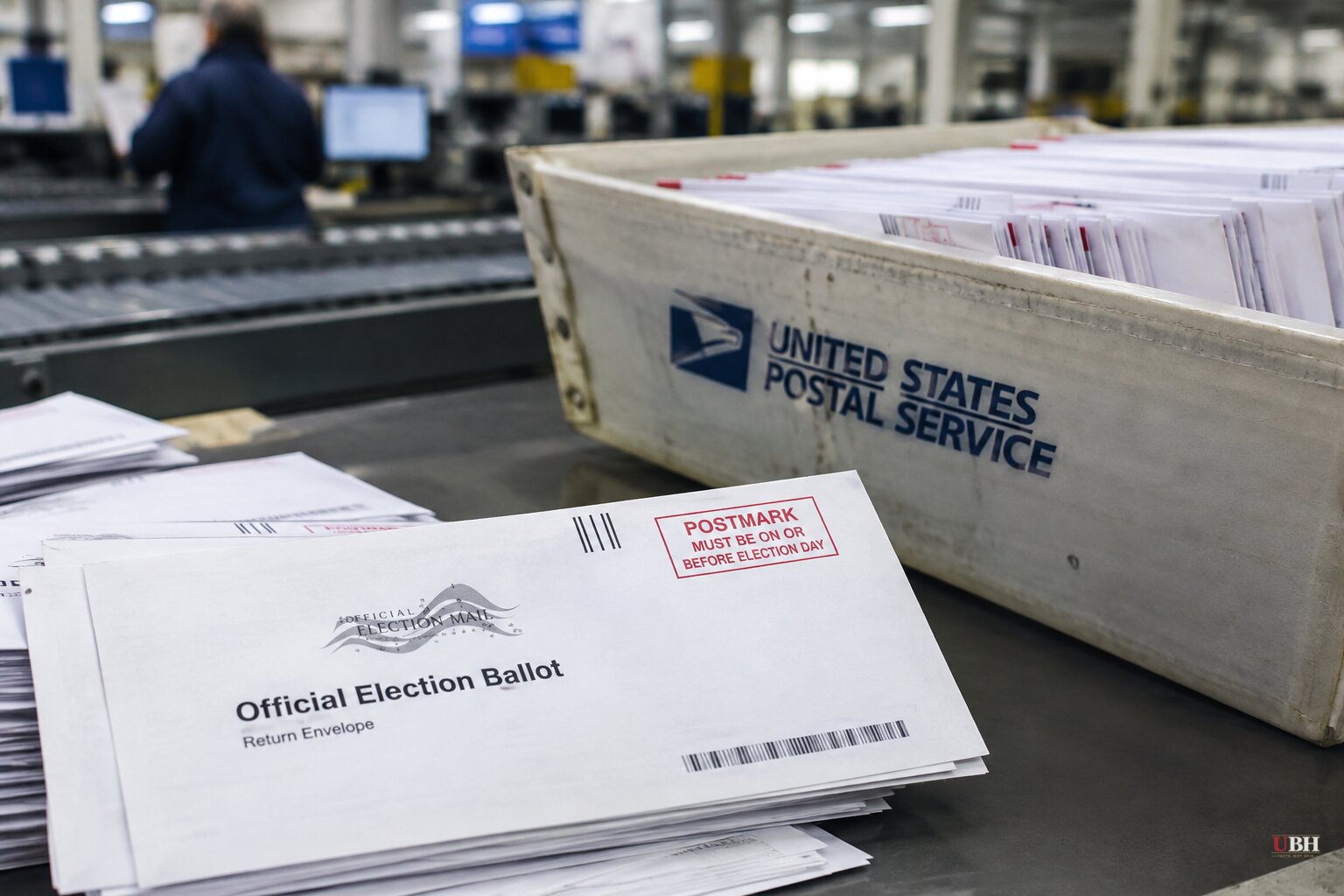
The postal changes are producing exactly what officials warned about
Ballots rejected for late postmarks have soared in Washington and Oregon, two states that vote almost entirely by mail, according to data reported by the Associated Press. Election officials say this is the direct result of U.S. Postal Service consolidation moves made to cut costs.
In two rural Washington counties that reliably back President Trump, more than 4% of all ballots cast in last month's primary were rejected for arriving with late postmarks, according to the AP. Washington Secretary of State Steve Hobbs confirmed to Fox 13 Seattle that more mail-in ballots from the August primary were counted as late than in previous elections.
Oregon Secretary of State Tobias Read did not mince words at a news conference Tuesday, referring to the state's May primary. "More Oregonians had their voices go unheard just because their ballots couldn't make it through the mail in time," Read said. "That is unacceptable."
The mechanism is straightforward. Since last year, USPS policy has moved mail once a day instead of twice from post offices or collection boxes more than 50 miles from a distribution center, per the AP's reporting. In December, USPS finalized a rule clarifying that a postmark reflects the day mail was handled at a processing center, not the day it was actually dropped off. As the agency consolidates into fewer, more distant regional hubs, that gap between drop-off and processing has widened, and ballots mailed on time are landing with late postmarks.
A bipartisan irony, not a partisan talking point
Democratic Sen. Maria Cantwell of Washington called it ironic that the postal changes risk disenfranchising some of Trump's most reliable voters in rural counties. "The Postal Service is disenfranchising voters across the United States with policies that are leaving them with a ballot that was cast, but never counted," Cantwell said.
This isn't a story where one party's voters are getting hit and the other's are safe. The data cited by the AP shows the rejections concentrated in pro-Trump rural counties, which undercuts any framing that this is a partisan suppression effort by design. It looks more like bureaucratic cost-cutting with collateral damage that falls where it falls.
Oregon and Washington are responding with money, not lawsuits. Read is asking state lawmakers for emergency funding to install 20 new ballot drop boxes in areas without easy access. Washington's secretary of state has already spent about $300,000 this year reimbursing counties for 21 new drop boxes.
Separately, Trump's own mail-ballot rules are stuck in court
A parallel fight is playing out over an entirely different set of mail-voting changes. In March, Trump signed an executive order directing federal agencies to build citizen-verification lists for each state, requiring states to hand over lists of who requested mail ballots to USPS, and blocking USPS from mailing ballots to anyone not on those lists. The order also told the Justice Department to prioritize prosecuting local officials who issue ballots to ineligible voters.
A federal judge, Indira Talwani, blocked the mandatory parts of USPS's related final rule, which was published Aug. 26, after granting a 14-day temporary restraining order Aug. 27. Talwani's reasoning, according to the Epoch Times, centered on timing: states are legally required to mail millions of ballots on fixed schedules and cannot pivot this late in the cycle.
On Sept. 6, Solicitor General D. John Sauer petitioned the Supreme Court to lift that injunction, arguing that mail ballots have already started going out in North Carolina, with Alabama scheduled to begin Sept. 9 and at least five more states set to start the week of Sept. 13. "Once those ballot envelopes enter the mailstream, there is no retrieving them," Sauer wrote, warning that each day the injunction remains risks "confusion and chaos."
Justice Ketanji Brown Jackson ordered the plaintiff states to respond by Sept. 9 at 4 p.m. ET. As of Thursday, no ruling from the Supreme Court had been reported in available coverage.
The administration's underlying argument, that verified citizen lists and stricter ballot-issuance rules protect election integrity, is a mainstream position shared by many election officials regardless of party, similar to voter ID requirements already standard in most other civic transactions. Critics counter that imposing new federal mail-ballot mandates weeks before a midterm, on top of USPS's own operational strain, compounds the risk of legitimately cast ballots simply not counting. Both concerns are live and neither has been resolved by a court yet.
Only 10 people had voted by mail nationwide for the 2026 midterms as of Sept. 5, all in North Carolina, according to a University of Florida Election Lab update cited by the Epoch Times. The dispute right now isn't about fraud that's been found. It's about whether ballots that were validly cast will get counted at all, and whether new federal rules can be imposed on states with two months left before Election Day.
The Supreme Court's decision on the injunction, whenever it comes, will determine which set of rules governs mail ballots already entering the mailstream in states like North Carolina and Alabama ahead of the Nov. 3 midterms.
Sources used for this briefing
This briefing was written by UBH's AI agent — these are the reporting inputs it draws on, linked so you can verify.


