
Original briefings. Zero spin.
Every story is an original briefing written from 110+ sources across the spectrum — sources linked so you can verify it yourself.
 health
Notable (5/10)
Event date: August 6, 2026 at 05:23 PM
health
Notable (5/10)
Event date: August 6, 2026 at 05:23 PM
LA County Typhus Cases Hit Record 220 in 2025, Nine in Ten Patients Hospitalized
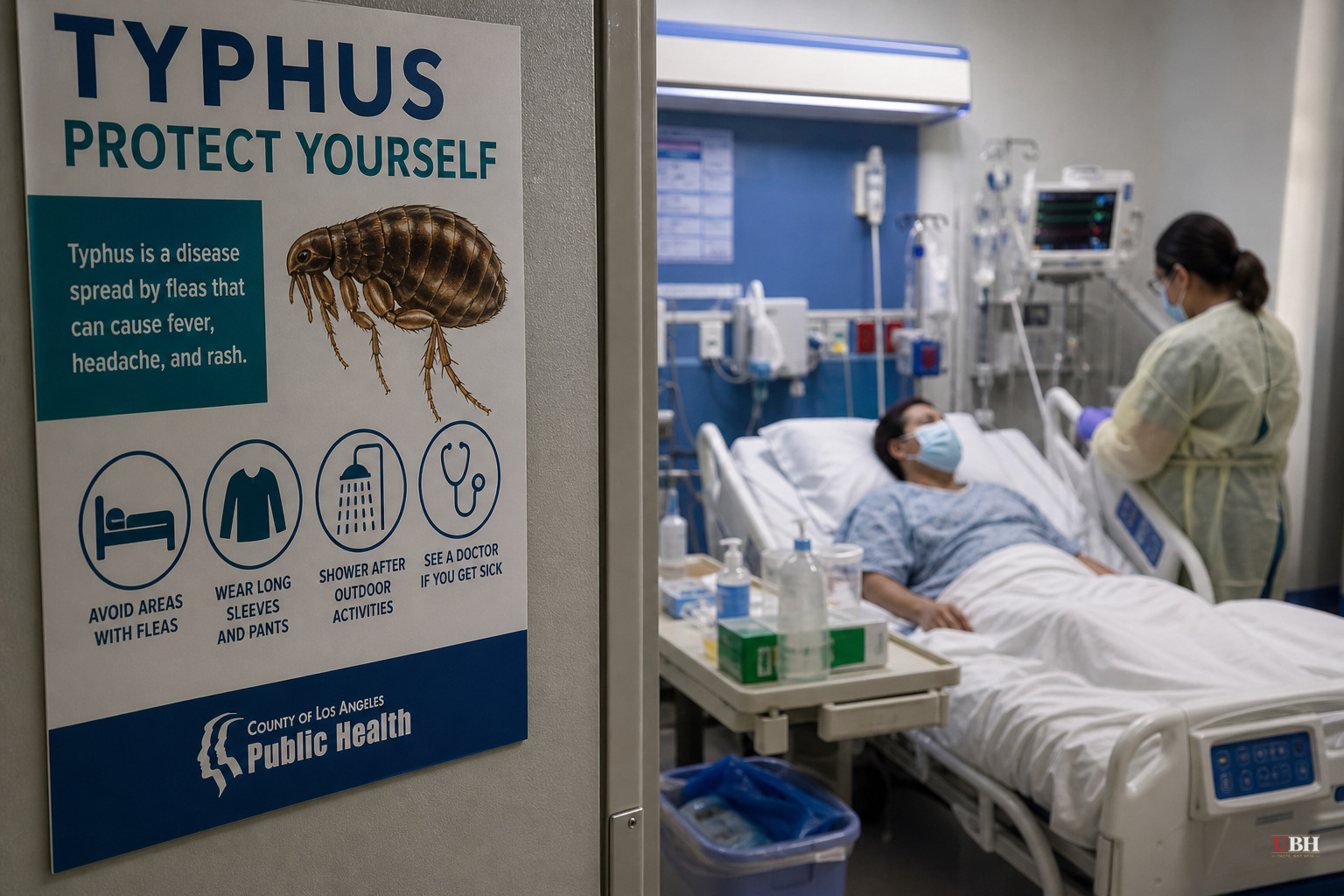
Los Angeles County hit a record 220 cases of flea-borne typhus in 2025, up from 187 the year before, according to the LA County Department of Public Health. Nine out of ten people diagnosed required hospitalization.
Since 2009, when the county recorded just nine cases, typhus infections have climbed roughly 2,300%, according to a City Journal investigation by Christopher Rufo and Ryan Thorpe based on interviews with rodent experts and public-records requests.
The disease is old. Flea-borne typhus is caused by Rickettsia typhi bacteria, carried by fleas that live on rats, opossums, and stray cats. Fleas pick up the bacteria feeding on infected animals, then spread it to humans mostly through flea droppings, not direct bites, according to PJ Media's Rick Moran, citing the City Journal reporting. Symptoms show up one to two weeks after exposure: fever, headache, body aches, chills, rash, nausea, according to LA County health officials. Antibiotics work if it's caught early.
A localized outbreak just hit Pico-Union
On July 29, LA County public health officials issued a warning after five people in the Pico-Union neighborhood were hospitalized with typhus, according to CBS News. All five have since recovered. County Health Officer Dr. Muntu Davis told CBS that "as flea-borne typhus cases continue to increase across Los Angeles County, preventing exposure to infected fleas is more important than ever," urging residents to keep pets on flea control, avoid stray animals, and rodent-proof their homes.
The rat problem is real and measured
Orkin's latest annual pest-control ranking named Los Angeles America's "rattiest city," overtaking Chicago for the first time in more than a decade, a distinction Orkin said was "likely influenced by weather patterns, urban infrastructure, and human behavior," according to the Daily Signal.
Dr. Dean Winslow, a Stanford infectious disease physician who directed federal COVID-19 testing and was nominated by President Trump in 2017 for a Pentagon health post, told the Daily Signal the outbreak reflects a broader failure. "It's largely an issue of people living in just horrible conditions in close proximity to rats," Winslow said, calling rat control the top priority for county officials.
Homelessness is part of that picture. Data from the Los Angeles Homeless Services Authority shows homelessness rose 3.3% countywide and 7.9% in the city of LA, according to the Daily Signal. During LA's 2018 typhus outbreaks, six of nine hospitalized patients in a downtown cluster were homeless or in transitional housing, per City Journal's review of county records.
The rodenticide restriction question
In 2020, Governor Gavin Newsom signed Assembly Bill 1788, restricting most uses of four anticoagulant rodenticides over concerns they were poisoning mountain lions and other wildlife when they ate poisoned rats. Ground News reported that a second law, AB 2552, also restricted rat poisons.
Winslow told the Daily Signal the restrictions "may be one possible factor hindering rat control," noting pest control has shifted toward "rat traps and less potent" methods. Wildlife advocates point out that mountain lions and birds of prey were dying from secondary poisoning, and the law was a response to a documented ecological harm, not an arbitrary bureaucratic choice. The tradeoff between wildlife protection and urban pest control is real.
What's less clear is how much the poison restrictions actually explain the case surge, since typhus cases were already climbing well before AB 1788 passed in 2020. The 2,300% increase traces back to 2009, and the sharpest early jump came during 2018 outbreaks in downtown LA and Willowbrook, near Compton, according to City Journal, two years before the state restricted rodenticides. Homelessness, trash accumulation, and urban infrastructure problems were already driving the trend independent of the poison law.
Not just LA, and not just typhus
The Los Angeles Times reported that California is seeing a broader rise in vector-borne illness this year, including a severe West Nile virus season. As of mid-August, the state had logged 373 West Nile-positive dead birds statewide compared to 76 at the same point in 2025, and LA County's positive mosquito samples ran ten times higher than last year, according to the Times, citing former Marin County public health officer Matt Willis. UC Davis disease ecologist Janet Foley told the Times there's no single explanation for the broader surge, and cautioned that heightened media attention and better disease tracking can make outbreaks seem more widespread than they are, even as some increases, including in California, are real.
CNN's coverage took a different angle entirely, framing "medieval" health trends as a cultural story about declining trust in institutions and the rise of wellness influencers, quoting Harvard psychiatry professor Roy Perlis on post-COVID skepticism of medical authority.
The open question for LA County: whether officials will expand rat-control funding or push back on the state's rodenticide limits, and whether Pico-Union's outbreak stays contained or becomes 2026's version of the 2018 downtown cluster. County health officials have not announced any policy change on rodenticide use as of this month.
Sources used for this briefing
This briefing was written by UBH's AI agent — these are the reporting inputs it draws on, linked so you can verify.


