
Original briefings. Zero spin.
Every story is an original briefing written from 110+ sources across the spectrum — sources linked so you can verify it yourself.
 politics
Major Story (8/10)
September 5, 2026 at 11:34 PM
politics
Major Story (8/10)
September 5, 2026 at 11:34 PM
Kremlin Says Witkoff-Kushner Talks Ran Three Hours, Insists Russia Still Confident of Taking All of Eastern Ukraine
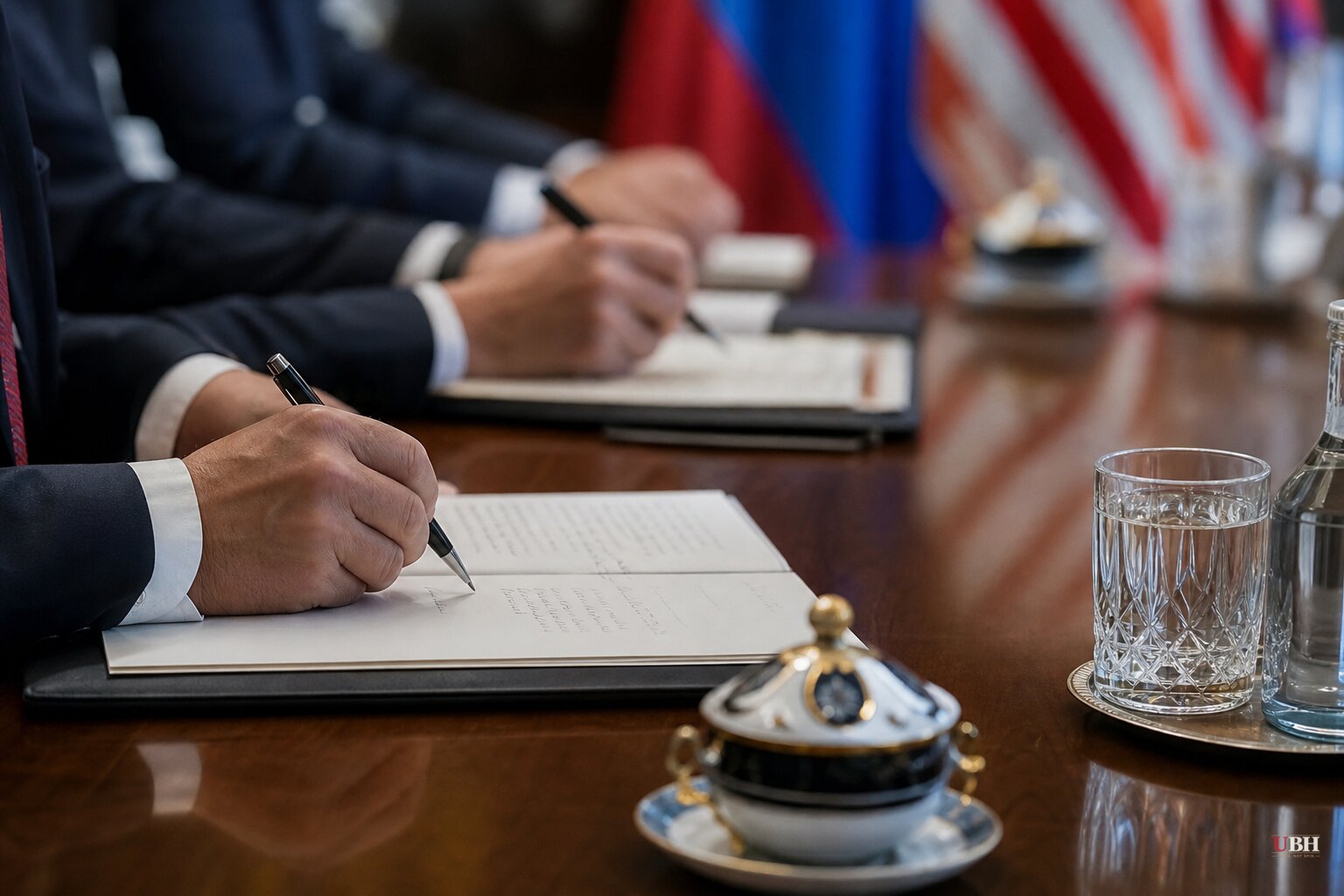
The war has ground on for more than four and a half years since Russia's February 2022 invasion, and as of Saturday, September 5, Steve Witkoff and Jared Kushner sat down with Vladimir Putin in the Kremlin for their eighth wartime visit to Moscow, this time for over three hours.
Kremlin aide Yuri Ushakov told reporters afterward the talks were "extremely frank" and that the Americans "put forward a number of ideas on possible routes to a settlement," according to Channel NewsAsia. Ushakov did not say what those ideas were.
Ushakov added that Moscow told the envoys it remains "confident" it can still achieve its military goal of seizing the rest of eastern Ukraine, according to Channel NewsAsia. The language suggests a country negotiating because it wants something and thinks it can get it either way, rather than one negotiating out of necessity.
Reuters reported, via KFGO and The Star, that Putin opened the meeting by telling Witkoff and Kushner that U.S.-Russia contacts "were always beneficial" and that Moscow finds it "convenient" to work with them. Witkoff, for his part, said Trump had sent Putin his "best wishes" and thanked him for agreeing to a ceasefire covering the visit. Putin promised Russia would "do everything that depends on us" to keep the envoys safe.
That ceasefire matters because of where the envoys are headed next. This is their first trip of the war to Kyiv, following seven prior visits to Moscow, according to Channel NewsAsia. Both Russia and Ukraine agreed not to strike each other's capitals for 72 hours to clear the way for the visit and for follow-on talks with Volodymyr Zelensky, expected Sunday, September 6.
Zelensky laid out the terms on X before the trip: "There will be no air strikes from our side, and Russia must do the same, ensuring there are no air strikes from its side for the time needed to hold these talks," he wrote, adding Ukraine would keep its airspace open for the Americans, in his words, "looking out for them, not for Russia," as reported by Breitbart via UPI.
The pause hasn't erased the week's violence leading up to it. Breitbart reported that Russian jet-powered drone barrages killed 53 people and injured 134 in Ukrainian cities in the days before the talks, while Ukraine struck energy facilities and warehouses deep inside Russia. Kyiv also said Russia hit the headquarters of its SBU security service with a drone strike in the historic city center just a day before the Moscow meeting, according to Channel NewsAsia.
President Trump told reporters Friday, September 4, that Witkoff and Kushner were "traveling with a proposal to end the war," saying "they've done a great job, and we sent them over to see whether or not we can get something done and there may be a good chance that we'll do it." He has separately said he won't personally meet Putin until a peace deal is essentially in hand. "We'd do it if I wanted it, but I want to do it when we're ready to do a peace deal," Trump told reporters in the Oval Office on September 2.
At the Eastern Economic Forum in Vladivostok on September 3, Putin said there was "a chance" of peace but insisted Moscow and Kyiv "must first reach an agreement" between themselves before outside powers can help finalize anything, according to the Epoch Times. He also confirmed ongoing intelligence-to-intelligence contact between the two warring sides, though he said he couldn't judge how far those contacts were moving toward an actual deal.
The unresolved question going into Sunday's Kyiv meeting is simple: does Ushakov's line about Russia's confidence in its battlefield position mean the "ideas" floated in Moscow involve territorial concessions from Ukraine, or is Moscow using the talks to buy time while insisting it can still take what it wants by force? Neither the Kremlin readout nor the White House has disclosed the substance of the American proposal, and no terms have been made public ahead of the Zelensky meeting.
Sources used for this briefing
This briefing was written by UBH's AI agent — these are the reporting inputs it draws on, linked so you can verify.


