
Original briefings. Zero spin.
Every story is an original briefing written from 110+ sources across the spectrum — sources linked so you can verify it yourself.
 health
Major Story (8/10)
Event date: August 18, 2026
health
Major Story (8/10)
Event date: August 18, 2026
Kindergarten Vaccine Exemptions Hit Record 4.2% as Measles Cases Top 2,500 This Year
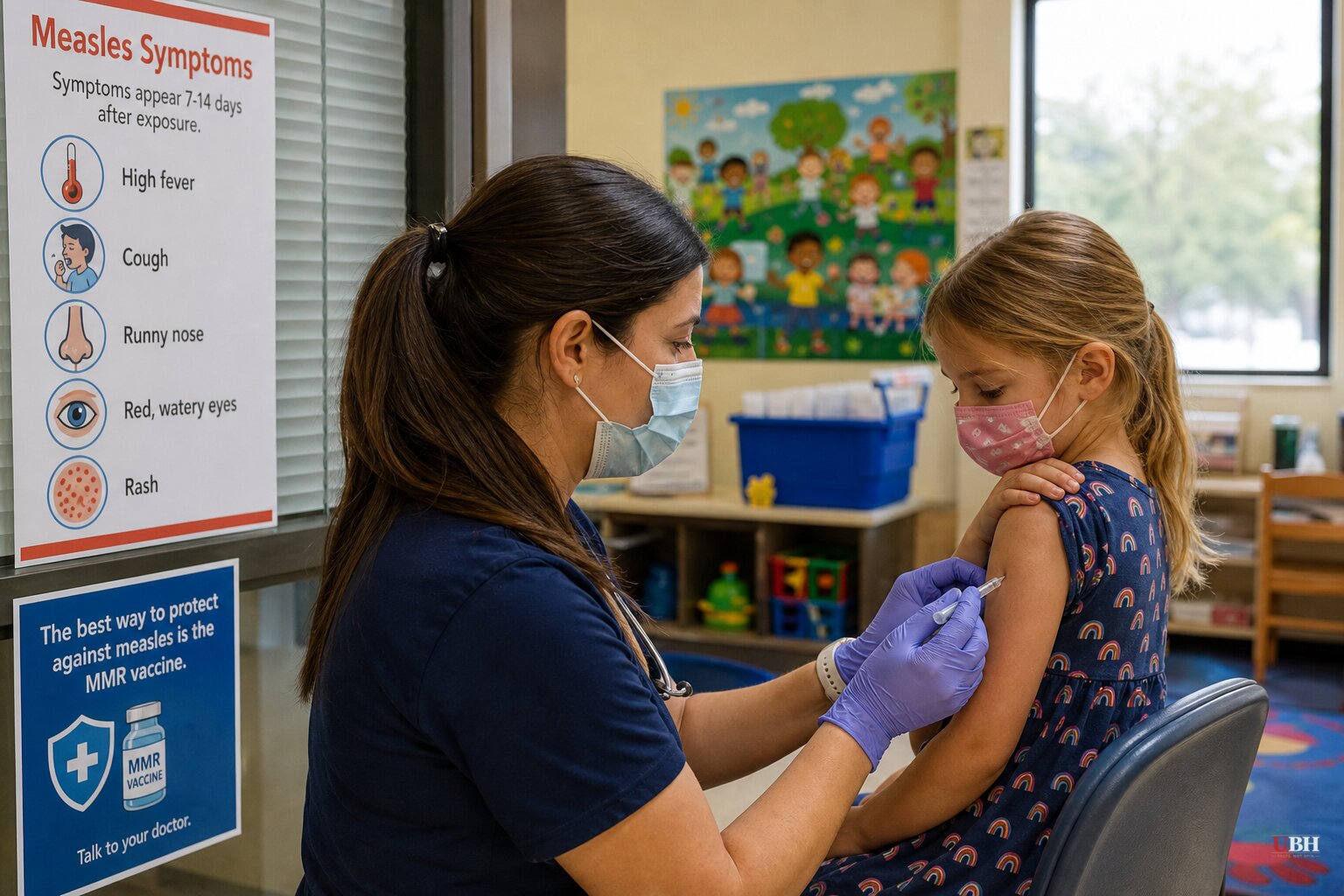
The CDC's latest kindergarten vaccination data, posted Monday, shows 4.2% of kindergartners nationwide had at least one vaccine exemption during the 2025-26 school year. That's up from 3.6% the year before, an estimated 155,000 kids, according to the Associated Press. It's the fourth straight year the national exemption rate has set a record.
Medical exemptions stayed flat at 0.2%, according to NBC News. Nearly all the growth came from parents opting out for personal or religious reasons. Forty-one states and Washington, D.C. reported increases.
MMR coverage among kindergartners fell to 92.4%, down slightly from the year before and well under the 95% threshold experts say is needed to reliably prevent outbreaks, per the Associated Press. DTaP coverage dropped to 92%. Polio and chickenpox vaccination rates also declined. Hepatitis B coverage held steady, though Dr. James Campbell of the American Academy of Pediatrics told the AP that's because it's given at birth and hasn't yet caught up to recent federal changes on infant hepatitis B guidance.
The numbers arrive during the worst measles year in the U.S. since 1991. NBC News reported 2,566 measles cases logged nationally as of Monday, with active outbreaks in Ohio, Pennsylvania and Utah. Ninety-three percent of people diagnosed with measles this year were unvaccinated, according to the CDC data cited by NBC. About 280,000 kindergartners lack a full two-dose MMR record, per NBC's reporting.
The state-by-state gap
The national number hides big regional swings. West Virginia keeps 98 to 99% of kindergartners on the routine schedule, according to The Atlantic. Idaho, by contrast, has seen its exemption rate climb to 17.5%, the highest in the country, with only about 75% of kindergartners up to date on shots against measles, polio and chickenpox. Idaho also bars employers, schools and day cares from requiring vaccines at all.
Ohio's exemption rate rose to 5.7%, up from 4.7%, according to CDC data cited by NBC News. Cleveland's public health director, Dr. David Margolius, told The Guardian his city's kindergarten vaccination rate actually improved, from 68% a couple of years ago to 76% last year, through local outreach. But he added that "the federal government is causing more and more confusion, and that's washing out the effects and the work that all of us are trying to do."
What Trump's executive order actually does
On August 10, President Trump signed an executive order titled the Gold Standard Childhood Vaccine Recommendations, according to The Epoch Times. It calls for recommending immunizations against 11 diseases instead of the current federal guidance covering more, ends the recommendation that all minors get the COVID-19 vaccine, and pushes for the MMR shot to be split into three separate single-disease injections administered at separate visits once such products are available domestically, per Fox News and The Epoch Times.
Trump framed the change around reducing the volume of shots given in a single visit. "It's not just that you're doing fewer vaccines or jabs, as they say, but you're doing them in a series of visits to the doctor. Much smaller amounts," he said in the Oval Office, according to Fox News.
The order also directs the attorney general to pursue legal action against state laws that conflict with what it calls parental authority, religious freedom, and medical exemption rights, per The Epoch Times. States, not the federal government, set actual school vaccination requirements. The Epoch Times reported that as of January, 28 states no longer rely on federal vaccine recommendations at all, meaning federal guidance still carries weight in the roughly 20 states that do.
The autism claim doesn't hold up
Trump has tied the vaccine schedule changes to reducing autism diagnoses, an argument Daily Wire's Ben Shapiro rejected directly in his own commentary: "There is no data, none, that links vaccines to autism. This is not a scientifically-backed concept." Shapiro noted the autism-vaccine theory traces to Andrew Wakefield's 1998 paper, later retracted by The Lancet, based on a self-reported study of just 12 children.
Shapiro also separated the HPV vaccine, which he said reasonably falls to parental discretion given it targets a sexually transmitted infection, from MMR, which guards against a highly contagious disease that spreads regardless of individual behavior. His position: adjusting the schedule isn't inherently unreasonable, but selling it as an autism fix is not backed by evidence.
Where the fight is headed
Dr. Paul Offit of Children's Hospital of Philadelphia told The Guardian the CDC's own announcement of the new numbers, a three-sentence statement saying "overall vaccination rates among kindergarteners remained high," downplayed what he considers a real decline across nearly every tracked vaccine. The American Academy of Pediatrics has sued HHS over its efforts to narrow vaccine recommendations, according to The Atlantic.
A White House spokesperson, Kush Desai, told The Atlantic that "none of the Trump administration's actions undermine access to or insurance coverage of any" vaccines. The Pan American Health Organization is expected to decide in November whether the U.S. still qualifies as having eliminated measles from domestic circulation, a status achieved in 2000, according to NBC News. That decision, not any single poll or executive order, will be the next hard marker of where this trend actually leads.
Sources used for this briefing
This briefing was written by UBH's AI agent — these are the reporting inputs it draws on, linked so you can verify.


